
On a hot summer day, while strolling around Shanghai's Pudong Qiantan, you hop on a shared bike, enjoy a refreshing ride for an hour and nineteen minutes, and return it at a designated spot.
Guess how much this ride cost?
Some might think, it's a shared bike, just a few bucks.
Others might have a sudden realization: since I'm asked to guess, it must be unusual. Could it be over ten bucks?
But what if I told you, you have to pay — 30 RMB?
Aren't you dumbfounded?

What's going on, have the shared bikes you casually scan by the roadside turned into price assassins too?
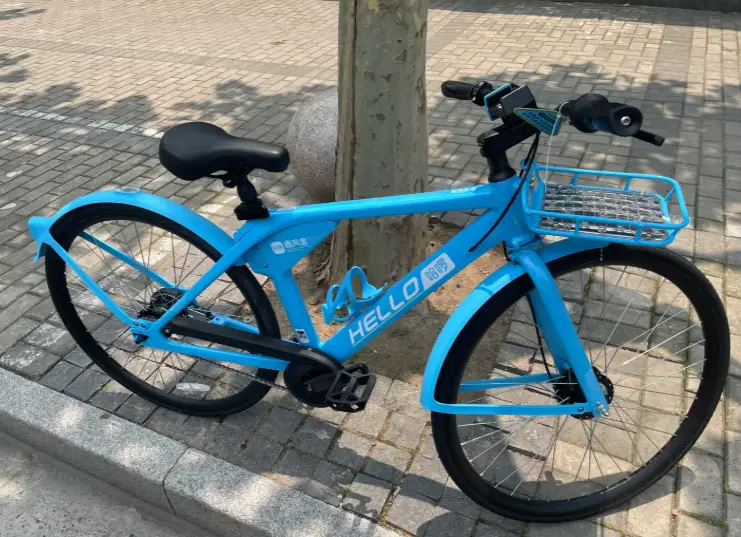
Actually, this guy wasn't riding the classic version of shared bikes we usually see, but a premium version that supports automatic gear shifting.
The pricing is also premium: the starting price is 10 RMB/30 minutes, with an additional 7.5 RMB/30 minutes. On weekends and statutory holidays, the starting price is 15 RMB/30 minutes. If you go outside the operating area, an extra 50 RMB dispatch fee is charged.
Perhaps your wallet hasn't been attacked by expensive shared bikes yet, but if you've ridden one recently, you've definitely noticed that shared bikes are getting more and more expensive.
It feels like 3 RMB is just the starting price now...
For example, a netizen posted that they ride for about 10 to 15 minutes every morning around 7:50. They used to pay 1.5 RMB, but in April this year, it became 2.8 RMB. The breakdown: a starting price of 1.8 RMB/10 minutes, plus 1 RMB for overtime.
Another netizen said they often ride for just 2 or 3 minutes, barely over 1 kilometer, and were still charged 2 RMB.
Calculating it this way, it seems even more expensive than taking the bus or subway.

But the prices above are often just for the classic shared bikes on regular weekdays.
What does that mean...
It can get even more expensive.
For instance, if you ride for less than half an hour and see a fare of over 5 RMB, or ride for over 40 minutes and the fare is 10 RMB—congratulations, you've hit the holiday pricing rules.
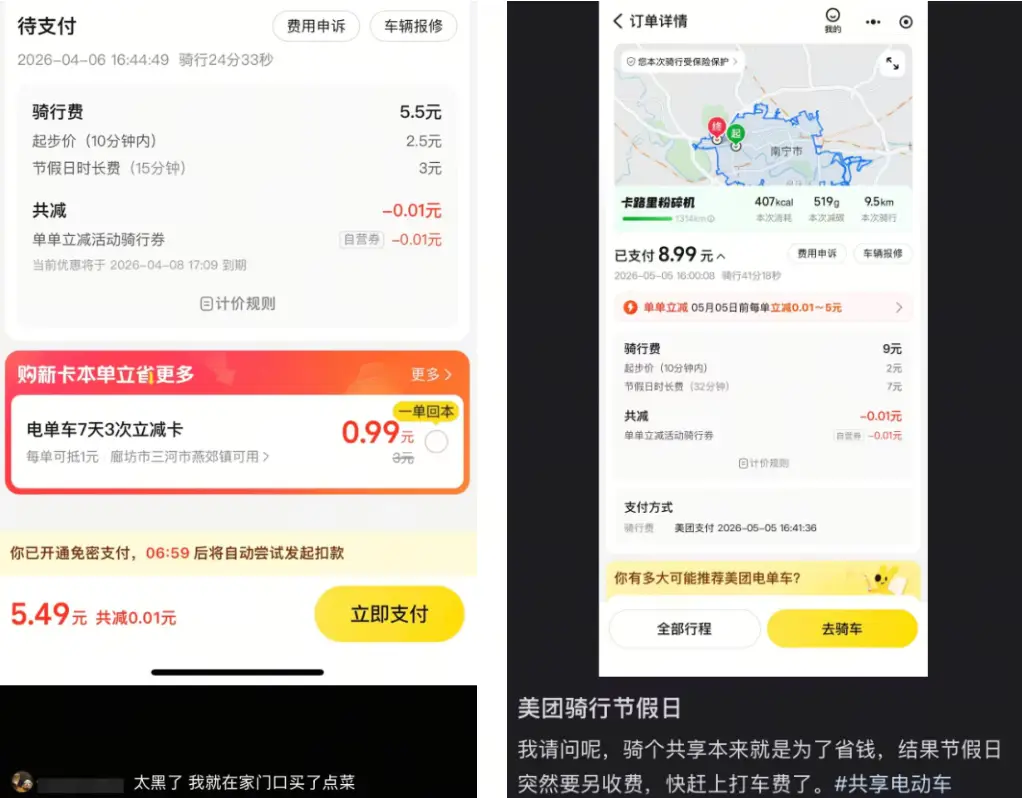
What's a bit different is that human holidays have makeup workdays, where even weekends require work. But bikes are different; on makeup workdays, they charge by the holiday rate.

The author doesn't ride often, maybe just three or four times a year, occasionally paying one or two RMB without much thought. It was only after scrolling through these complaints that it dawned on me: the good old days of 0.5 RMB for half an hour and 1 RMB for an unlimited ride are long gone.
But when exactly did this start?
This wave of industry price hikes might have started earlier than you remember, back in 2019...
From March to November 2019, multiple shared bike companies adjusted their pricing rules in various cities. Bluegogo (the predecessor of DiDi Qingju) changed its starting price in Beijing from 1 RMB per 30 minutes to 1 RMB per 15 minutes. After Mobike followed suit, it quickly raised the starting price from 1 RMB to 1.5 RMB in Shanghai, Chengdu, Shenzhen, and other places.
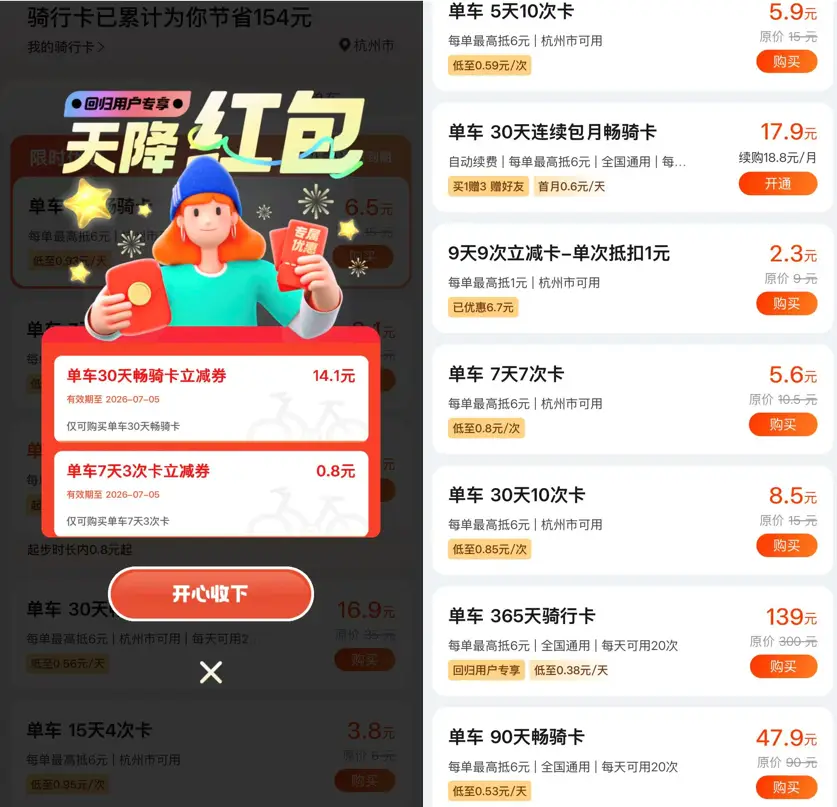
Of course, besides per-ride charges, shared bikes also offer package models, namely riding passes.
These have also taken turns rising. In January 2022, Hellobike announced that its 7-day pass would increase from 10 RMB to 15 RMB, the 30-day pass from 25 RMB to 35 RMB, and the 90-day pass from 75 RMB to 90 RMB. Meituan soon followed, raising its corresponding packages to the same prices.
The three giants of shared bikes haven't explicitly disclosed their financial data. In Meituan and DiDi, the shared bike business is broadly categorized under new business segments and reported alongside other operations. Hellobike issued a prospectus in 2021 but no longer discloses complete financial statements separately.
We can only get a glimpse from Hellobike's earlier prospectus.
According to Hellobike's 2021 prospectus data, the gross margin of its two-wheeler business in 2018 was -54.3%—losing money on every order, essentially doing charity every day. It wasn't until 2020, after the first wave of price hikes, that the gross margin of the two-wheeler business was pulled up to 6.7%.
To be fair, the price hikes for shared bikes aren't actually that exaggerated. After all, another giant in the sharing economy, shared power banks, has long reached 4 to 10 RMB per hour.
It's just that when the sharing economy was booming, capital giants footed the bill. Now that the tide has receded, companies must fend for themselves. How to survive? Raising prices to increase revenue and cover losses has become a realistic and inevitable choice.

As a capital-intensive business, if you want to start in the shared bike industry, you have to spend a lot of money to buy enough bikes and occupy enough urban spots.
During operations, when bikes break or lose parts, you have to spend more on maintenance.
Hellobike CEO Yang Lei previously calculated an account: the daily maintenance cost per bike is 0.3 RMB, and the daily depreciation cost per bike is 0.6 RMB. This means the daily maintenance and depreciation cost for each shared bike is about 1 RMB, and this doesn't even account for loss or severe damage.
Many people might know that these bikes have dedicated operations staff who load up excess vehicles and dispatch them to areas with shortages (the high dispatch fees during holidays are partly because the frequency of vehicle movement is higher and maintenance is more difficult during these times).
But did you know...
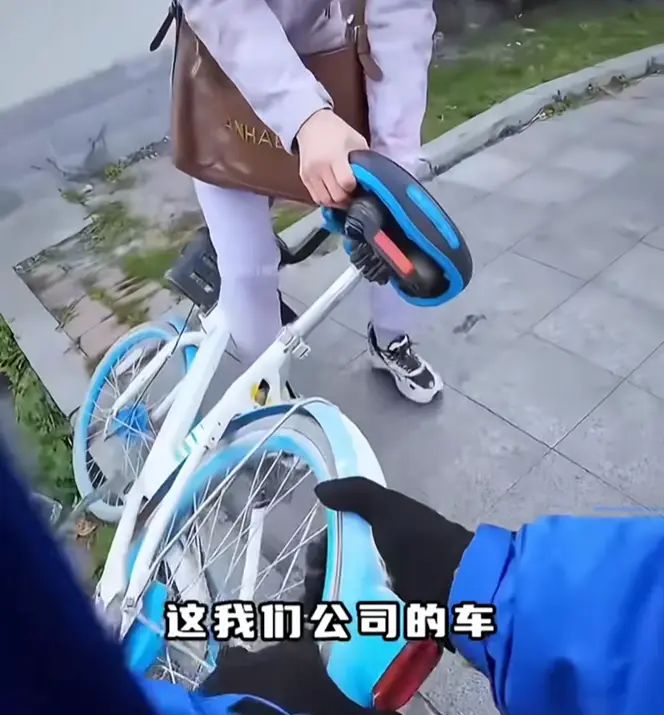
These operations staff also have to go out from time to time to retrieve their own bikes.

When a bike deviates from its designated operating area and goes offline for days, the operations staff need to track the information and go to various places to rescue the stranded bikes.
For example, based on tips from the public, they might go dig a bike out of the Taiping River...

Or they might stake out on the road and have a "heart-to-heart" with people who have claimed shared bikes as their own. Sometimes, the two sides reach a stalemate, leading to a fierce tug-of-war.
Therefore, the loss and unexpected wear and tear of bikes, along with various asset impairments, might be a bit larger than we realize.
Heavy assets, high wear and tear, high maintenance costs.
Over the years, these companies either don't disclose their numbers or stuff them into large segments like "new businesses" for reporting, keeping things vague and sticky, not wanting you to see through them.
Caught in a pincer movement, shared bike companies are forced to keep moving forward.
Riding fees are the biggest key supporting the shared bike business model. Other businesses, like pop-up ads in the apps or data services, bring in revenue, but it's not substantial enough.
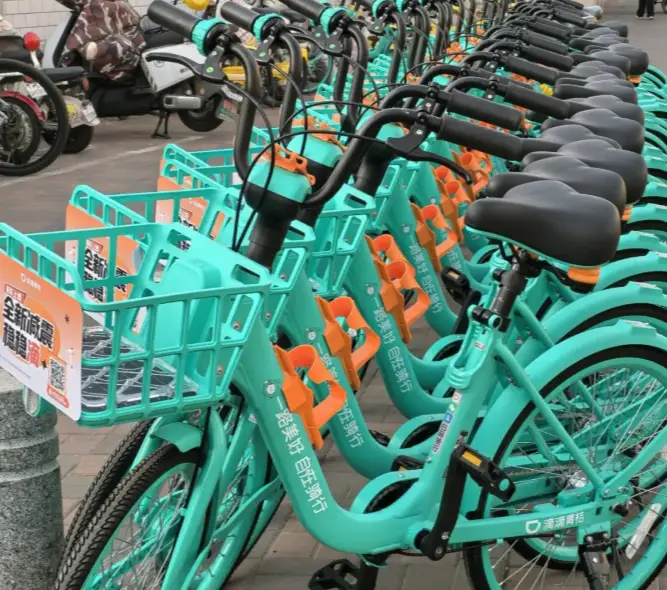
But riding fees can't keep going up forever...
Although the demand for the last mile cannot be solved by public transit, and the need for flexible pick-up and drop-off cannot be met by buying your own bicycle—these travel pain points can only be properly handled by shared bikes.
However, everyone has a scale in their heart: is the convenience of this short stretch of road worth how much money?
As for the author, if the price for this distance exceeds 3 RMB, I can't help but just walk.
So, the price threshold at which the public would rather endure the walk is the profit ceiling, or the foundation, for shared bike companies.
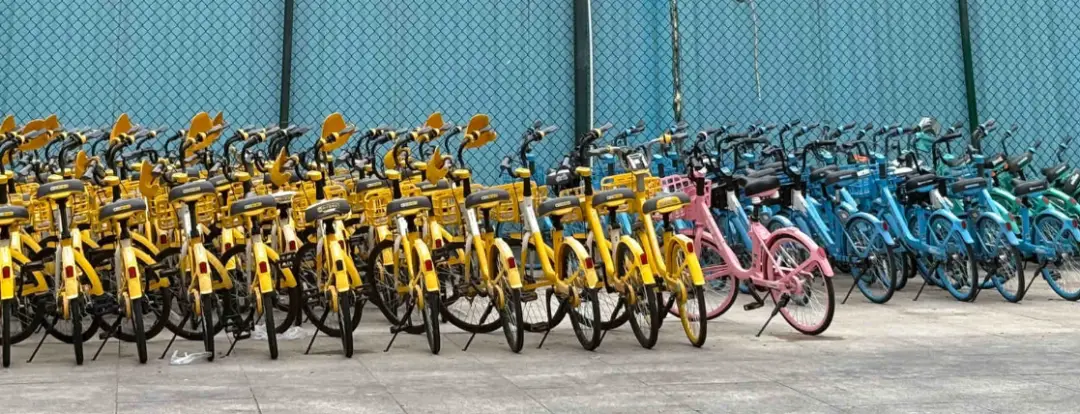
Thus, today's shared bikes have entered an era of extremely refined operations, racking their brains to repeatedly strike a balance between "making people willing to keep riding" and "making the company profitable enough to survive."
Different prices for weekdays, rest days, and holidays.
The duration for the starting price has shrunk from 30 minutes to 15 minutes, or even 10 minutes, to make a little off those who ride occasionally and are price-insensitive. For high-frequency riders, the price can be brought down to a reasonable level through riding passes.
As the room for refined cultivation of classic bikes gradually shrinks, launching various types of bikes and creating more scenarios has become a way out.
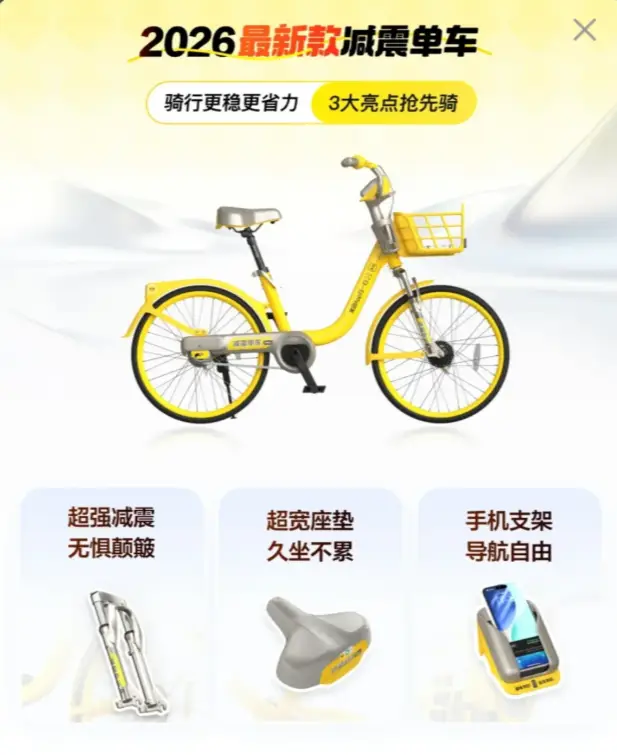
Because some people complained that the riding experience of previous shared bikes was too poor, shock-absorbing bikes with optimized suspension, saddles, and phone mounts were introduced.
Many people have the need to pick up kids or take them out for a trip, so parent-child bikes with a back seat for children came into being.
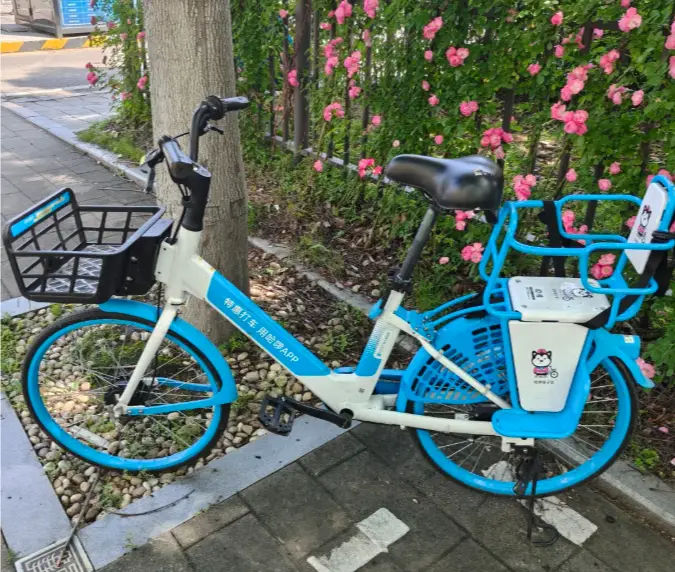
In various scenic areas or greenways, road versions of shared bikes with automatic gear shifting have started appearing in droves.
The demand scenarios corresponding to these are real. When the author went cycling along the Shaoxi River last time, I saw many people riding shared bikes (the classic version) for a stroll. If I could spend 20 or 30 RMB to enjoy an afternoon of refreshing riding along the Shaoxi, I'd be quite willing.
Especially for those who aren't sure if they want to get into cycling, shared bikes might just be a low-barrier entry point. No need to buy a bike, no maintenance, no worry about it sitting idle—just scan and ride, return when done.
So, in my opinion, this is a good way out.
Different specifications of bikes can solve more of our demand scenarios, and for shared bike companies, it's also new commercial space.
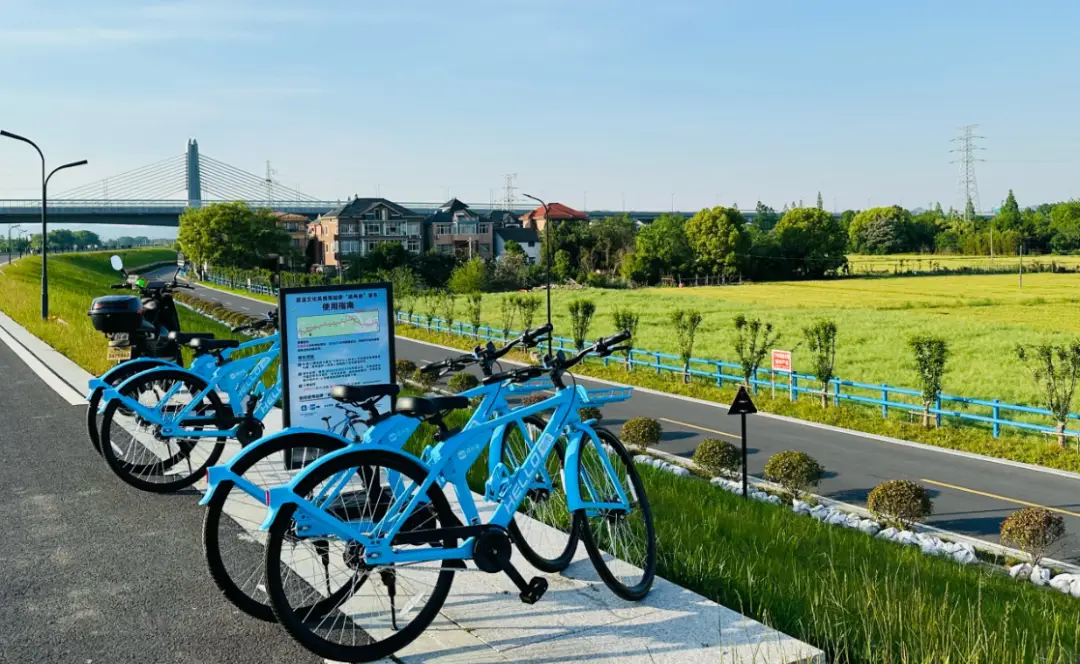
But these are all new scenarios and new demands; market acceptance takes time.
For example, many people might not even know that holiday prices are different, or that there are so many types of bikes available now.
If price prompts are not clear enough, it might really affect people's impression of shared bikes...
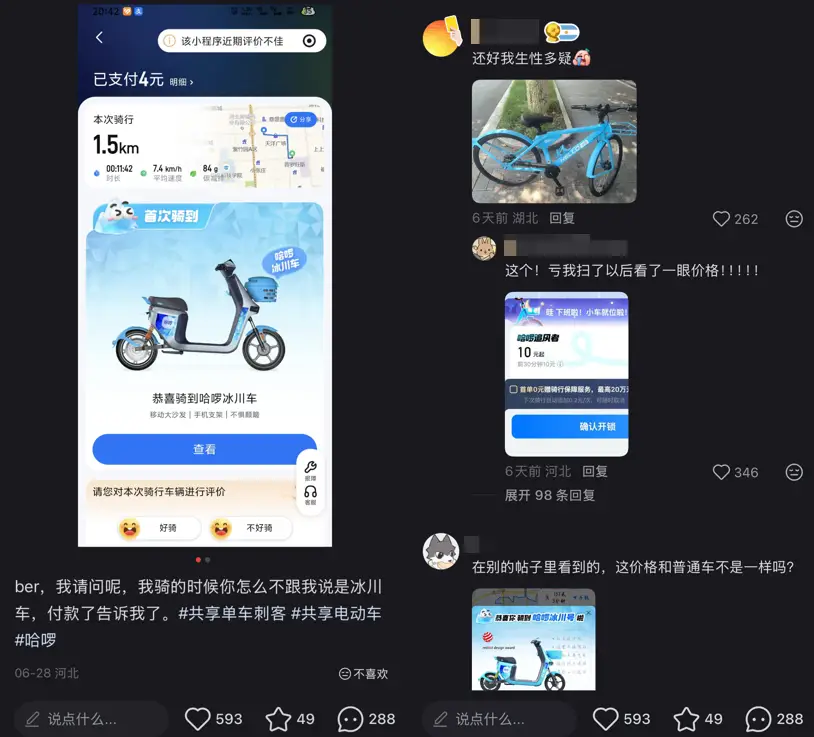
At the same time, another uncomfortable point is that we all know when shared bikes were first born, they were meant for those rigid demand scenarios of a few bucks and a few minutes, specifically to solve the "last mile" of travel.
To be more specific, it's those marginal distances where you have to walk a bit after exiting the subway, or walk 10 minutes after getting off the bus, where taking a taxi is unnecessary but walking is annoying. Paying 1 or 2 RMB to ride across used to be a joy.
But as the complaints at the beginning highlighted, this has now become a consumer calculation of whether it's worth it or not.
For the platforms, they probably haven't found a better solution yet. All we can say is that shared bikes have value for users, value for cities, and value for platform ecosystems, but when you calculate the accounts independently, it's very hard to be an easily profitable business.
Shared bikes, which solve the last mile of your travel, are ultimately stuck at the last mile of their business model.
 微信扫一扫打赏
  支付宝扫一扫打赏
Comments (0)