
Latest
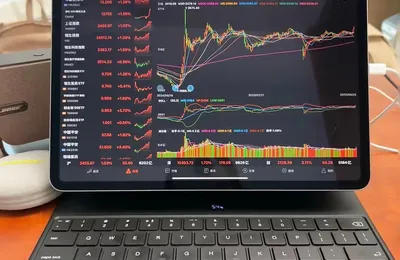
I Belong to the 'We're Doomed, Doomed, Doomed' Faction
In this humorous post, the author observes the fierce tribalism between the "Old Guard" (traditional stocks) and "Tech" factions in the investment community. Influencers of both sides act like fanatical drill instructors, purging any doubters and creating unified, cult-like comment sections that aggressively defend their respective market strategies despite crashes. In contrast, the author identifies with the "We're Doomed" faction—confused, anxious, and constantly asking, "What do I do?" Unable to project the unwavering certainty required to be a top influencer, the author instead attracts equally bewildered followers. While the two main factions engage in metaphorical warfare, the author and their readers remain collectively dumbfounded, humorously depicted as beggars holding bowls rather than warriors.
![[Bohai Gems 0707] Goose Version of Watching Fire from the Other Shore](https://images.hotview.uk/scraped/16e6e77d7110975da341cea127a9cefd.webp)
[Bohai Gems 0707] Goose Version of Watching Fire from the Other Shore
This article is a humorous image and GIF compilation titled "Bohai Gems 0707." It features 25 entertaining clips and pictures with witty captions. Highlights include a goose seemingly "watching a fire from the other shore," unexpected traffic accidents, clever animal antics like a "Stalker" cat and an "Elvis Cat," and funny situational humor such as questioning if posting an incriminating video counts as turning oneself in. The collection blends internet slang, playful double entendres, and relatable mishaps, offering a lighthearted glimpse into viral Chinese internet culture and everyday comedic moments.

Workplace Bullying in Japan Can Easily Lead to Temple Fires
A 600-year-old temple in Imari City, Saga Prefecture, Japan, was severely damaged by arson on the 30th of last month. Police arrested a 28-year-old trainee monk who confessed to starting the fire, stating he was "fed up with everything in life." He explained that he suffered constant scolding from senior monks regarding sutra chanting and lifestyle, and was frequently struck with a <em>kyosaku</em> (a flat wooden stick used in Zen practice). The relentless workplace bullying caused an emotional breakdown. He set the dormitory's second floor alight, then fled with a colleague. The wooden structure burned rapidly, taking seven hours to extinguish, leaving the ancient temple mostly in ashes, though no casualties occurred. The article humorously concludes that temple workplace bullying easily leads to fires, referencing historical figures Oda Nobunaga and Akechi Mitsuhide.

Volkswagen Pops the Champagne at Halftime
Volkswagen is prematurely celebrating its transition after partnering with XPeng to learn modern EV manufacturing, a move dubbed "popping the champagne at halftime." Facing a dramatic decline in China—market share dropping from 19% to 9.7% and sales falling from 4.2 million to 2.7 million—VW invested $700 million in XPeng for a crash course in rapid EV development. However, their first co-developed model, the ID.Unyx, has seen lackluster sales, hampered by outdated tech and VW's fading brand appeal among Chinese consumers who now view legacy automakers as "boomer" brands. Eager to avoid becoming a hollow brand reliant on XPeng's software, VW is already showcasing new independently developed EVs, insisting they represent its true future.

The RV Market is Extremely Competitive: Even Second-hand Type C RVs Priced Over 80,000 RMB Can't Sell, the Market Has Changed Dramatically
This article discusses the dramatic downturn in the Chinese RV market, highlighting that intense competition and declining prices have made it difficult to sell even second-hand Type C RVs priced just over 80,000 RMB. The author draws a parallel with the broader economic trend of falling house and car prices, arguing that RVs are no exception. Furthermore, the piece questions the practicality of owning an RV, suggesting that purchasing a large SUV or MPV and simply parking near public restrooms provides the same essential conveniences without the need for a dedicated recreational vehicle. The post includes a Bilibili video link and an accompanying image to illustrate the current market situation.

Selected Micro-Quotes 0707: Can't Find a Clean Swimming Pool
This article compiles a selection of insightful and humorous micro-quotes on various topics. SahilBloom highlights the underrated value of emotional stability and peace in relationships. Liuxuan discusses the perks of renting over buying when facing aging infrastructure. Milu jokingly warns against dating people with long relationship histories. LuckyRattlesnake shares a staggering API cost estimate for running Fable 5 continuously. PureAndKindPampas analyzes the intense pressure and disappointment faced by Tsinghua/Peking University alumni whose children struggle to meet the same academic standards. Finally, XuFanyang points out the struggle of finding a clean pool for joint-friendly exercise and illustrates the concept of reflexivity using the increasingly sweet stereotype of Shanghai cuisine.

The Black Organization Has a Huge Naming Problem
This article humorously critiques the naming system of the Black Organization from *Detective Conan*, where members are codenamed after broad alcohol categories like Gin and Vodka. The author argues that assigning such vast categories to individual members reveals the organization's limited scale and lack of ambition. Drawing a parallel to Alibaba's early practice of using Jin Yong character nicknames, the author explains that as a company grows, it must resort to increasingly obscure names. If the Black Organization were truly massive, its codenames would resemble specific, niche alcohol brands rather than broad categories, highlighting their poor strategic positioning.

30 RMB for Just Over an Hour: Have Shared Bikes Become Price Assassins Too?
Shared bikes in China have increasingly become "price assassins," with costs rising significantly over recent years. A recent viral case showed a rider charged 30 RMB for just over an hour on a premium auto-shifting bike, but even standard bikes have seen prices surge. The industry's price hikes began around 2019, as companies shifted from money-losing ventures subsidized by capital to trying to achieve profitability. Heavy asset costs, high maintenance, vehicle loss, and depreciation force these increases. To balance profitability with user retention, companies are adopting refined pricing strategies—like higher holiday rates and shorter starting intervals—while introducing specialized bikes (e.g., shock-absorbing, parent-child, and auto-shifting models) for new scenarios. However, as basic rides become a calculated expense rather than a cheap convenience, shared bikes remain trapped at the "last mile" of their own business model.

Journey to the West Live-Action Gameplay is Ten Thousand Times Better Than the Original! And It's a One-Take!
This article shares a hilarious live-streamed gameplay video of Journey to the West, which the author claims is vastly superior to the original classic. The highlight is the character's incredibly talkative and sassy personality, delivering memorable lines like calling his master an 'old geezer' and dramatically claiming he owes his rescuer eighteen lifetimes of servitude out of 'gratitude.' The post includes an embedded Bilibili video player and a direct link to the iOS version, along with a screenshot, allowing readers to easily watch the entertaining one-take gameplay for themselves.

DIY AI Night Vision Baby Monitor: An 8-Billion Parameter LLM Helps Me Stay Up Watching the Baby
A Bilibili creator built a DIY AI night vision baby monitor using JD.com's open-source JoyAI-VL-Interaction model. This innovative setup solves the privacy issues of traditional baby monitors and the lack of night vision and high token costs associated with using cloud-based AI like Doubao. However, the significant drawback is the hardware requirement: running the 8-billion parameter model locally demands a high-end machine comparable to Nvidia's DGX Spark, costing around 30,000 RMB. The creator's project highlights the ongoing challenges of chip shortages and computing power limitations, while also raising the question of whether edge computing is the future for such AI-driven consumer applications.

Why Aren't Ice Creams Selling Well This Year?
This article explores why ice cream sales have plummeted this year, particularly for products priced over 10 yuan. The author argues that the primary reason is declining consumer purchasing power amid economic uncertainty. While official data shows steady growth in per capita disposable income, actual take-home wages—especially after deducting living costs and loans—leave little room for discretionary spending. The rise of "flexible employment" with its inherent income instability has further eroded consumer confidence, making people more conservative. Unlike the past, where rising housing prices fueled spending, current economic sentiments are cautious. Additionally, price hikes on previously cheap ice creams and health concerns over high calories contribute to the slump, alongside unseasonably cool, rainy weather in the south.

The Elderly, Pregnant Women, and Pet Owners Face Difficulties in Renting Homes
This article explores the harsh realities of the urban rental market, where securing a lease is likened to a rigorous interview. Elderly individuals, pet owners, and pregnant women find themselves at the bottom of a "chain of contempt," frequently rejected by landlords and agents due to perceived risks. The elderly face discrimination over fears of accidents or death on the property, often subjected to higher rents or outright refusal. Pet owners struggle with property damage concerns and neighbor complaints, leading to repeated evictions. Pregnant women are rejected due to superstitious beliefs about giving birth in a rental and fears of medical liabilities. While tenants face immense hardship, landlords defend their selectivity, citing past traumas and financial losses. The article highlights a systemic mismatch where vulnerable groups struggle to find housing without policy interventions.

So You're the One Called Zhang Qiang
The article discusses the 2011 classic short web novel "Sister Li's Ridiculous Superpower World" by Wang Jianguo. It highlights a humorous superpower dynamic where a character named Guan Yu can defeat anyone named Yan Liang, while his girlfriend possesses the ability to change people's names to Yan Liang. The author notes that the novel's comical superpowers remain memorable and points out that AI technology can now adapt such classic web novels into visual media. An embedded Bilibili video and an image are included to showcase this AI-driven adaptation.

What is it like to become someone's emergency contact for online loans?
This article humorously and poignantly explores the experience of being listed as an emergency contact for someone else's online loans. The author describes how debt collectors relentlessly harass these contacts with daily calls and texts, forcing them to share the emotional and psychological burden of a stranger's debt. Sharing a personal anecdote about being hounded for a debtor named Wang Wei—whom they have never even met—the author highlights the absurdity of the situation. Anyone can be listed as an emergency contact without their consent, turning unsuspecting individuals into unwilling participants in a stressful financial game. The piece concludes with a direct plea to Wang Wei to repay his debts.

Why Does the Older Generation Seem More Resilient, While Young People Are More Prone to Depression?
This article challenges the notion that the older generation is more resilient while young people are simply fragile. The author, a psychiatrist, argues that older people's "resilience" is actually alexithymia and somatic symptom disorder—a defensive emotional numbness born of trauma, leading to undiagnosed depression and learned helplessness. Conversely, young people's depression stems from a mismatch between human brain evolution and modern society's chronic, diffuse stressors, causing physiological brain changes like hippocampal atrophy. Young people also face existential crises and relative deprivation without safe emotional outlets. The author asserts that acknowledging mental illness is an act of courage and honesty, not weakness, and urges youth to reject the toxic glorification of suffering and maintain their sensitivity as a form of rebellion against systemic alienation.
India is Fishing Again
India has invited Chinese firms to bid on its $100 billion mega power project, but millions warn against it due to India's notorious reputation as a "foreign investment graveyard." The article highlights the case of Shanghai Electric, which completed an Indian project in 2015 but was denied a 1 billion final payment. India counterclaimed 2.7 billion for alleged defects and delays. A Singapore arbitration tribunal ruled in Shanghai Electric's favor this June, citing India's poor management and substandard coal as the real issues. The article also notes past instances of India stealing Chinese power technology after receiving training and blueprints. With India's deceptive tactics exposed, Chinese companies are highly cautious.

Stop Worrying About AI Taking Your Job—After Doing the Math, Your Boss Might Find You're a Better Deal
The article discusses the recent corporate trend of maximizing AI token consumption, where companies tied token usage to employee KPIs and created internal leaderboards. However, this盲目 (blind) pursuit quickly backfired as exorbitant bills piled up without proportional business value. Examples include Uber burning through its annual Claude Code budget in four months, Microsoft revoking Claude licenses for financial reasons, and an unnamed company allegedly spending $500 million in a month. The piece highlights the flaw in equating token consumption with productivity, noting that AI often generates costly but useless output. Consequently, companies are now capping usage and shifting focus to ROI. Ironically, when factoring in AI's high computing costs alongside human wages, low-end human labor might currently be more cost-effective than AI, leaving workers in a bittersweet position.

Ah, Where Did the Kill Threshold Go?
A junior student from Nankai University joined a US Summer Work Travel program, working at Subway and a homestay. She shared her two-week earnings from both jobs in a video by Xiaohongshu user "Clumsy Bird Can't Fly." Remarkably, documenting her experience helped her gain hundreds of thousands of followers on Xiaohongshu in just a few months, potentially easing future employment concerns. The article highlights the power of combining everyday experiences with social media, suggesting that "social media + everything" can open up new opportunities. The program, which offers a J1 visa, is partnered with her university, encouraging others to explore and experience it firsthand.

The Coach's Stock Market Adventure
This humorous article recounts a fitness coach's tumultuous stock market journey. During the 2015 bull market, he frantically saved every penny to invest, eventually making 800,000 yuan. However, he didn't cash out, hoping to reach 1.8 million, and lost 300,000 when the market crashed. Vowing never to return, he eventually relented in 2026 after noticing his client (the author) discussing stocks. He successfully bought the dip on two of her stocks, making a quick profit, but fell into path dependence. Ignoring her warnings, he heavily invested in an import stock, which plummeted, wiping out his earlier gains and putting him deep in the red. Now, both client and coach share mutual despair during their gym sessions, bonded by their stock market losses and his notoriously bad gambling luck.
![[Bohai Shells 0706] Table Tennis is Almost Becoming Like the National Football Team](https://images.hotview.uk/scraped/68a9f35fd37a8287e269dd8479cfaa37.webp)
[Bohai Shells 0706] Table Tennis is Almost Becoming Like the National Football Team
This article is a collection of 25 humorous internet memes, funny images, and short video clips, typical of a daily curated series. The title references a joke about table tennis becoming like the national football team, hinting at unexpected failures in a traditionally dominant sport. The content features a wide variety of lighthearted topics, including animals (like an agile lioness and a real coconut crab), everyday mishaps such as mistaking the gas pedal for the brake, clever visual puns, and amusing human behaviors. It captures the playful and sarcastic spirit of online meme culture, offering readers a quick and entertaining browse through trending visual jokes and relatable moments.