
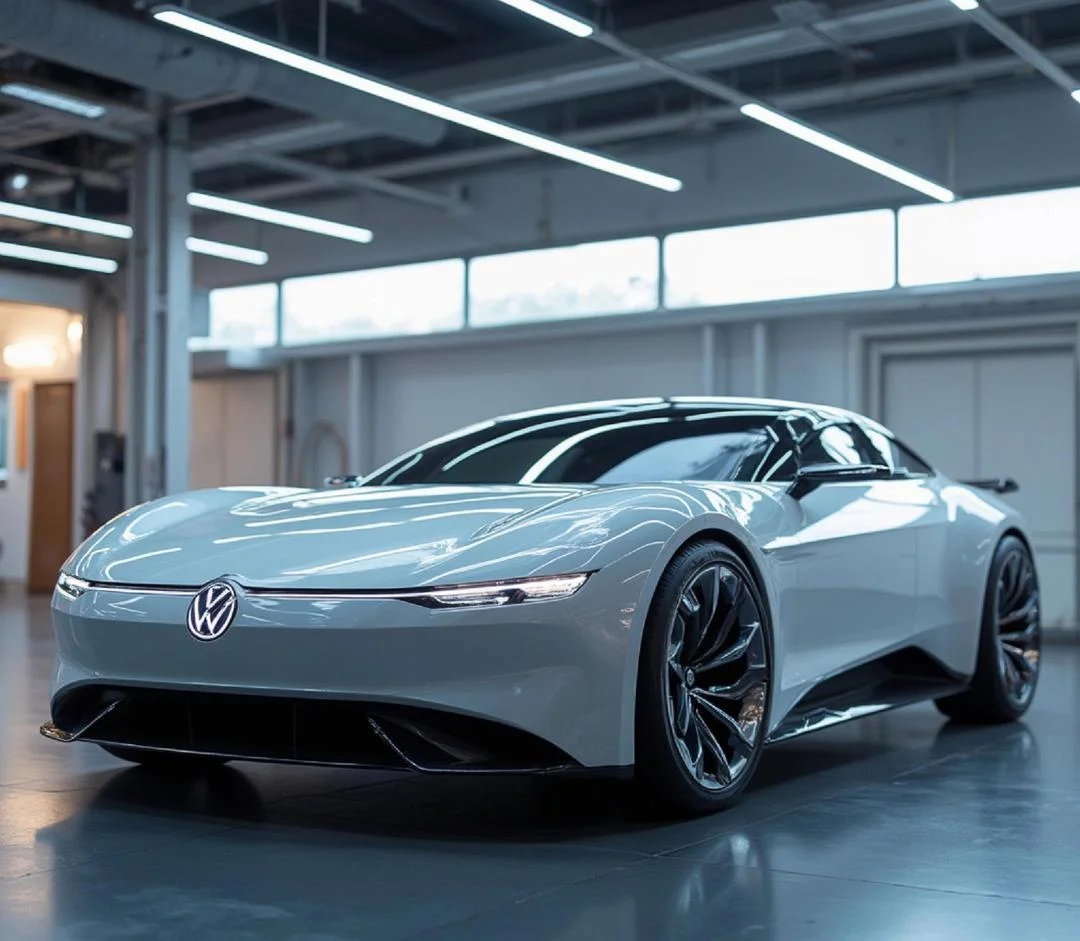
@Lanxi: After reading The Information's report on Volkswagen turning to XPeng to learn how to build cars, it feels like VW is already popping the champagne at halftime...
In early summer in Beijing, Volkswagen executives were showcasing the brand-new luxury electric vehicle "ID.Unyx与众08", a model with a complex and tongue-twisting name that is the first product launched after VW's joint venture with XPeng.
Volkswagen stated that, in return, XPeng provided a crash course in car manufacturing potentially worth over hundreds of millions of dollars. The curriculum includes how to design and mass-produce an electric vehicle in just 18 months—one-third of the time VW traditionally needed—as well as how to configure off-the-shelf chassis and manage vehicle chips.
Volkswagen paid a massive capital price to enroll in this course, believing the expense would serve as a ticket into the Chinese car-making school: "If you want to watch the game, you can't dodge the ticket."
The interaction between VW and XPeng reflects a microcosm of the global auto industry adapting to a "once-in-a-century transformation." Many analysts do not believe all Western automakers will successfully transition amid the electrification wave, but China, having embraced the new era early, has already become the world's largest automobile exporter.
Taking VW as an example, even by 2019,
Up until 2019, the Chinese market was still VW's foundation, selling 4.2 million vehicles a year and contributing $5 billion in profits, accounting for 39% of its global deliveries. VW was also the best-selling auto brand in China, holding a 19% market share.
Then the good times ended. Last year, VW only sold 2.7 million vehicles in China, with its market share shrinking to 9.7%, falling behind BYD and Geely. In Q1 of this year, there was no improvement either, as sales continued a 15% decline, and the company's stock price plummeted by more than a third.
As Europe's largest automaker, VW is not sitting idly by; it is implementing a massive downsizing plan to lay off 15% of its staff—over 100,000 people—and stepping up efforts to spin off and sell some of its technology subsidiaries.
To turn its business around in China, VW invested $700 million in XPeng, buying a partnership status, with XPeng willing to export technology and grant VW licensing rights.
One result of this is the aforementioned "ID.Unyx与众08", launched in April. So far, its sales have been mediocre, moving just over 2,000 units a month.
The sluggish sales might be because the vehicle's technology is still relatively outdated, unable to compete with Chinese peers who launch new cars almost daily.
However, it's also possible that the influence of the VW name is no longer what it used to be. In the minds of Chinese consumers, VW, GM, and Toyota are all "boomer" brands.
After being guided by XPeng for the past few years, VW can't wait to declare that it has learned how to build cars anew, avoiding the risk of letting XPeng become the brand's added value. "If the core competency of automakers shifts from powertrains to software systems, then VW will be reduced to a hollow brand, because the intellectual property of the technology isn't in its hands."
Therefore, VW executives aren't particularly concerned about the success or failure of the "ID.Unyx与众08". They are already showcasing new electric models built without XPeng's involvement, declaring, "This is our future."
 微信扫一扫打赏
  支付宝扫一扫打赏
Comments (0)