
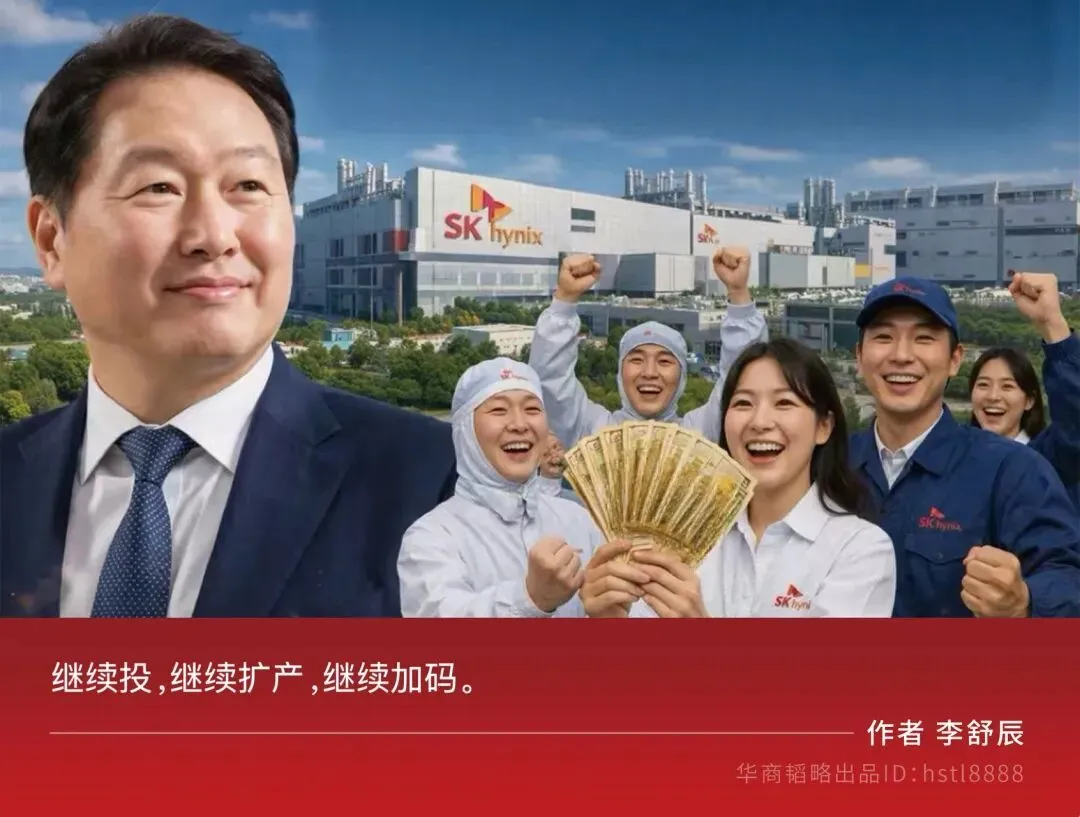
In 2011, Hynix, burdened with over ten trillion Korean won in debt, saw global memory prices slashed in half, becoming a non-performing asset for multiple banks.
All Korean chaebols refused to take it over, considering it a bottomless pit in the semiconductor industry.
Until SK Group Chairman Chey Tae-won decided to buy the company. He said: "I'm not betting on Hynix. I'm betting that—information will become the next oil."
Fifteen years later, those words came true. Hynix's market capitalization is approaching one trillion dollars, and its annual profit is expected to reach 1 trillion RMB.

The reason Hynix was such a hot potato in 2011 has historical roots.
The 1997 Asian financial crisis prompted the South Korean government to promote industrial consolidation, meaning major chaebols swapped non-core businesses, leaving only one or two global champions in each industry.
In the DRAM field (computer memory sticks and mobile RAM fall under this category), besides Samsung retaining its DRAM business, Hyundai Electronics and LG Semiconductor merged into Hynix, owned by the Hyundai Group.
The merger was completed in 1999, but when the dot-com bubble burst in 2000, DRAM prices plummeted by 75%. Hynix not only suffered severe losses but also inherited the debts of the two pre-merger companies. Coupled with acquisition loans, its total debt exceeded 15 trillion Korean won.
At this time, the Hyundai Group was also embroiled in a succession struggle, and Hynix was spun off as a burden, taken over by multiple banks through debt-to-equity swaps.
Between 2002 and 2007, Hynix turned a profit several times, but just as it recovered, it hit the down cycle of the semiconductor industry, and in 2008, the financial crisis struck.
During this period, the banks wanted to sell it, but as South Korea's third-largest export enterprise, no one could easily take on Hynix. The major chaebols either found the valuation too high or feared the semiconductor cycle. This dragged on for a full ten years.
Until 2011, when SK Group, whose main businesses were petrochemicals and telecommunications, decided to step in.
There was constant opposition within the group. The reason was that Hynix burned too much cash, and Samsung was already the overwhelmingly dominant global leader, making it hard to catch up, let alone the fact that the DRAM cycle was currently in a downturn.
Chey Tae-won decided to take the gamble. However, he negotiated terms with the banks, insisting on injecting capital through a new share issuance, meaning most of the money would flow directly into the company's account rather than to the creditor banks. Since SK was the only buyer willing to sign, the creditor banks had to accept. In fact, the shares the banks retained later surged dozens of times in value.
On February 14, 2012, Valentine's Day, SK acquired a 21.05% stake in Hynix.
On the night of the signing, Chey Tae-won said: "I'm not betting on Hynix. I'm betting that—information will become the next oil." At the time, this sounded like a castle in the air. Facebook had just IPO'd, Apple had only released the iPhone 4S, and cloud computing was still being debated as a potential bubble. But if information truly became the next oil, it would inevitably require massive storage media to carry it.
The summer after the signing, Chey Tae-won moved into Hynix's headquarters and conducted one-on-one interviews with a hundred core employees, each lasting one to two hours. He only asked three questions: What are you doing? What's wrong with this company? If it were up to you, what would you want to do?
An engineer who participated in the interviews later recalled: "That was the first time I felt that this company might actually survive."
During the decade under the management of creditor banks, Hynix's capital expenditure was strictly controlled; after all, a bank's instinct is prudence, not venture capital, so multiple chip fabrication plant expansion projects were shelved. After Chey Tae-won took over, he announced an investment of 46 trillion Korean won over the next decade to build three new chip plants.
Two weeks after the signing, on February 27, 2012, Japan's Elpida filed for bankruptcy protection. This was the last Japanese manufacturer in the DRAM industry and the world's third-largest DRAM maker. Its collapse caused global DRAM supply to contract, and prices rebounded accordingly. SK Hynix turned a profit that very year.
Chey Tae-won later admitted: "If Elpida had collapsed two years later, Hynix's cash flow might not have lasted until then. I won the bet, but a large part of it was luck."

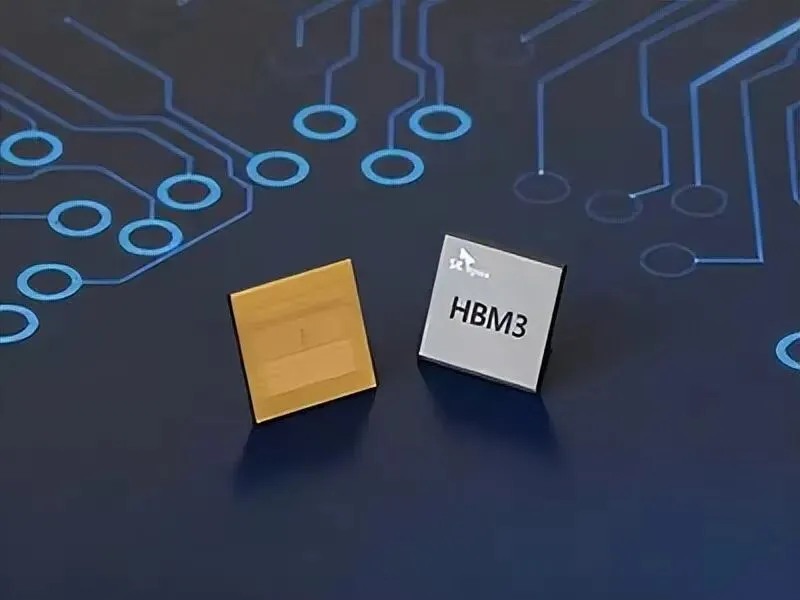
In December 2013, SK Hynix released the world's first High Bandwidth Memory (HBM) chip.
Traditional DRAM chips are laid flat on the motherboard one by one, so data has to travel a long way. HBM, on the other hand, vertically stacks multiple DRAM chips into a single pile, shortening the data transmission distance and drastically increasing the number of channels, thereby boosting bandwidth by an order of magnitude.
This technology actually originated from a project started inside AMD in 2007. When looking for partners, Samsung disdained such a small business, and Micron lacked the technical reserves; only Hynix was willing to cooperate. The two parties officially partnered in 2010.
In December 2013, Hynix completed HBM development. In June 2015, AMD's Radeon R9 Fury X became the world's first GPU equipped with HBM.
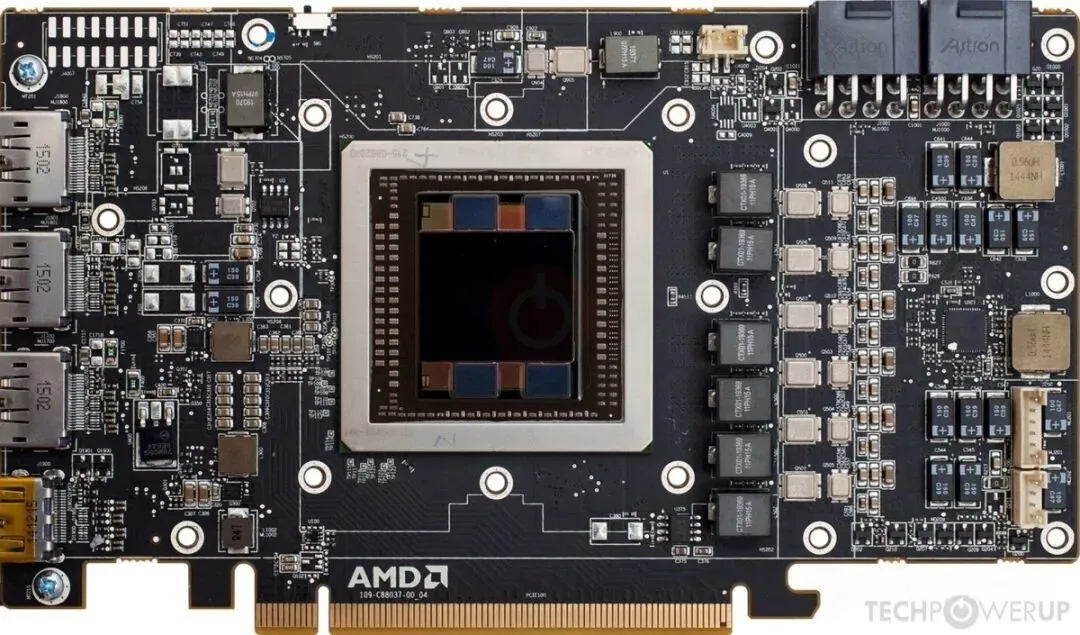
▲ Image source: Semiconductor Industry Watch
However, at this time, Chey Tae-won was in prison. In January 2013, he was prosecuted by Korean prosecutors for embezzlement and sentenced to four years, until he was pardoned by Park Geun-hye in August 2015. While in prison, he instructed SK Group to fully support Hynix's continued investment in HBM, and the first thing he did after his release was not return to SK headquarters for a press conference, but head straight to the Hynix factory for a discussion with the HBM R&D team.
In January 2016, Samsung suddenly announced it would skip the first generation and mass-produce HBM2 ahead of schedule. Its architecture remained unchanged; it simply used engineering resources to brute-force the results, doubling the speed, stacking layers, and capacity.
Three months later, in April 2016, Nvidia released its first GPU optimized specifically for AI computing—the Tesla P100—using Samsung's HBM2.
When Jensen Huang announced the partnership with Samsung, a Hynix employee later recalled: "At that moment, I felt like what we spent seven years inventing was snatched away by Samsung in just one year."
Over the next two years, AMD's and Intel's next-generation GPUs all switched to Samsung's HBM2, and none of this had anything to do with Hynix, the creator of HBM.
HBM sales weren't even enough to cover the R&D investment, and the issue of "whether to continue making HBM" was put on the SK board meeting agenda. The reasons for opposition were ample; after all, global annual demand for HBM was less than 1% of total DRAM volume, and putting the same R&D resources into mobile DRAM or server DRAM would yield immediate returns.
Chey Tae-won's reason for continuing was almost a gamble: HBM was the future direction of high-performance computing, and AI would rise (even if no one knew when).
Meanwhile, Hynix internally advanced a packaging technology called MR-MUF in secret.
HBM stacks over a dozen DRAM chips, which creates heat dissipation problems, causing yields to drop sharply. MR-MUF technology first solders all the chips together, then fills the gaps with a liquid epoxy resin that has extremely high thermal conductivity. This not only improves heat dissipation but also reduces process steps.
Globally, only Japan's NAMICS could stably supply this liquid epoxy resin, and Hynix quietly signed a long-term exclusive supply agreement with NAMICS.
No one cared about this at the time. But five years later, when the whole world needed HBM, MR-MUF proved to be the packaging solution with the highest yield, and NAMICS's epoxy resin became the critical ammunition in the HBM war. Samsung would find that when they wanted to switch to MR-MUF, the material supply was already locked down.

In 2018, DRAM reached a cyclical peak, and Hynix's total net profit exceeded 15 trillion Korean won, though the HBM division was still losing money.
In 2019, DRAM prices plummeted, and the company's total profit cliff-dived from 15 trillion to 2 trillion won, putting immense pressure on the HBM division.
But Samsung delivered a godsend—they disbanded their dedicated HBM business group. At that time, AI was still far from taking off, the global annual market size for HBM was about 1.5 billion dollars, less than 2% of the total DRAM pie. From a financial statement perspective, HBM was simply a loss-making unit.
Hynix, however, chose to keep betting on HBM.
In August 2019, Hynix took the lead in releasing HBM2E (a performance-enhanced version of HBM2, with about 80% higher bandwidth and double the capacity). This was the first time it regained the technical lead after having its HBM2 share snatched by Samsung; Samsung caught up half a year later. From then on, Hynix led Samsung by half a year to a year in the mass production timeline of every HBM generation.
In 2020, the company began heavily investing in the new MR-MUF packaging technology, which later became key to the mass production of HBM3 and HBM3E.
The HBM team expanded from a few hundred to over a thousand people, and Chey Tae-won personally approved multiple R&D budget increases. Financially, these investments were wrong; after all, HBM's individual revenue remained under 5% of the company's total revenue.
In the fall of 2022, Silicon Valley tech stocks were slashed in half from their early-year peaks, and AI was widely regarded as just another concept hyped up by capital markets.
By winter, DRAM prices plummeted again. Korean financial media extensively reported: "Semiconductor winter arrives, Hynix on alert," "DRAM prices halved, top three manufacturers cut production," "AI bubble bursting? High-bandwidth memory demand remains weak."
Although Hynix's market cap at this time was about 60 trillion Korean won, already several times higher than when Chey Tae-won took over, it was far from an explosion.
On November 30, 2022, OpenAI released ChatGPT. That day, SK Hynix's stock price showed no abnormality, until a month later, when Nvidia started to rise. The market sniffed something out.
In late January 2023, ChatGPT's monthly active users broke 100 million. Then Nvidia started placing frantic HBM3 orders with Hynix. At that point in time, HBM3 was not a better choice; it was the only choice.
ChatGPT's large language model required 350 GB just to store the model weights (far exceeding any single GPU's memory capacity), and the total memory requirement during actual operation was 3–5 times that of the weights. Only the H100 could meet this demand, and each H100 required six to eight HBM3 stacks.
Thus, the HBM3 demand curve went from flat ground straight to a 90-degree vertical ascent.
At that time, Samsung's HBM team had been disbanded in 2019, and Micron's HBM3 wouldn't have samples until the following year. Hynix was the only company in the world capable of mass-producing HBM3 stably.
The DRAM industry as a whole was still in a loss-making cycle then, but Hynix's profit from HBM alone was enough to pull the entire company from loss into profitability.
Samsung restarted its HBM team, but progress was slow because they were blocked by the MR-MUF packaging technology secretly polished by Hynix's HBM team and the exclusively supplied NAMICS materials. In May 2024, Reuters exclusively reported: Samsung's HBM3 and HBM3E failed Nvidia's certification due to heat and power consumption issues. This meant Samsung would be completely locked out of Nvidia's supply chain for the first two years of the AI golden era.
It wasn't until September 2025 that Samsung passed the 12-layer HBM3E certification after 18 months of repeated attempts.
In April 2024, Jensen Huang asked if HBM4 could be delivered six months early. Chey Tae-won nodded.
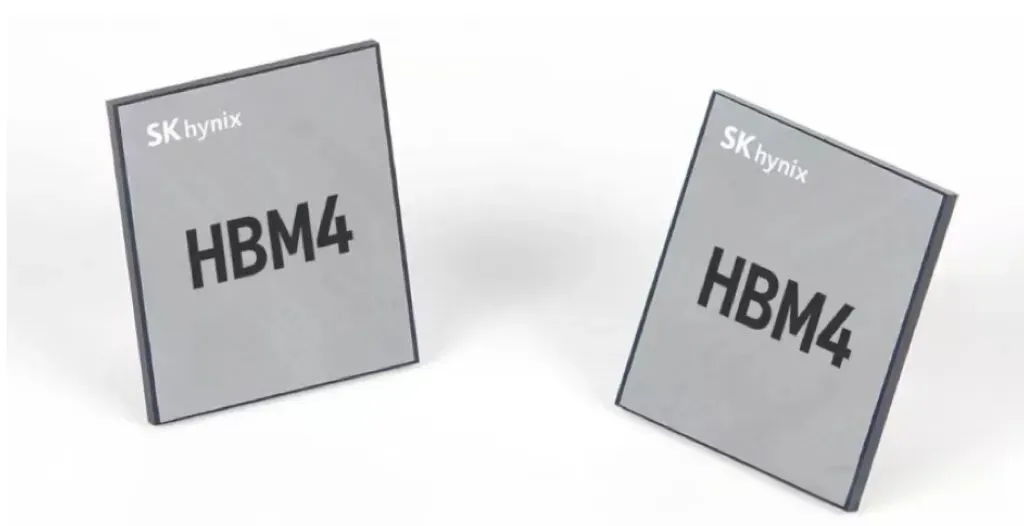
In the first quarter of 2025, Hynix's global HBM market share was about 70%. For the full year 2025, its operating profit was 47.21 trillion Korean won, surpassing Samsung Electronics' entire group total of 43.53 trillion Korean won for the first time. It's worth noting that Samsung Electronics is a diversified giant making phones, TVs, home appliances, panels, and foundry services, while Hynix only does memory.
As time entered 2026, everything became even crazier: Hynix is expected to earn an annual profit exceeding 1 trillion RMB, and its market capitalization is now approaching the colossal sum of 1 trillion dollars. From a market cap of 13 trillion Korean won to nearly 1 trillion dollars, an approximately 90-fold increase, Hynix took 14 years.
In January 2026, Chey Tae-won published a new book, *Super Momentum*. The most quoted line from the book is: "SK Hynix needs to be ten times bigger than it is now." This implies surpassing the current combined market capitalizations of Apple, Nvidia, and Microsoft.
This sounds like madness. But fourteen years ago, his decision to buy Hynix sounded like madness too.
Now, new opponents are gradually taking their seats at the HBM card table. And his response remains unchanged. Keep investing, keep expanding production, keep raising the stakes.
In March 2026, at the SAP Center in San Jose, the GTC keynote concluded. Reporters surrounded Chey Tae-won, asking for his views on the future. He smiled and said:
"We're just getting started."
 微信扫一扫打赏
  支付宝扫一扫打赏
Comments (0)