
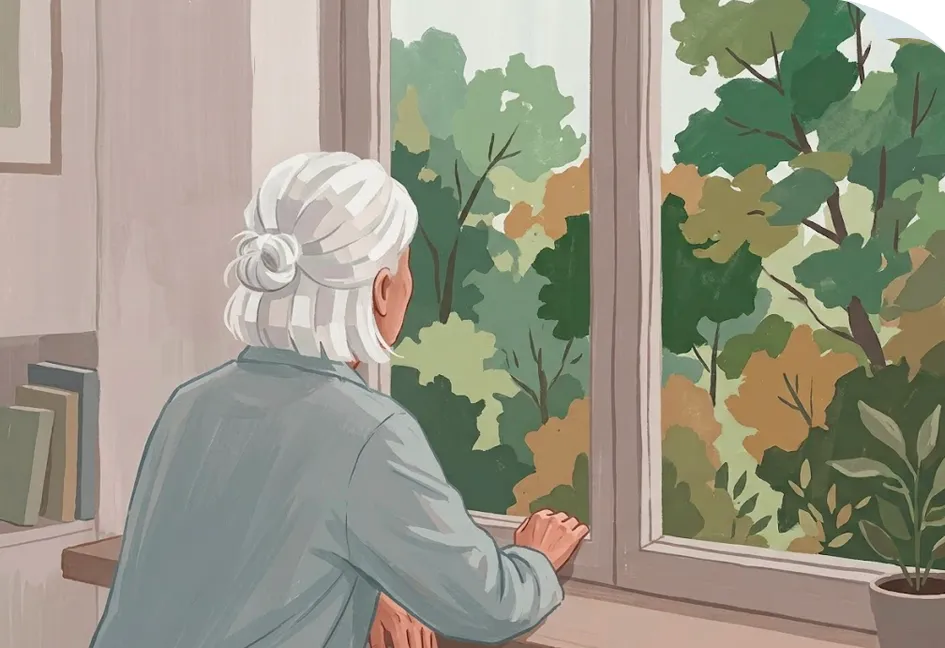
In contemporary urban life, renting an apartment is like a rigorous interview. At least, that's how it feels for Li Shuhua. She is 70 years old. This means that in this market, she is highly likely to be a tenant eliminated from the very beginning.
The first hurdle in this "interview" is the real estate agent. Clutching her freshly printed medical examination report, Li Shuhua asked the agent cautiously, "The landlord won't think I'm too old and refuse to rent to me, right?" The agent gave a professional smile, "Auntie, let's give it a try"—this was actually a decent start. Usually, agents will outright reject tenants the moment they hear their age.
The most crucial "interviewer" is the landlord. "She is indeed a bit old." After hearing the agent's introduction, the landlord, Ms. Wu, seemed dissatisfied. Li Shuhua quickly handed over her medical report. Ms. Wu flipped through it, scrutinizing them like defective goods, "Auntie, you have cardiovascular and cerebrovascular diseases, and your husband has a bad heart. Renting the house to you carries risks."
"Those are just common geriatric diseases, they won't be a problem," Li Shuhua explained with an apologetic smile.
The landlord eventually agreed to rent it out, but with harsh conditions: for the small two-bedroom apartment originally priced at 1,600 yuan per month, the rent was raised to 1,800 yuan in the first quarter, and would increase by 100 yuan every subsequent quarter, capped at 2,500 yuan. Normal tenants only needed to pay 1,600 yuan per month with no increases during the lease. Li Shuhua and her husband quickly agreed. They had been through too many "interviews" before and were rejected every time.
"It's not coldness; it's the landlord's calculation of risk," Li Zeyu explained. He has worked as a real estate agent in this city for 11 years and has seen countless similar "interviews." The criteria for passing include age, pets, physical condition, and even an unborn fetus in the womb. Elderly people like Li Shuhua, along with pregnant women and the sick, sit at the very bottom of the chain of contempt—in 2025, someone claimed they "tried to rent a house for their 65-year-old mother and elderly grandmother, and were rejected 20 times in 3 days."
At the top of the chain are young people with stable incomes, good health, no bad habits, single or newly married without pets, and no immediate plans to have children.

70 Years Old: The Original Sin of Renting
"Under normal circumstances, tenants aged 60 to 70 have to pay extra to the landlord; those over 70 must be accompanied by their children; and for those over 80, it's absolutely impossible." During the interview, Li Zeyu's phone kept ringing. After answering a call, he seized the moment to explain this industry's unspoken rule, which he knows all too well.
Behind this unspoken rule, countless people like Li Shuhua are being shut out. Data from the Ministry of Civil Affairs shows that by the end of 2023, the number of elderly people aged 60 and above living alone in China had exceeded 120 million. Fang Yan, a deputy to the National People's Congress and supervisor of the Shaanxi Lawyers Association, mentioned in an interview with *Southern Weekly* that in 2025, she led the Rights and Interests Protection Department of the All-China Women's Federation and the Elderly Rights Protection Committee of the All-China Lawyers Association to conduct a joint special survey on "the protection of elderly tenants' housing rental rights." The survey data showed that 48.9% of elderly tenants had experienced rejection while renting, with "being too old" being the primary factor, accounting for 67.02%.
Li Shuhua never imagined she would have nowhere to go simply because she was "too old."
She lived in a village on the outskirts of the city for most of her life. After the demolition compensation plan was finalized, she thought she would be able to move into a well-equipped resettlement community with high-rise buildings as shown in the blueprints. But the community was never built. First, there were issues with land acquisition, then the construction teams changed several times, and later the funding chain broke. After three years of construction, there were still only a few half-finished buildings on the site.
With a transitional allowance of less than 2,000 yuan, and not wanting to burden her son, Li Shuhua and her husband decided to rent on their own.
"How old are you?" the agent asked right off the bat.
"Almost 70."
"That probably won't work. Generally, landlords are unwilling to rent to anyone over 60."
Li Shuhua stood stunned at the door. In the village, being older meant being respected; wherever she went, people would call her "Auntie" or "Granny." How did it become an original sin when it came to renting?
The subsequent interviews were even harsher. One landlord agreed to meet, so Li Shuhua and her husband cleaned up and arrived half an hour early. The landlord looked them up and down, asked, "How old are you?" and then picked up their phone, pretended to take a call, and left; others outright refused, "Afraid something might happen." After five consecutive failed interviews, Li Shuhua realized that landlords weren't afraid of the elderly; they were afraid of them dying in the house. If something happened, it would bring bad luck, not to mention cause the property value to drop.

48.9% of elderly tenants have experienced rejection while renting.
"There's an old Chinese saying: 'Don't host a 70-year-old overnight, don't invite an 80-year-old to dinner.'" Li Zeyu explained the landlords' logic to me. He heard from a colleague about a elderly person in their 70s who fell in a rental apartment and wasn't found until discovered until three days later. When firefighters broke down the door, the old person could no longer speak. They were eventually saved, but the apartment was constantly gossiped about by the neighbors. There was also an elderly person living alone who forgot to turn off the gas, causing the entire building's residents to be evacuated in the middle of the night. Since then, the landlord has never been able to rent that apartment out again. More realistically, if an elderly person suddenly passes away, the smell in the room is hard to get rid of. The house will never fetch a good price again, or might not be rented out at all.
He opened the listing system on his phone to show me. In the remarks section, some landlords used euphemisms like "suitable for young families"; others were blunt, "No one over 60"; and some attached conditions: if there are elderly tenants, their children must guarantee and sign a liability waiver, and the deposit is doubled.
Ms. Wu, whom Li Shuhua eventually encountered, was one of the few willing to sit down and negotiate. But she proposed that tiered rent increase contract, with the reasoning, "With your health, the risk is too great. Charging a bit more counts as risk compensation."
Li Shuhua didn't understand terms like "risk compensation." She only knew that her blood pressure was well under control, she took her medicine on time every day, and she had never had a sudden episode. Her husband's heart condition was an old issue, but he could move around freely and had no trouble grocery shopping and cooking.
But in the landlord's eyes, their age itself was the "risk."
When they terminated the lease for this reluctantly rented apartment two years later, it was still somewhat humiliating. By then, her son had rented a larger place and decided to have his parents live with him. As the old couple was packing up to move, the landlord refused to return the 1,600 yuan deposit, citing "the house has an elderly smell and will be hard to rent out again."
Li Shuhua stood in the room where she had lived for nearly two years, sniffing repeatedly and looking around. The walls were white, the floor was clean, the windows were open, and the wind was blowing in; there was no smell at all. She wanted to ask the landlord, what exactly is the "elderly smell"? Is it the smell of medicine? The smell of old clothes? Or is it simply because she is old, and her very existence has become a pungent odor? But she held back and didn't ask.
The agent's mediation was unsuccessful, and the landlord remained adamant. As she was leaving, Li Shuhua said, "We've never cheated anyone or owed anyone money our whole lives. To reach old age and not even be able to get our deposit back—it's just too undignified."
On the day they moved out, she didn't look back. On the way, she passed that unfinished resettlement building again. She thought that when the resettlement apartments were finally built, she would plant a few pots of fragrant flowers on the balcony. By then, surely no one would ask her how old she was, and no one would say her house smelled.
Elderly People Living Alone
From Li Zeyu's perspective, wealth and education are probably the least important factors in the rental interview. Even with a high pension, savings, and social status, as long as you are old enough, you might not meet the rental criteria.
This is the case for 83-year-old Chen Jingzhi.
Before retiring, Chen Jingzhi was a university professor with a senior professional title. She has a monthly pension of over 10,000 yuan, owns a fully paid-off property, and has enough savings to rent an apartment in any neighborhood for 10 years. She has no children, has lived alone her entire life, and is physically robust. In terms of financial status, she should clearly be a "premium client," but the moment Chen Jingzhi stated her age, her resume was tossed straight into the wastebasket.

The elderly who need elevators the most often find it hardest to rent apartments with elevators.
She just wanted to rent an apartment with an elevator.
After living in the university's staff housing for nearly 30 years, Chen Jingzhi found that her knees could no longer handle climbing five flights of stairs every day. When she was young, climbing up and down several times a day didn't feel tiring; in her 60s, she started getting out of breath; in her 70s, she needed to rest on the way; and after turning 80, every trip up and down became incredibly difficult. One evening in June 2025, she was climbing to the fourth floor with her cane when her body suddenly tilted backward. In the few seconds she clung desperately to the handrail, a terrifying thought crossed her mind: If I fall here, who will know?
She asked her niece to help contact real estate agents. The first agent said they would "ask around," but never got back to her. The second was more direct, "It's hard to rent at this age; how about looking at a nursing home instead?" The third spent five minutes understanding her requirements for floor level, orientation, and so on, but upon hearing that Chen Jingzhi was in her 80s, fell silent for three or four seconds, and then said sorry.
Just like that, her niece contacted seven or eight agencies, but they couldn't rent a single apartment.
"Dealing with an elderly tenant takes as much effort as doing three normal deals," Li Zeyu admitted that he also doesn't like taking on elderly tenants. He did the math: normal tenants can sign after viewing an apartment once or twice, but elderly people require repeated communication, signing various liability waivers, and even coordinating medical checkups. In addition, many elderly people have high demands for apartment facilities—handrails must be sturdy, floors can't be slippery, water heater temperatures must be constant; there are also more later repairs and disputes, requiring the agent to invest a lot of after-sales effort. "The commission is about the same, but the risk is higher. Which do you think I'd choose?"
What he fears even more is accidents. He heard about an agent who rented an apartment to a 75-year-old. The elderly person died of a sudden cerebral hemorrhage in the middle of the night. The children caused a scene at the agency, demanding compensation and hanging banners at the door. In the end, the agent paid tens of thousands to settle it. For an agent, the commission for facilitating a rental transaction is only a few hundred to a thousand yuan. But if an accident occurs, the compensation could be dozens of times the commission.
"Do you think it's worth it?" Li Zeyu asked me in return.
He said that not all landlords are unwilling to rent to the elderly; many are willing as long as the elderly person is not disabled or suffering from a major illness. But those landlords' apartments are mostly in old neighborhoods without elevators. This creates a paradox—the elderly who need elevators the most often find it hardest to rent apartments with elevators.
In the end, Chen Jingzhi had to have her niece rent a two-bedroom apartment on her behalf, concealing the fact that an elderly person would be living alone.
The day she moved into the 17th-floor apartment with an elevator, Chen Jingzhi breathed a long sigh of relief. But new problems arose even faster. This finely renovated apartment was not suitable for the elderly at all. The bathroom was paved with smooth tiles that became like an ice rink when wet. She had to put a plastic stool in the shower to sit and wash slowly. There were no handrails next to the toilet, so she had to push against her knees every time she stood up. The corridor was empty, with nothing to grab onto; when going to the bathroom in the middle of the night, she could only shuffle along, holding onto the wall.
She asked her niece to negotiate with the landlord, hoping to install some basic age-friendly facilities—anti-slip flooring in the bathroom, assistive handrails next to the toilet, and a folding chair in the shower area. She offered to pay for it herself.
The landlord flatly refused, "No unauthorized modifications. What's the point of installing those things? They don't look good anyway. The contract clearly states that the apartment must be restored to its original condition upon lease termination. If you want to install them, fine, but when you move out, you must remove them completely. If there are holes in the wall, you'll pay compensation based on the damage."
Chen Jingzhi didn't push it any further. She placed a plastic stool in the bathroom, laid an old towel on the floor, and stuck a few suction-cup handrails next to the toilet—the kind specially designed for the elderly that don't require drilling, but aren't very stable either. She also installed a camera in the living room, connected to her niece's phone. Every morning when she woke up, she would say "I'm up" to the camera. If she hadn't spoken by 9 a.m., something might have happened.
"I've lived my whole life, taught my whole life, and in the end, I need a machine to watch over me," Chen Jingzhi said with some helplessness. This was not the dignity she wanted.
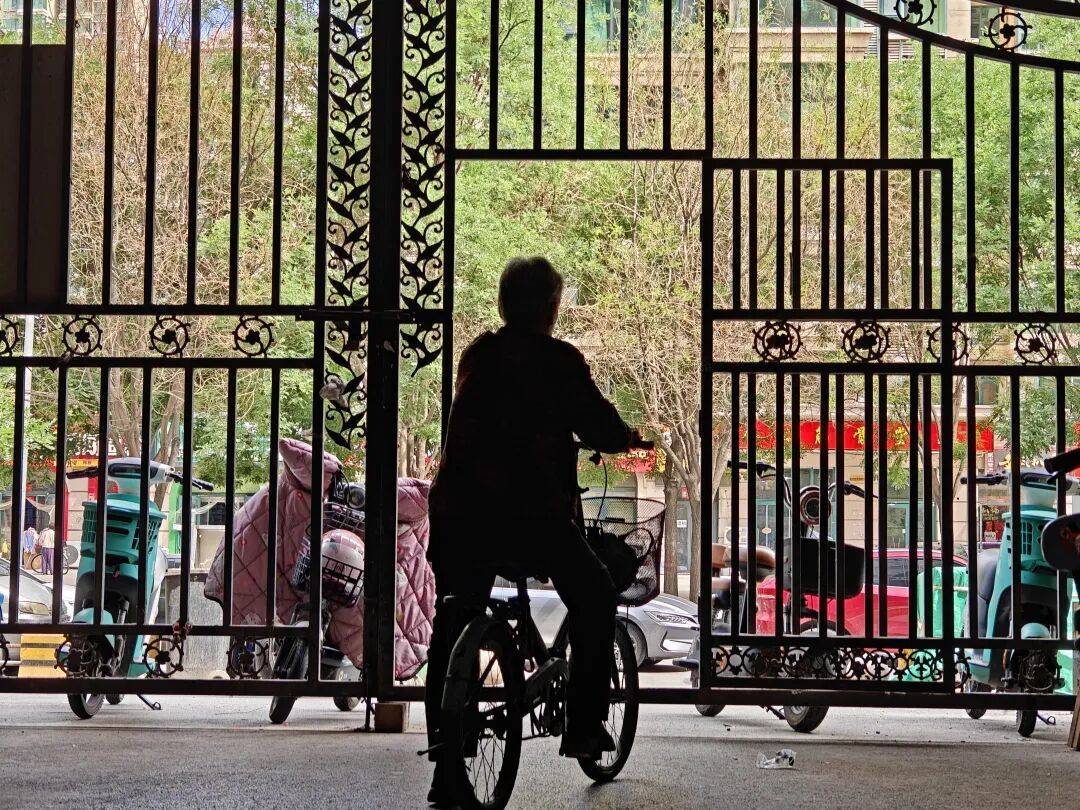
Li Zeyu believes that landlords' reluctance to rent to the elderly is mostly a matter of risk calculation.
Li Zeyu has seen many elderly people like this. There are retired teachers, veterans, elderly people from the countryside moving in with their children, and empty-nesters living alone after their spouses passed away. Most of them do have children, but their children have their own difficulties—the house is too small, they're too busy with work, they live out of town, or the children themselves are also renting.
"Emotionally and legally, we certainly shouldn't discriminate against the elderly. I mean, those elderly people living alone, with no children or whose children aren't around—we can't just let them sleep on the streets, can we?" But Li Zeyu feels this issue can't rely on landlords' sympathy. "There need to be policies. For example, government subsidies or insurance. If something happens, the landlord shouldn't have to pay too much. Otherwise, why would a landlord rent to you?"
6 "Fur Babies", Moved Four Times in Two Years
If the elderly are rejected because of "risk," then the majority of this generation of young people fail the interview because they bring along unauthorized "family members."
These "family members" are pets.
24-year-old Liu Chang is a big tech company employee, part-time employee, part of the demographic most favored by landlords at the top of the chain: young, high-income, and with a regular lifestyle. But because of her six "fur babies," she quickly plummeted to the bottom. In just two years, she was forced to move four times.
The *2025 Pet Fashion Trends White Paper* analysis suggests that the penetration rate of pet-owning households in China has exceeded 30%, indicating that the industry has gradually transitioned from a "cultivation period" to a "universalization stage." According to an earlier report by the investment bank Goldman Sachs, the total number of pets in China in 2024 exceeded the number of infants under four years old for the first time, and it is projected that by 2030, the number of pets may reach twice the number of infants. For many young people, pets are their only family in their solitary lives.
But in the rental interview, landlords do not value this emotional bond. Xiao Long, the agent helping Liu Chang find an apartment, put it bluntly: nine out of ten landlords mind tenants keeping pets, especially cats and dogs that shed, make noise, and easily scratch up furniture.
Liu Chang lost her first rental interview because she was too "honest."
At the time, she proactively told the landlord that she had a pet—a stray orange cat she had adopted during her junior year of college, which she had secretly kept in her dorm. After graduation, when she got a job at a major internet company, she took the orange cat out of the campus with her. But the moment the landlord heard the words "keeping pets," they immediately shook their head. She approached several landlords, and they all had the same attitude.
"The house will get scratched up, it will smell, and it will affect future rentals"—this was their uniform reason.
To keep her fur babies, Liu Chang had to change her strategy and conceal the fact that she had pets. With the mindset of "let's just move in first and deal with it later," she anxiously moved into her new home with the orange cat and a newly adopted stray dog.
The trouble came unexpectedly.
Before leaving for work one day, Liu Chang hastily locked the dog in the kitchen. Home alone and scared, the dog barked incessantly; the sharp barks penetrated the door, causing neighbor complaints. After multiple unsuccessful complaints, the neighbor directly contacted the landlord. The landlord came to verify and found that Liu Chang had hidden the fact that she had a pet, immediately demanding to terminate the lease.
Despite Liu Chang's repeated apologies, the landlord was resolute, deducting the full deposit and giving her a deadline to move out.

The rental market seems equally unfriendly to pet owners.
The second time, Liu Chang again concealed the situation and rented an apartment. This time, her squad had grown—besides the previous cat and dog, she had adopted three more cats and another dog, giving her a total of six fur babies at home.
To avoid complaints, Liu Chang paid extra attention to daily management: cleaning up feces regularly every day and opening windows for ventilation. However, the combined odor of multiple pets still permeated the hallway, triggering neighbor dissatisfaction and complaints.
After the landlord found out, they demanded Liu Chang move out, citing "damage to the property and affecting neighborly relations." This time, not only did they deduct the 1,500 yuan deposit, but they also demanded 2,000 yuan in compensation to repair the curtains and leather sofa scratched by the pets, as well as to cover house cleaning costs.
"Those people all think that having pets means being unhygienic and irresponsible," Liu Chang felt wronged.
Forced to move again, she once again fell into a physically and mentally exhausted predicament because of her pets.
On an ordinary evening, she was walking her dog downstairs as usual. When they reached the first-floor lobby, the dog suddenly started barking loudly at an elderly person passing by. The sudden barking startled the elderly person, who slipped and fell to the ground. This accident cost Liu Chang several thousand yuan in medical expenses and led to her being kicked out by her landlord for the third time. Once again, not a penny of the deposit was refunded.
Three moves, three deposits deducted, and one accident compensation. During her apartment search, Liu Chang became afraid to look landlords in the eye, afraid to proactively mention her pets, and even when agents introduced listings, she had to repeatedly confirm "whether the landlord minds pets."
Eventually, she found her current residence, an old, run-down apartment in an aging complex. The apartment is simply renovated and has outdated facilities, but the landlord is remarkably, the landlord is accommodating: there are no special requirements for keeping pets, only that it be cleaned up upon moving out.
The day she moved into this apartment, Liu Chang felt a long-lost sense of stability. Even though the place isn't fancy, she finally no longer has to hide here and there with her fur babies.
According to agents, on this rental chain of contempt, young people with pets are ranked even "lower" than the elderly. As the number of pet owners increases, this clearly creates a mismatch between supply and demand: young people view pets as emotional companions, while landlords want to preserve their asset value and refuse any wear and tear.
Before taking clients to view apartments, agents must confirm with the landlord in advance whether they accept pets—generally speaking, landlords in older neighborhoods are more tolerant, while the more exquisitely renovated and newer the building, the lower the landlord's acceptance of pets. This contradiction often escalates into tenants secretly keeping pets and landlords conducting surprise inspections, ultimately resulting in a lose-lose situation.
To break the deadlock, in May 2026, a rental platform piloted "pet-friendly apartments" in Chengdu, introducing a pet commitment letter and pet liability insurance in an attempt to alleviate landlords' concerns through institutional guarantees. However, such pilot programs are still in the minority. Finding a landlord who doesn't mind pets is not that easy.
"Accept Death, But Not Birth"
When Li Zeyu told me that pregnant women are also at the bottom of the rental chain of contempt, I was somewhat surprised.
The rejection of the elderly and pets by landlords is heavily discussed on social media, and the reasons are mostly straightforward: the former carries the risk of death, and the latter the risk of property damage. But why would pregnant women, who are bringing new life, also be eliminated in this "interview"?
"Pregnant women cannot give birth in the landlord's house," Li Zeyu explained; this is an unspoken taboo in the rental market.
28-year-old Huang Jing has experienced this deeply.
She and her husband put down roots in the city after graduating from college, earning ordinary salaries and living a carefully budgeted life. With no property and no savings, they had been renting for years. In 2025, the couple finally saved up a small sum—still not enough to buy a house, but they decided it was time to have a child. They found a nice three-bedroom, two-living-room apartment for 3,000 yuan a month.
The initial interview went smoothly. The landlord was very satisfied with this young, working couple and immediately decided to rent the house to them. During the Spring Festival of 2026, Huang Jing got pregnant and shared the joy on her WeChat Moments. It was this post that prompted the landlord's inquiry, "Are you pregnant?"
Huang Jing thought she would receive their blessings. But the landlord immediately stated that they would no longer rent the house to them, though the deposit could be refunded.
Upon repeated questioning, the landlord revealed the underlying obsession—there is a local old custom of "accepting death, but not birth." In this belief, an outsider giving birth or doing postpartum confinement in one's house will seize the quota for the landlord's own descendants and hinder their family from adding new members; conversely, if someone passes away in the house, it will "replenish" the household and bring prosperity to the family.
A lease agreement crumbled in the face of feudal superstition.
Huang Jing, who had just entered her pregnancy and needed stable rest, was forced to continue looking for a place. She rushed from one agency to another, and the answer was always "no problem." But once the landlord learned she was pregnant, the interview would abruptly end. From residential compounds to apartment buildings, the reasons for rejection were identical—no legal basis, no respect for contracts, just the claim that "it's a rule passed down from the older generation."
Eventually, Huang Jing found an owner who lived abroad year-round and didn't care about these taboos, finally securing a place to stay.
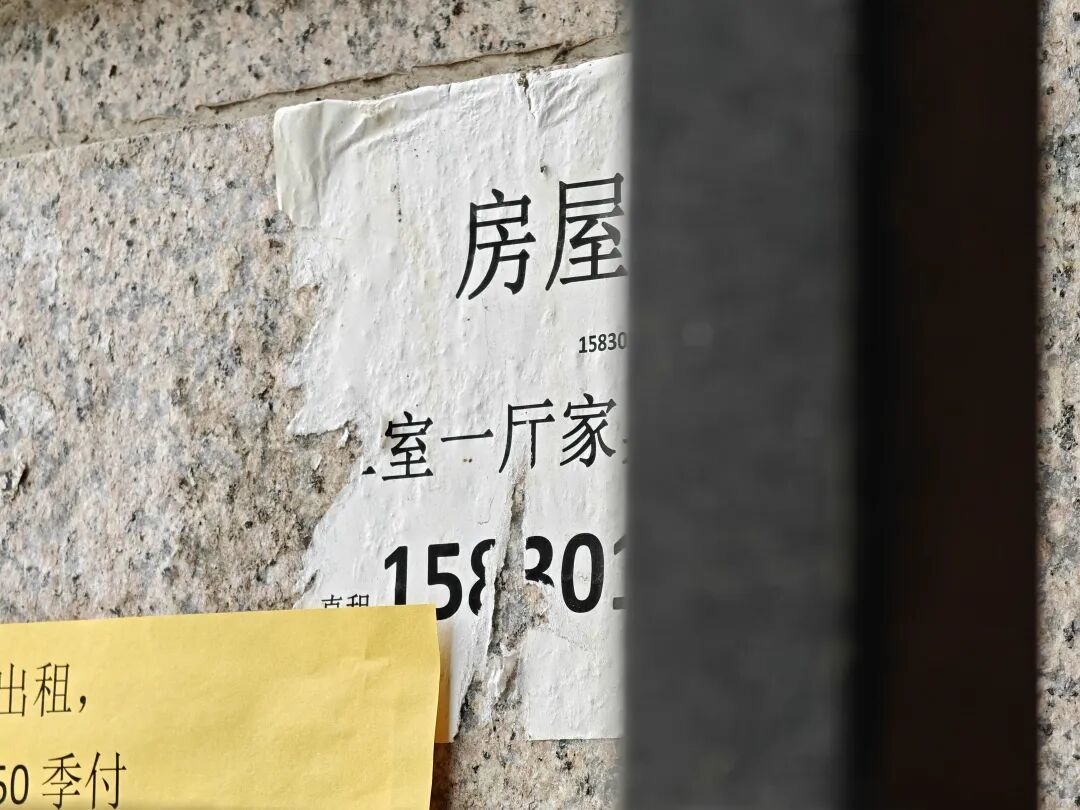
Like the elderly and pet owners, pregnant women are also at the bottom of this chain of contempt.
Li Zeyu said that many landlords are unwilling to rent to pregnant women, superficially claiming it's about feng shui, but fundamentally they are afraid of trouble.
The most realistic concern is the potential legal risk.
"A colleague once took a pregnant woman to view an apartment, and everything was settled. But when the landlord heard the due date was next month, they backed out." Li Zeyu remembered that the landlord's point at the time wasn't that they were unreasonable, but rather they worried: if the pregnant woman accidentally slipped in the apartment, leading to premature birth or massive hemorrhage, who would be responsible? A woman about to give birth, in their eyes, is a ticking time bomb that could go off at any moment.
Then there are the potential neighbor disputes. Li Zeyu said a colleague of his handled an old apartment with very poor soundproofing that was rented to a couple who had just had a baby. As a result, the downstairs neighbor called to complain every midnight, saying the baby's crying was giving the whole family nervous breakdowns. In the end, the landlord was forced to compensate the neighbor with two months' property management fees and pay out of pocket to terminate the lease with the tenants.
In Li Zeyu's view, the conflicts caused by this group are much harder to resolve than those involving "pets"—with pets, you can sign agreements, buy insurance, or even install gates, "but the potential legal risks of pregnant women and the crying of infants are uncontrollable factors."
If what Huang Jing encountered was "fertility discrimination," then what Zhang Liang faced was even more blatant "health discrimination."
Zhang Liang is 48 years old. He and his wife have been working in the city for many years, renting a suburban resettlement apartment where they lived for four years. He paid rent on time, took good care of the property, and got along well with the landlord. Until April 2025.
At that time, Zhang Liang was diagnosed with colorectal cancer, and the massive treatment costs instantly drained their savings. To alleviate the pressure, Zhang Liang's wife asked the landlord for a half-month delay in paying rent. She truthfully informed him of her husband's severe illness, hoping to gain his sympathy, but it became the trigger for their eviction.
The landlord initially agreed to the delay. But half a month later, he went back on his word and demanded they move out. The reason was simple and cruel: "It's bad luck." In some landlords' minds, a seriously ill patient brings bad omens to the house, affects the so-called "feng shui," and even lowers the rental value of the property.
Homeless, Zhang Liang didn't dare to move far from the hospital. He could only keep an eye on the small advertisements posted around the hospital, looking for "patient rooms" specifically rented to the sick. Eventually, they found a 50-square-meter, elevator-less, poorly maintained old apartment in the area. For the convenience of seeking medical treatment, even though the monthly rent was still over 3,000 yuan, they had no other choice.
Landlords' "Love and Fear"
After interviewing numerous tenants and agents, I found that in this massive rental interview, landlords always occupy a dominant position. They hold the power of life and death over whether a tenant can find a place to settle, and thus are often portrayed in the narrative as cold, unsympathetic "villains."
But looking at social media, landlords also seem to be the vulnerable party at times—they complain about "exquisitely renovated apartments being destroyed," about tenants defaulting on rent, skipping out on utility bills, secretly converting the house into a group rental, or even using it for illegal operations. Behind those seemingly harsh and unreasonable interviews often stands a landlord who has been "h has been "hurt" and is now traumatized.
Landlord Zhang Hua told me that his apartment is what people call a "stigmatized property." He took me to his doorstep but was reluctant to go in himself.
The door was open, and the inside was piled with cardboard boxes and old furniture. The air had a stuffy smell, a mix of dust and old fabrics. He wasn't sure if that was what people called the "elderly smell." He only knew that ever since the previous elderly tenant passed away, this one-bedroom apartment could no longer be rented out.
58-year-old Zhang Hua is a resettled resident whose family was allocated four apartments. He lives in one, saved one for his son, and rents out the remaining two. In the past, he had no prejudice against elderly tenants, "I'm almost 60 myself, how could I dislike someone for being old?"
Before the Spring Festival in 2025, he rented this apartment to a 67-year-old man living alone. The man was brought by an agent; he had gray hair but was in good spirits, spoke clearly, and had no trouble walking. He said he was retired, his children all lived out of town, and he just wanted a quiet place to live.
Zhang Hua didn't think much of it, collected the deposit, and signed the contract.
After a few uneventful months, one afternoon, the property management called.
"Did you rent your apartment to an old man? Come open the door right now."
When Zhang Hua rushed over and opened the door, he found the tenant lying in the bathroom, unconscious. Although he still had a heartbeat and was breathing at the time, the elderly man passed away on the way to the hospital in the ambulance.
"He actually didn't pass away in my apartment," Zhang Hua tried to explain, but it was to no avail. Since then, this apartment became known as a stigmatized property among the neighbors, and even agents stopped promoting it. Now, the apartment has become a storage room. He simply dumped all the unused old furniture and leftover renovation materials inside. When the door is closed, out of sight, out of mind.
He can't sell it, doesn't want to live in it, and doesn't dare to rent it out again.
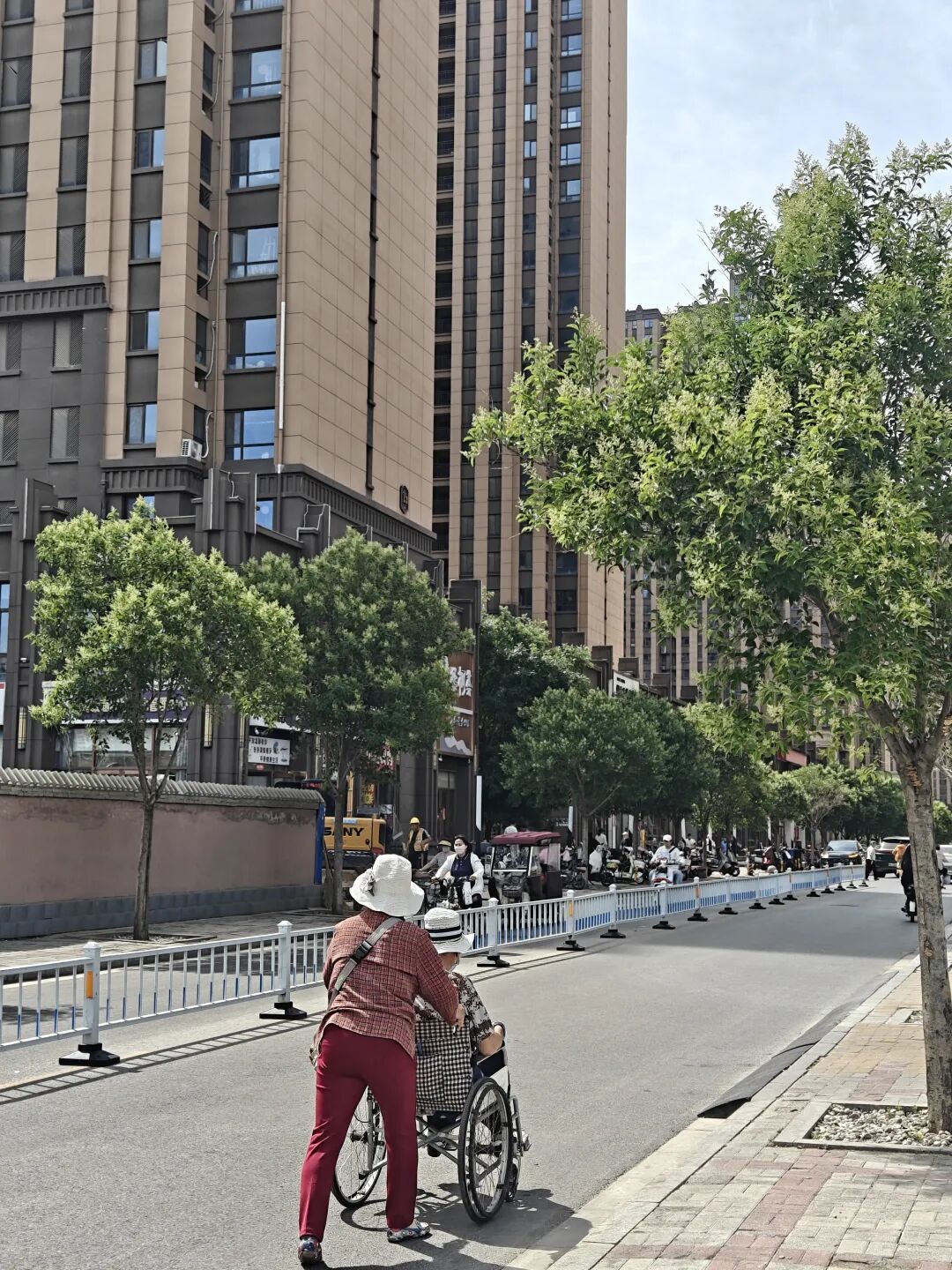
Seemingly unreasonable landlords often have a past of being "hurt."
Li Xiujin is also one of the landlords who has been "hurt." Normally, she lives in Beijing to help take care of her grandson, while her house in her hometown of Shandong has been continuously rented out. Since the previous tenant moved out, the house has been vacant for four months.
The previous tenants were a couple in their 70s from out of town. When signing the contract, Li Xiujin didn't hesitate at all; "putting herself in their shoes," she felt it wasn't easy for the elderly to rent. The first two months were indeed peaceful. Then, the property management bombarded her phone with calls: first, complaints about the hallway being piled with cardboard boxes, and then about a building-wide cockroach inspection.
In the north, cockroaches are a rare sight. When the property management inspected door-to-door, all clues pointed to Li Xiujin's ground-floor apartment with a yard.
When property management knocked, an old lady opened the door. The room was dim, and an indescribable smell hit them. The staff wanted to look inside, and after a moment of hesitation, the old lady stepped aside to let them in.
"Horrifying." When the property management later described the scene inside to Li Xiujin, they used these four words.
The 90-square-meter, two-bedroom, two-living-room apartment had every available space in the living room, bedrooms, and kitchen piled high with cardboard boxes, plastic bottles, old clothes, newspapers, and packaging bags. The only space left to set foot was a narrow path barely wide enough for one person to pass sideways. The two elderly people even kept three chickens in a cage in a corner of the living room, filling the room with the smell of chicken droppings.
Hearing the property management's description, Li Xiujin's hands shook with anger. She immediately ordered the tenants to move out and clear the house. The two elderly people worked for several days before finally clearing out the clutter. Li Xiujin then hired a pest control company to treat the place repeatedly before getting rid of the cockroaches. Now, an ironclad rule has been added to her interview criteria: "No elderly, no matter how much money they offer." She said she has no ill intent and doesn't want to discriminate against anyone; she's just scared.
Landlord Wang Ying's defenses, on the other hand, were breached because of pets. She once rented a fully furnished, exquisitely renovated apartment to a young girl with a cat. Before signing, the girl vowed that the cat was very well-behaved and wouldn't scratch things. Three months later, when she moved out and Wang Ying took back the apartment, she found the leather sofa covered in scratch marks, the curtains torn open, and urine stains in the corners.
She spent 3,000 yuan repairing the sofa, 800 yuan replacing the curtains, and 1,000 yuan on odor removal. "The deposit was 2,500, and I had to chip in over 2,000 more," Wang Ying said. Since then, she has refused all pet-owning tenants because she "can't afford the losses."
As the interview was wrapping up, Li Zeyu's phone rang again.
On the other end was a man, "I want to rent an apartment; it would be best if it has an elevator."
Li Zeyu held his phone and habitually asked about age first. He repeats this routine dozens of times a day, and the reasons for rejection are always the same: too old, has pets, pregnant, or sick.
"Almost 70," the other party replied.
"Sorry, landlords still prefer to rent to young people," Li Zeyu said quickly and hung up the phone.
(To protect privacy, all names in the article are pseudonyms)
Operations / Huang Xinyue Proofreading / Li Baofang Art Design / Uncle Mary
 微信扫一扫打赏
  支付宝扫一扫打赏
Comments (0)