
Tell you a horror story: there's only 1 month left until the World Cup.
Following the usual script, by this time, major social platforms, elevator ads, and building screens should already be flooded with all kinds of World Cup commercials, and supermarkets should have started crazy promotions for beer and crayfish.
But this year, it feels unusually quiet, even a bit weird. There's barely any promotion, not even a ripple.
Actually, the core reason for this bizarre situation is that, to this day, our country still hasn't secured the broadcasting rights for this World Cup.
The current negotiation deadlock boils down to two words: too expensive.
According to various online sources, FIFA's initial asking price for the 2026 World Cup broadcasting rights to CCTV was as high as $250 million to $300 million USD, roughly 1.8 billion to 2.16 billion RMB. After several rounds of negotiation, they are still asking for $120 million to $150 million USD.
Many netizens are up in arms over this. Some feel that FIFA should be paying us to help them promote it for free.
Some netizens feel this quote is just treating us like suckers to be slaughtered.
Others think, what's there to watch anyway, since the Chinese team isn't in it.
Another netizen joked that we have to thank the national team for giving CCTV the backbone to say no.
Of course, some netizens are worried: if the broadcasting rights can't be secured this time, how are fans supposed to watch the games?
Is this price really that expensive? Let's do the math.
In a vertical comparison, for the 2010 and 2014 World Cups, China paid a combined package price of $115 million. For the 2018 and 2022 tournaments, the price jumped to about $300 million for both, which averages out to about $150 million for the 2022 edition alone.
This means FIFA's initial asking price for a single World Cup this time almost doubled compared to the last one. Only if the negotiated price drops to $120-150 million would it be considered on par with the previous edition.
In a horizontal comparison, broadcasting fees for this World Cup have been rising globally. In the host nation, the US, FIFA sold two packages: English and Spanish broadcasting rights combined for over $900 million.
The UK's BBC and ITV jointly acquired the rights for two World Cups for about $350 million, multiple Japanese platforms jointly purchased the rights for a single edition for about $200 million, and South Korea's JTBC secured a single edition for about $125 million, etc.
Although the price might not seem particularly outrageous when viewed this way, everyone feels that China is neither a sports powerhouse, nor a participating team, nor a developed country.
As a result, being priced into the same Tier 1 category as the US and UK feels a bit like being hit with an exclusive premium.
The reason FIFA dares to ask for such sky-high prices this time is mainly that they have maxed out their own expectations.

First of all, in this World Cup cycle, FIFA has made multiple changes that go against tradition:
For example, expanding the number of teams from 32 to 48, which directly surged the total number of matches from 64 to 104; adding an extra round of 32; and even mandating a 3-minute hydration break at the 22nd minute of each half, which netizens and media have mocked as "four-quarter football" or the "NFL/NBA-fication" of the sport...
On the surface, Infantino says this is "bringing the beauty of football to more people," but in reality, isn't it all just to make money?
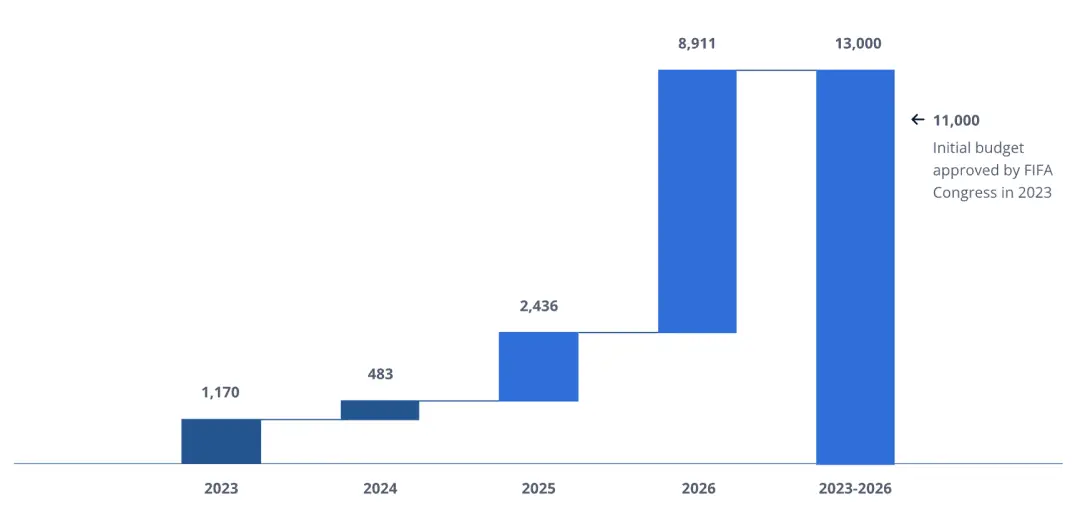
Using excuses like more matches, more opportunities for ad insertions, and increased attention, FIFA plans to make $130-140 billion in this World Cup cycle. To fill this bottomless pit, they've activated full-on vampire mode.
The most直观 manifestation is the massive hike in ticket prices. FIFA adopted a "dynamic pricing mechanism" this year, meaning prices are set based on match popularity, opponent strength, and venue differences. This leads to huge price disparities for matches in the same stage. For instance, a single ticket for the US team's opening match costs as much as thousands of dollars.
The final is even more absurd. The highest ticket price for the 2022 Qatar World Cup final was only $1,600, but this year it's a staggering $11,000. Not only do many ordinary fans complain that they "can't afford to watch," but even Trump couldn't help but rant that it's "too expensive, can't bear to buy it."
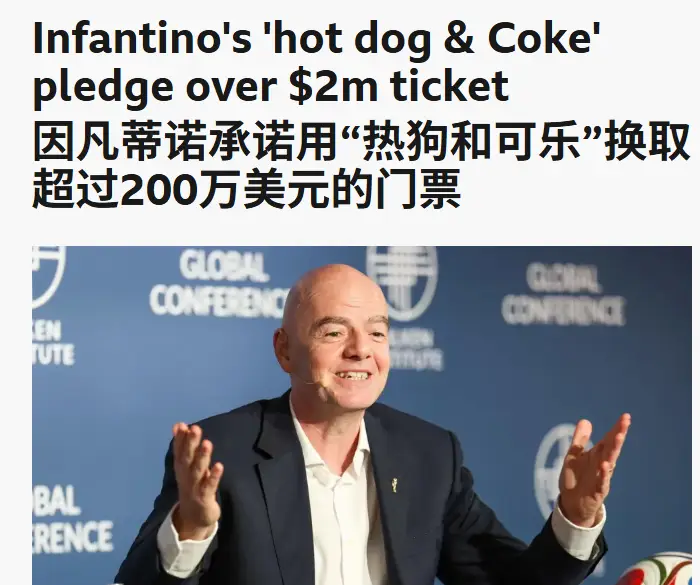
Yet Infantino came out to say that this is because Americans are wealthy and have high entertainment spending power, so they must adapt to their market.
Faced with online scalpers listing tickets for $2 million, the old guy even cheerfully said that if someone actually buys it, he'll personally deliver hot dogs and cola...
Of course, besides selling tickets, FIFA's biggest hope lies in broadcasting revenue, which is expected to be a $4.264 billion piece of the pie.
To meet their KPIs, FIFA executives have fixed their gaze firmly on unsigned strategic markets—especially China.
During the 2022 Qatar World Cup, the viewing time of Chinese audiences on digital and social platforms accounted for 49.8% of the global total.
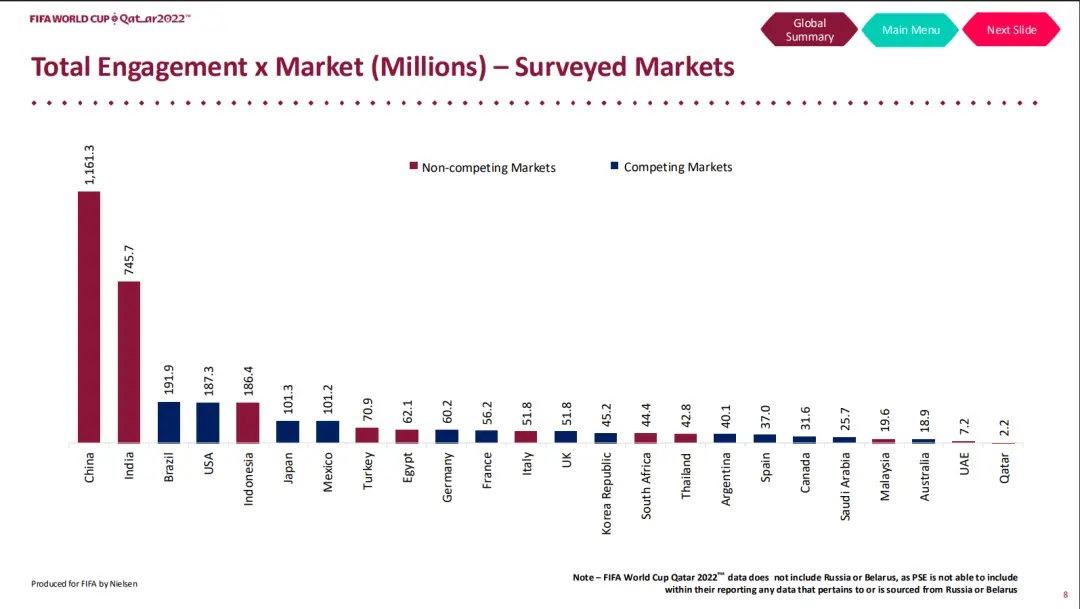
FIFA looked at this data and concluded without a second thought: China has a huge population, money, and loves watching football—it's a perfect "Tier 1 high-price harvesting zone."
Coupled with the fact that in recent years, domestic streaming giants routinely threw hundreds of millions of dollars to snatch exclusive Premier League and NBA rights, establishing a persona of being "rich and foolish."
FIFA probably thought: You spend so much money buying league rights, and this is the World Cup; shouldn't you cough up even more gold?
But they completely failed to realize: folks, times have changed. This World Cup simply isn't as highly sought after domestically as they imagine.

The most fatal flaw is the "unholy schedule" brought by hosting the tournament in North America.
According to statistics, about 70% of the matches are scheduled between 2:00 AM and 9:00 AM Beijing time. In the knockout stages, it gets even more extreme, starting at 1:00 AM or 3:00 AM.
What value can late-night advertising still have?
So, FIFA wants CCTV to pay double the price to buy a time slot where ad rates are discounted—that's not doing business; that's looking for a sucker.
On the other hand, the "false prosperity" brought by the expansion is actually of little significance to us.
Because while the number of matches has increased, human energy is limited. If the hypothetical scenario of the Chinese team qualifying had happened, people might have forced themselves to stay up late or get up early to watch.
But the national team performed steadily and didn't put everyone through the wringer.
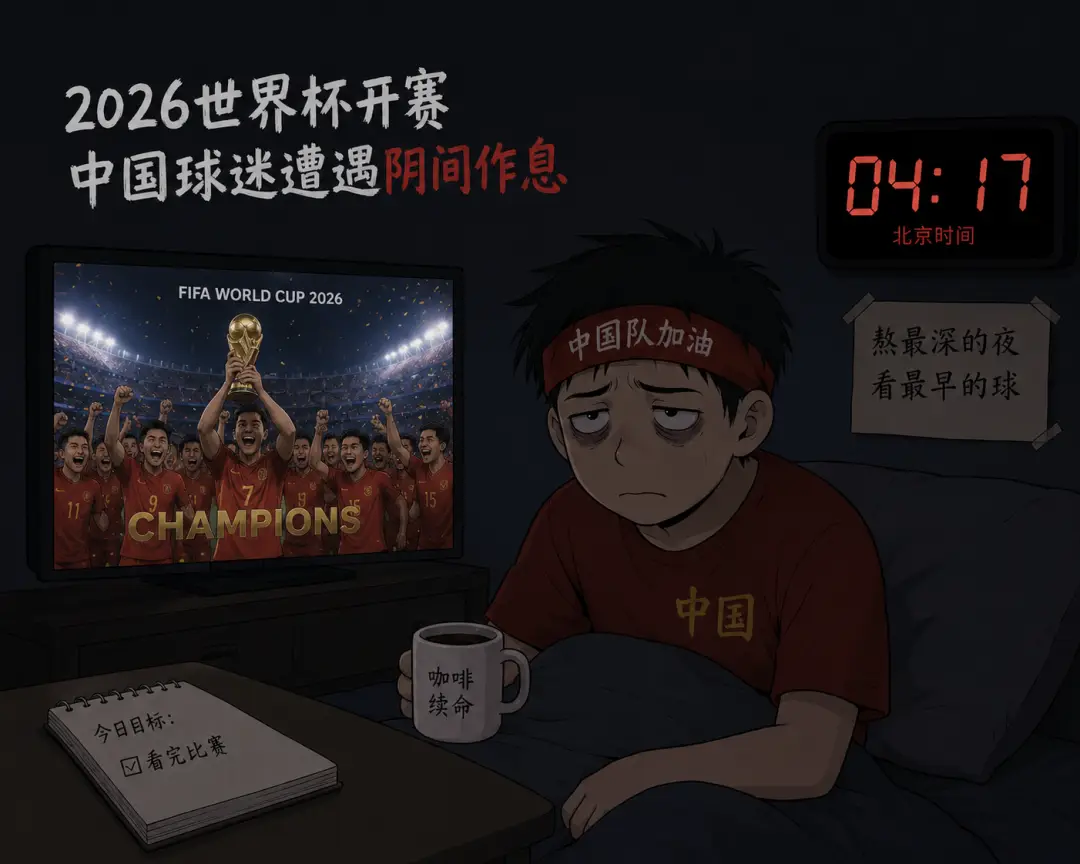
Does FIFA really think Chinese fans will set their alarms to crawl out of bed in the middle of the night to watch Ivory Coast vs. Curaçao, or Panama vs. Ghana?
Besides, young people today no longer have the patience to sit in front of a TV for a full 90-minute tug-of-war.
People are more used to swiping through 30-second World Cup highlights on Douyin, Kuaishou, or Xiaohongshu the next morning, or checking out match memes and reports.
For various broadcasting platforms, spending heavily to buy the full live broadcast package doesn't seem as profitable anymore.
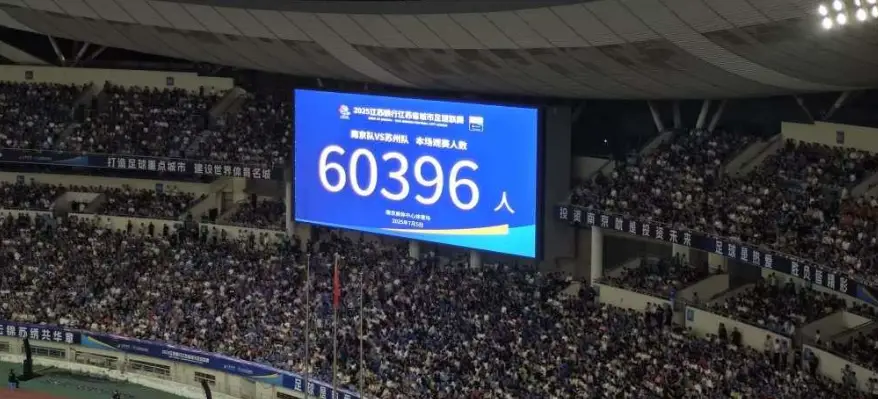
Not to mention, in the past couple of years, grassroots leagues like the "Village Super League" and "Jiangsu Super League" have become hugely popular. People have way too many entertainment options now. A tournament without the Chinese team really isn't a must-watch.
To put it more bluntly, good traffic data doesn't equal real money.
The last Qatar World Cup did make money; the time difference was relatively friendly, and since people were stuck at home due to the pandemic, viewership naturally rose.
Under such rare, perfect conditions, CCTV managed to attract about 5 billion RMB in sponsorships after securing the rights, but profits were still limited after deducting the high costs.
The monetization ability of this World Cup is visibly shrinking. CCTV has strictly controlled its rights acquisition budget between $60 million and $80 million, which can be considered extremely sober and rational.
Of course, netizens shouting "don't buy it" or "make FIFA pay us to watch" are just talking out of frustration.
If they stubbornly hold out and the talks completely collapse, frankly, it's a lose-lose situation.
Think about it: if there really are no official broadcasting rights, despite netizens saying that not buying the rights means everyone gets to watch for free...
But you can't really expect your dad or grandma to search for matches in the middle of the night on shady websites flashing "sexy dealers," can you?
Therefore, as a national public media outlet, CCTV definitely still wants to buy the rights; they just absolutely refuse to be suckers.
Beyond just watching the games, buying the broadcasting rights isn't solely about that. Essentially, it's our "admission ticket" and "voice" in international football.
In recent years, netizens have always felt that the national team is constantly targeted on the Asian stage—whether it's dubious refereeing in crucial matches, unfavorable AFC Champions League schedules, or always drawing the "group of death."
Many media outlets have pointed out that this is the aftermath of a comprehensive decline in sports diplomacy and commercial clout.
Back in the day, we were the AFC's biggest sugar daddy. But later, domestic club sponsors got involved in a mess of rights disputes, contract breaches, and unpaid wages. Coupled with a lack of leadership representation at the top, our status in international football plummeted, which to some extent added insult to injury for Chinese football.
Frankly, many believe that the global football circle is just a world of favors and connections. If you don't put money on the table, have no strength on the pitch, and no one speaking up for you at the table, why should the referee's whistle ever lean your way?
Therefore, amicably securing the rights at a less outrageous price might somewhat help stabilize the shattered external ecosystem of Chinese football.
On the flip side, FIFA is actually more afraid of the talks collapsing than we are. Don't forget, sitting at this card table is also a group of Chinese sponsors jumping with anxiety.
Chinese companies including Wanda, Hisense, Mengniu, and vivo have already poured over $500 million into this World Cup.
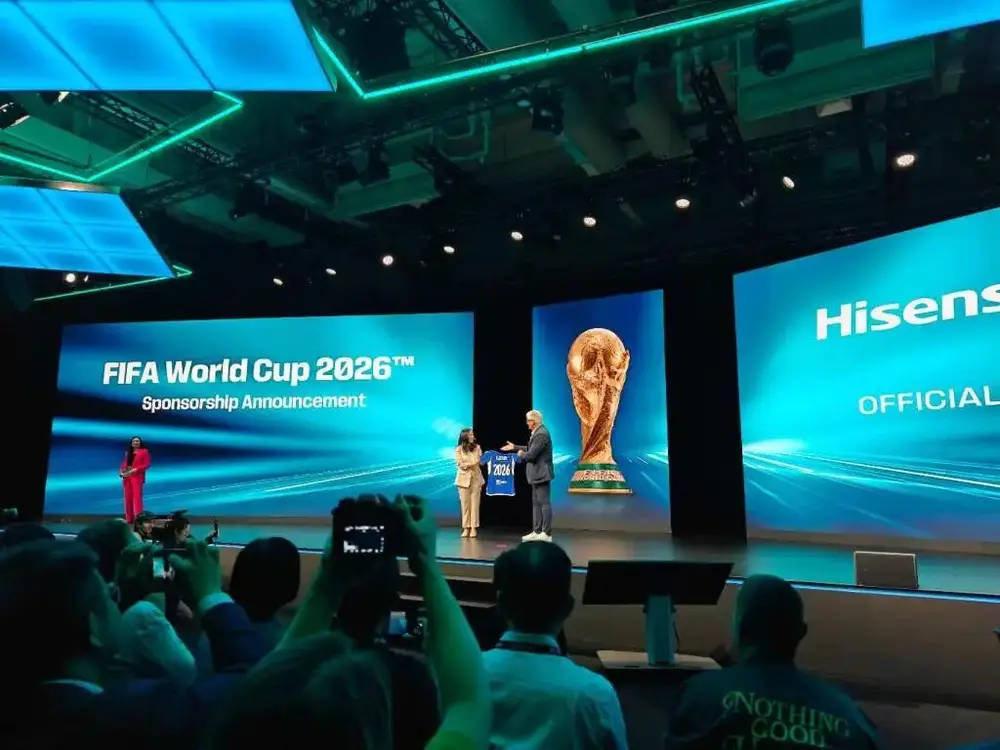
Why are they throwing money around? Isn't it for the overwhelming exposure when the event is broadcast live domestically? If CCTV really flips the table and stops broadcasting, these sugar daddies' hundreds of millions of dollars will go down the drain without even a splash.
If they rip off Chinese companies this badly, is FIFA going to look for sponsors on Mars for the next World Cup?
So, with only a month left until kick-off, this extreme tug-of-war over broadcasting rights is essentially the market teaching FIFA a lesson: it's fine to want to make money, but don't treat everyone like fools.
Source: Chaping XPIN
 微信扫一扫打赏
  支付宝扫一扫打赏
Comments (0)