
Author / Xiao Xuanfeng Caijin
Saizeriya is one of the ultimate models in the restaurant industry, worth learning from for domestic catering.
Saizeriya was founded by a Japanese university student named Yasuhiko Shogaki.
In 1964, he was admitted to Tokyo University of Science, majoring in theoretical physics.
During college, to earn living expenses, he washed dishes at a cafeteria in Shinjuku.
In his senior year, through his father's introduction, he took over a poorly managed Western restaurant in Chiba Prefecture.
The location of this store was on the second floor of a vegetable market. Customers had to walk through the market piled with vegetables and step on greasy stairs to find this small shop hidden in the corner of the second floor. Vegetable baskets were often piled at the stairway entrance, and guests had to step over these obstacles to go upstairs.
The store was only 56 square meters, and the 36 seats were somewhat crowded. Yasuhiko Shogaki borrowed money to buy this store, which became Saizeriya's first outlet.
Before taking over this store, Yasuhiko Shogaki learned cooking skills from an experienced chef.
He believed that as long as good ingredients were used, delicious food could be made.
After opening, Yasuhiko Shogaki was very confident in the raw materials he used, but there were very few customers.
Because at that time, Japanese society had a deep-rooted concept: cheap goods are not good.
In the minds of the Japanese, Western food was synonymous with high-class and expensive. A Western restaurant hidden upstairs in a vegetable market that wasn't expensive made people doubt: if it's so cheap, can it be delicious?
At that time, Japan was in a stage of rapid economic growth. After World War II, the United States provided a lot of aid to Japan, and bread and milk began to appear in school lunches. When this generation grew up, they had a natural affinity for Western food.
But Western food was still out of reach for ordinary people.
Yasuhiko Shogaki could be said to have stepped on the trend of the times, but not entirely accurately. He saw the trend of Western food popularization but underestimated consumers' acceptance of cheap Western food.
To attract customers, Yasuhiko Shogaki tried every means, even extending business hours until four in the morning.
But the effect was minimal. The small shop hidden on the second floor of the market was even more deserted late at night. Extending business hours didn't bring more customers but instead increased utility and labor costs.
Due to the remote location and simple environment, hooligans often came to make trouble. As a physics major student, Yasuhiko Shogaki began to analyze the problem with a science student's mindset.
The Japanese economy was developing rapidly, and people's consumption capacity was improving, but the price of Western food remained stubbornly high, making it unaffordable for ordinary people. Yet his small shop, clearly relatively cheap, had no customers.
Where exactly was the problem? Was the location too bad? Was the food not good? Or was the marketing insufficient?
A store owner cannot just think their own food is delicious; when business is bad, they only blame the customers for being picky or the economy for being poor, instead of facing the real problem.
Yasuhiko Shogaki began to observe the customers. He found that after entering the store, customers looked at the prices first, then the menu. When seeing the prices, many would frown slightly, then hurriedly order the cheapest item, or simply leave.
As a physics student, he was accustomed to speaking with data. He began to calculate: What was the monthly salary of an ordinary office worker? What proportion of their income did a meal account for? How much were people willing to pay for an occasional luxury?
The conclusion: Saizeriya's prices at the time exceeded the public's psychological tolerance threshold; they felt it wasn't worth the price.
After thinking for a few nights, Yasuhiko Shogaki decided to reduce the prices of all dishes by 70%.
He thought, if no one comes after the price cut, then this store is truly hopeless. But if people come after the price cut, even if it doesn't make money, at least he would know where the problem lies.
On the first day of the price cut, Yasuhiko Shogaki waited anxiously in the store.
In the morning, there was no change.
At noon, a few regular customers came, showed surprised expressions at the new prices, but didn't say much. Yasuhiko Shogaki's heart sank little by little.
In the evening, a miracle happened.
First, a few students came, excitedly discussing after seeing the prices, and ordered a full table. Then came nearby office workers, coming in twos and threes. Then more and more people came, and the 36 seats were quickly filled.
A queue started at the door, lining up from the second-floor stairway entrance, all the way to the first-floor market, and then out to the street outside. That night, Saizeriya stayed open until dawn, and the queue never dissipated.
The price cut brought not only an increase in foot traffic but, more importantly, viral word-of-mouth.
In the era before the internet, word-of-mouth relied on passing it from person to person. This kind of spread was viral, with students and mothers being the main force.
Many ordinary families came to the store to eat, parents bringing their children. They might never have been in a Western restaurant in their lives, but now they came, and they ate happily.
Yasuhiko Shogaki summarized a pricing philosophy.
He believed that restaurant prices should refer to the price of the country's best-selling consumables. Back then, his benchmark was weekly magazines and cigarettes priced around 200 yen. The logic was that if customers were willing to spend money on disposable consumables, they would pay a similar amount for a meal.
Price cuts were to gain scale. When the foot traffic is large enough, even if the unit price is low, the total revenue can still go up. More importantly, as scale increases, costs decrease, forming a virtuous cycle.
In the first month after the 70% price cut, Saizeriya's operating revenue increased by 300%.
He began a series of reforms.
He cut all expensive ingredients and complex dishes, focusing on standardized, easily replicable home-style cooking.
He began researching how to reduce costs without affecting taste. To maintain low prices, costs must be controlled from the source.
Just as things were getting on the right track, fate played another joke.
One day, hooligans fought in the store, knocked over the stove, and the store burned down.
That fire was a devastating blow to Yasuhiko Shogaki. The store was destroyed, and years of hard work turned to ashes.
However, without destruction, there is no construction. He began to review Saizeriya's entrepreneurial experience, preparing for a comeback.
With the fire insurance payout from the insurance company, Shogaki decided not to rush into opening a new store, but to travel and study first.
He visited major Western restaurants in Tokyo, observing their dishes.
He became increasingly confused. It seemed every street was copying the same model: French, British, and Japanese-style Western food, all pursuing a sense of high-end luxury.
Until he walked into an inconspicuous little Italian restaurant.
He ordered a tomato pasta. The steaming noodles were served without complex sauce or exquisite plating. But with one bite, the aroma of the ingredients bloomed in the mouth, refreshing and natural.
The owner was an old man who had lived in Italy. The two struck up a conversation.
The old man said: In Italy, no one treats Italian cuisine as high-end cooking; it's just home-style food, something you eat every day. Our food philosophy is simple: use the freshest ingredients, minimal processing, and let the food speak for itself.
He returned home and began looking up information on Italian cuisine. Several discoveries made him feel like he had found treasure.
French cuisine emphasizes a sense of ceremony, suitable for special occasions and showing off, but Italian cuisine—from morning coffee and bread, to lunch pasta and salad, to dinner pizza and risotto—can run through three meals a day, naturally resulting in a high repurchase rate.
Italian cuisine values the original taste of ingredients. The combinations of basic ingredient flavors are ever-changing, but the core logic is simple. This means it is easy to standardize and has relatively low requirements for chefs' skills.
The Mediterranean dietary structure has been scientifically proven to be one of the healthiest dietary patterns in the world. The combination of vegetables, grains, olive oil, and appropriate protein aligns with modern nutrition science.
At that time, there were almost no affordable Italian restaurants in Japan. Italian food was classified as high-end Western cuisine, appearing only in premium commercial districts at prices unreachable for the working class.
He compared the most profitable types of dining in Japan at the time: high-end French, Japanese-style Western, traditional Japanese, and Chinese cuisine.
French cuisine required too much skill from chefs, had complex sauces, and served food slowly, unable to meet table turnover requirements. Moreover, French cuisine was already stereotyped in Japan as high-end food for showing off, making it hard to popularize.
Although Japanese-style Western food was the mainstream, it was already a red ocean. More importantly, Japanese-style Western food was actually a heavily modified product. Fried pork cutlets with rice, cream stews with bread—this mixing was delicious but lacked the health attribute of being edible every day.
Japanese cuisine seemed the safest, but Japanese housewives were all masters of it. Restaurants could hardly beat mom's cooking in terms of home-style feel. Moreover, Japanese cuisine's seasonality was too strong, posing a huge challenge to the supply chain.
Chinese cuisine was considered greasy and heavy-flavored in Japan. It was okay for an occasional meal, but the repurchase rate was poor.
Italian cuisine perfectly avoided all minefields. It had strong health attributes, could be eaten daily without getting tired of it, had simple ingredient processing, and was easy to standardize. It had a premium halo in Japan but was essentially very平民-friendly, with almost no competitors of the same type—a blue ocean.
So he would use Italian cooking concepts to make home-style food that ordinary Japanese people could afford every day.
He did the math:
A high-end Italian restaurant, 5,000 yen per person, serving 50 people a day, revenue of 250,000 yen.
An affordable Italian restaurant, 800 yen per person, serving 500 people a day, revenue of 400,000 yen.
More importantly, the latter was replicable and scalable.
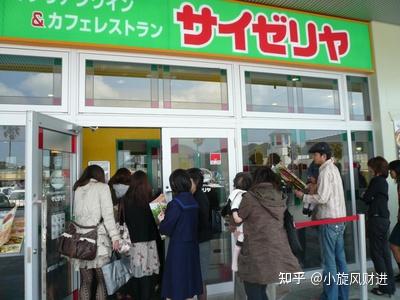
In 1973, on the site of the burned-down store, the new Saizeriya reopened.
The menu was completely changed. The cream stews and hamburger steaks of the past disappeared, replaced by tomato pasta, Margherita pizza, vegetable salad, and Milanese-style fried pork cutlet.
The pricing system was completely restructured. The cheapest pasta was priced at 280 yen, equivalent to the price of a bowl of ramen at the time, and the most expensive dish did not exceed 500 yen.
The decoration was downgraded even further. The previous Western chandeliers and thick carpets were all abandoned, replaced by simple wooden tables and chairs and bright lighting. Waiters no longer wore suits and bow ties but changed into lightweight aprons.
In the first month, business was lukewarm. Old customers were somewhat confused, and new customers were still watching.
But three months later, something magical happened.
At noon, nearby office workers came for working meals; in the evening, families brought children for dinner; on weekends, students would do their homework here, ordering a drink and sitting for an afternoon.
The repurchase rate was extremely high. Some customers came four times a week. The customer base spanned largely, from students to the elderly, with a balanced gender ratio.
The ordering pattern changed. Previously, customers would order a main course; now they ordered a pasta, a salad, and a snack, so the average spending per person actually increased.
An old lady living nearby came almost every afternoon, ordered a coffee, and sat for two hours. When Shogaki asked her why, the old lady said: It's very comfortable here. The food is delicious and not expensive. It feels just like being at home.
He accidentally created a brand-new category: the Italian family restaurant.
To reduce costs, Saizeriya decided to operate its own farms.
Avocados oxidize and turn black as soon as they are cut; this is an industry problem. Saizeriya's solution was to intervene at the farm stage. They developed a special harvesting timing algorithm to detect the dry matter content of the flesh, and only those meeting specific standards were picked. After picking, they were treated with patented technology to delay oxidation from the source.
In Saizeriya's back kitchen, you cannot find a kitchen knife because all ingredients have been standardized and cut in the central kitchen before entering the store. The longest cooking time for any dish does not exceed 8 minutes because all cooking steps are completed in the central kitchen; the stores only do heating and assembly.
Saizeriya excels at utilizing the Earth's time zone and seasonal differences.
In the outskirts of Melbourne, Australia, Saizeriya has a 1.3 million square meter factory that produces white sauce, hamburgers, and beef.
When it is winter in the Northern Hemisphere, it is summer in Australia, allowing for uninterrupted year-round production. Australian livestock farming costs are 40% lower than in Japan. Saizeriya owns its pastures, controlling the entire chain from feed to slaughter. It has 12 fixed global routes; on the 1st and 15th of every month, Australian beef is shipped to Japan.
Traditional dining believes the store is the core.
But Saizeriya believes the store is just the last link, a food heating and assembly station.
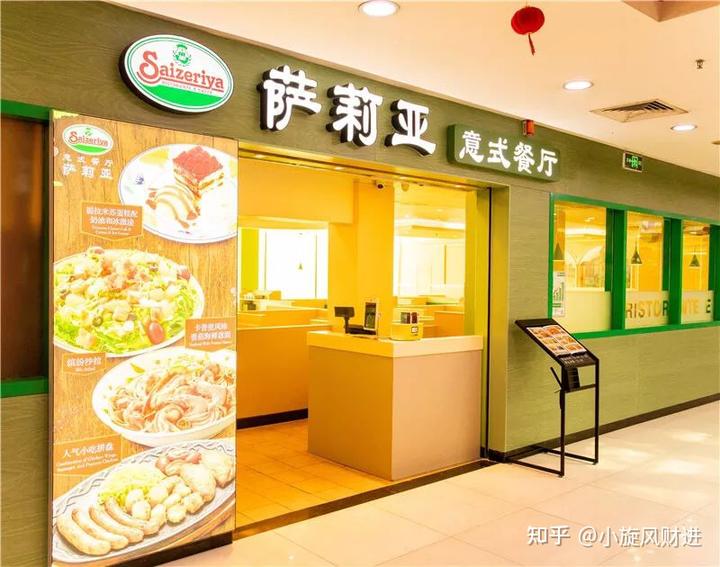
Saizeriya has a secret formula for location selection: first-class commercial districts in tier-1 cities, but third-class positions.
For example, in a first-class commercial district in Shanghai, the corner of the B1 floor in Xujiahui Mall.
Saizeriya's rent cost only accounts for 13% of revenue, while the industry average is 20% to 25%.
Why dare to choose poor locations?
Because Saizeriya doesn't need to rely on storefronts to attract foot traffic. Its foot traffic comes from repurchases and word-of-mouth. Customers will actively find that hard-to-find location.
Saizeriya's pursuit of efficiency has reached an insane level.
The biggest cost in the catering industry is labor. Saizeriya cracked this problem with revenue per labor hour.
Revenue per labor hour equals total revenue divided by total labor hours, looking at how much value each person generates per hour.
Every operation is broken down to the second. Based on historical data, foot traffic is predicted in 15-minute intervals. The shortest path from the back kitchen to the front hall and the optimal route for tableware recycling are calculated; even the angle at which waiters turn around has been studied.
Saizeriya's labor efficiency is 1.8 times the industry average. What others do with 10 people, Saizeriya can do with 6.
Yasuhiko Shogaki has a background in theoretical physics; he looks at a system: how ingredients go from the land to the table, how information feeds back from the store to the farm.
In this system, every link is not independent. The R&D at the farm affects the efficiency of the central kitchen, and the feedback from the stores affects the planting on the farm.
While ordinary restaurants are still competing on taste and marketing, Saizeriya is competing on the supply chain, the edible rate of ingredients, and the unit output of labor. It is not a competition on the same dimension, just like cold weapons against firearms.
Using engineering thinking, Saizeriya disassembles and optimizes every link of dining, relentlessly fighting costs. It doesn't pursue huge profits. Founder Yasuhiko Shogaki's philosophy is to make customers happy first, then make money, and only make a small profit. It makes pre-made dishes transparent and feeds the saved costs back to consumers.
It brings Western food from a class-tinted consumption back to what a meal should be. There's no need to agonize over prices when ordering, families can eat happily, hosts don't feel pressured to treat, and it gives customers a dignity of not being price-humiliated.
 微信扫一扫打赏
  支付宝扫一扫打赏
Comments (0)