
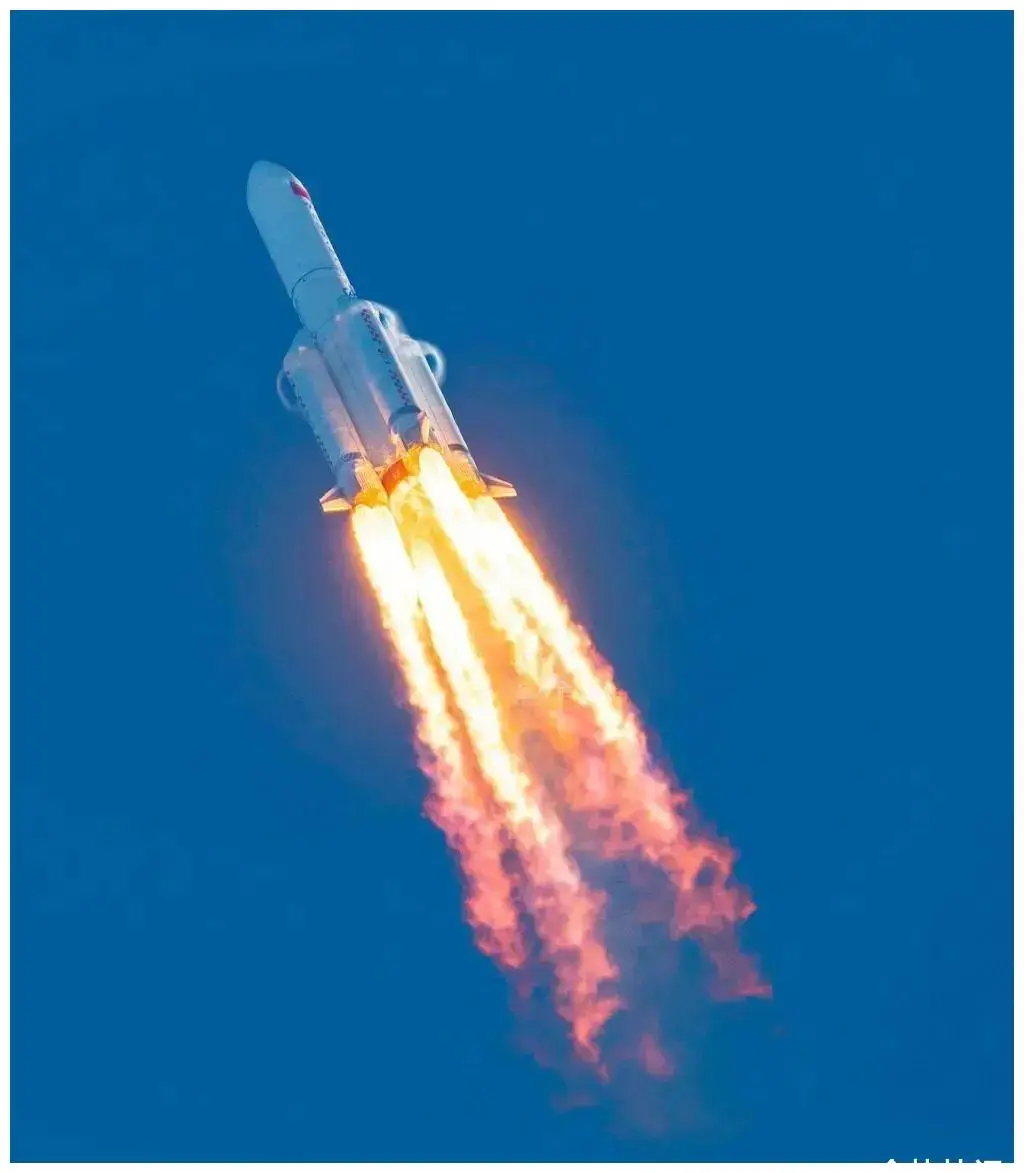
Space is infinitely vast, but the 500-kilometer altitude Low Earth Orbit (LEO), which holds the hottest commercial value, is already as busy as a popular flight route—in the first half of 2025, SpaceX's satellites performed 144,000 maneuvers in space to avoid collisions.
Most of the congestion is caused by SpaceX itself. There are now 10,049 Starlink communication satellites in the 500-kilometer LEO above us, all launched over the past three years by SpaceX using its "little rocket," the Falcon 9.
As planned, SpaceX's heavy-lift rocket will achieve fully reusable launches next year, with triple the payload capacity and a 90% reduction in launch costs, bringing it down to $200/kg. After that, SpaceX plans to accelerate the launch of 42,000 communication satellites and 1 million computing satellites. Orbital space is becoming a finite resource.
Regarding the congested environment, at a relevant UN Security Council meeting late last year, a Chinese representative stated, "The unbridled expansion of commercial satellite constellations by certain countries, lacking effective regulation, poses significant security challenges."
For Chinese commercial aerospace entrepreneurs and investors, building low-cost reusable rockets and competing for orbital space has become an unavoidable trend, much like semiconductor self-reliance. Moreover, SpaceX has already paved the way; newcomers just need to charge forward, learning from it like they did from the iPhone and the Model 3—another "Xiaomi model" opportunity.
As SpaceX's IPO progresses, its valuation could exceed $1.75 trillion. Commercial aerospace has delivered investment opportunities before delivering payloads. The A-share commercial aerospace sector has surged over 40% this year, and a startup we tracked saw its valuation multiply tenfold in four months, faster than embodied AI.
Like our previous research on humanoid robots, we interviewed multiple Chinese rocket company founders, chief engineers, and their investors, attempting to strip away expectations and reality to examine the actual progress and path of commercial aerospace.
Queuing for Launch, Replicating SpaceX in 2015
This January, I touched a rocket for the first time, in a factory converted from a steel mill in the suburbs of Zhuzhou, Hunan. The floors, beams, and pillars were bare concrete, much like the auto repair shop next door. Only the workshop safety signs and confidentiality warnings against photography hinted at the difference.
Unzipping the tent erected for secrecy and cleanliness, inside lay a rocket with a diameter of 4.2 meters, standing as tall as a 20-story building when upright—slender, symmetrical, with its front end tapering to a sharp point. The stainless steel shell presented a near-mirror reflection under the lights; there was no finely sprayed white exterior. The rocket body was covered with metal ribs, with dark weld seams every meter. The rocket's shell was as thin as a bank card, cold and smooth to the touch, and a gentle tap produced a metallic echoing vibration, making one afraid to press too hard.
At its debut, when the curtain lifted, over 80 investors from institutions like Ant Group, CATL, and Inovance stood up and applauded. One investor said, "We in Hunan will finally have our own rocket too."
This is the AS-1, made of stainless steel like the SpaceX Starship, intended to use a similar recovery method, but much smaller in volume. Its manufacturer, Yushi Space, was established less than two years ago, and the first rocket was built by 150 people in 10 months.
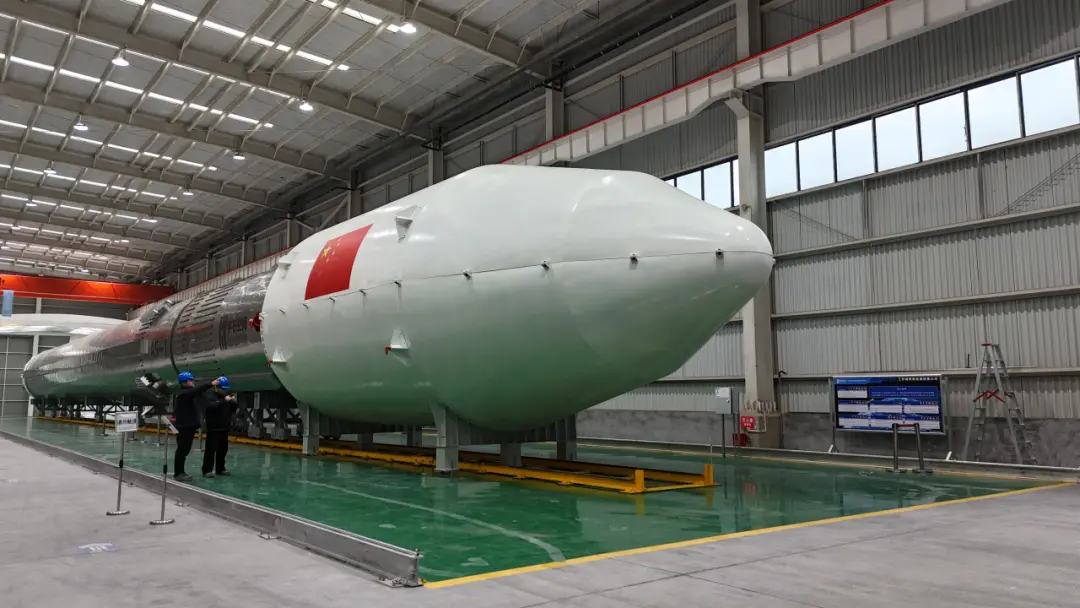
Yushi Space's AS-1 rocket. Source: Yushi Space.
This rocket will be transported to Wenchang, Hainan, in the second half of this year to queue for launch, relying on actual rocket experiments to collect data, just like SpaceX. Zhu Xinwen, co-founder of Yushi Space, said, "We don't shy away from replicating SpaceX; good technical routes will resonate. The hard part is localization, and localization that is detached from the global supply chain system."
This batch of Chinese commercial aerospace startups all treat replicating SpaceX as their business model. The founders of four companies we contacted directly stated they copy SpaceX's design principles, which is also what investors expect. A startup claiming to be "the most like SpaceX" saw its valuation soar from less than 1 billion yuan to 10 billion yuan in four months.
SpaceX has been established for 24 years and has three main generations of commercial rockets:
Falcon 9: Aluminum-lithium alloy body, first stage equipped with 9 engines, payload capacity equivalent to the Long March 5, the main rocket used to build the Tiangong space station, with a cargo launch cost of $2,700/kg.
Falcon Heavy: Core architecture based on the Falcon 9, also using aluminum-lithium alloy, composed of three first-stage rockets connected in parallel, equipped with 27 engines, performance equivalent to the SLS Block 1 that just completed the Artemis lunar flyby mission, with a cargo launch cost of $2,300/kg.
Starship: The largest rocket to date in size and payload, built from stainless steel costing 20 yuan per kilogram, along with humanity's most cutting-edge materials and metal processing techniques. The 33 Raptor 3 engines at the bottom can propel a rocket, fuel, and payload heavier than the Eiffel Tower into space. If fully reusable as planned, the cargo launch cost will be only $200/kg.
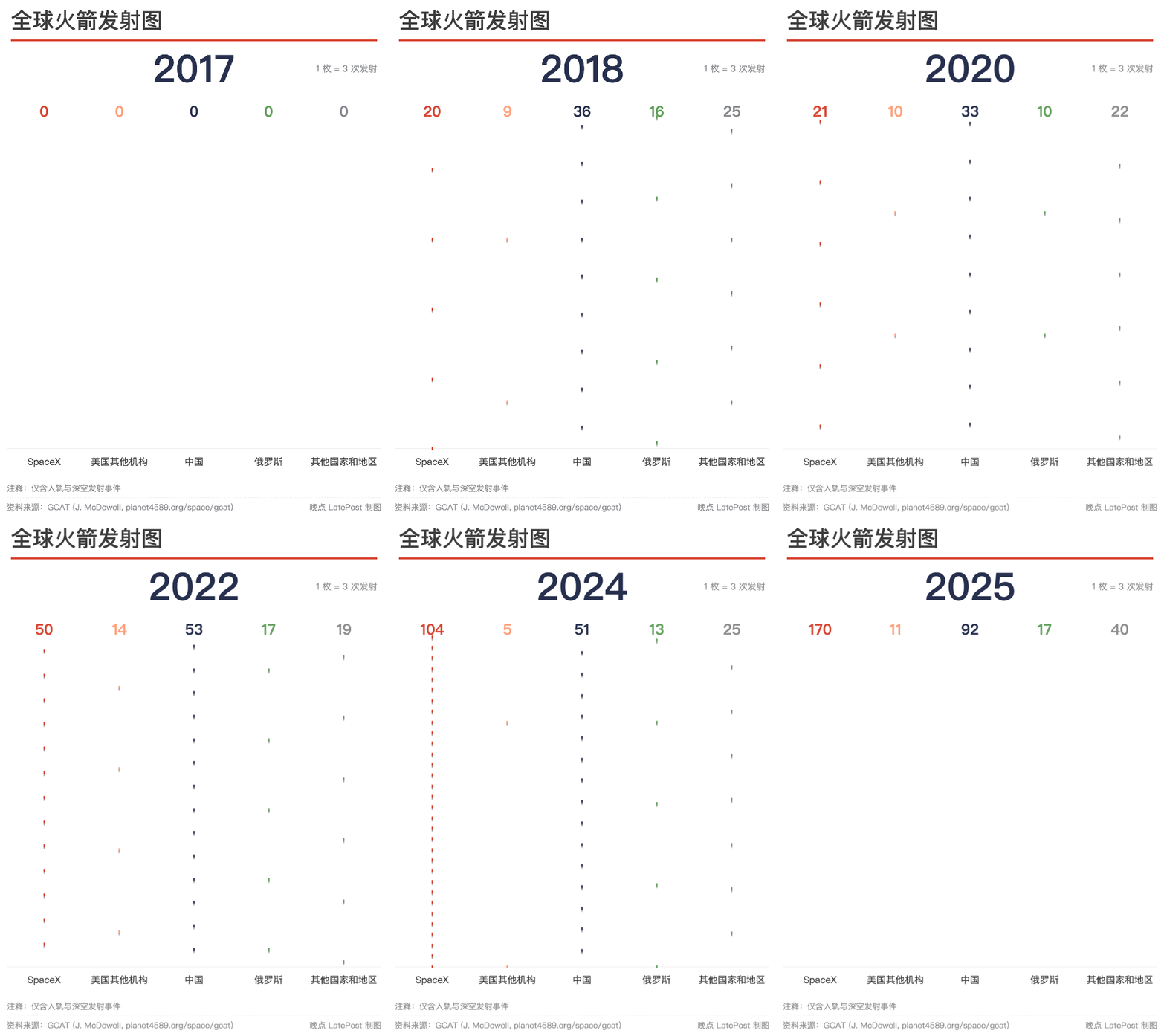
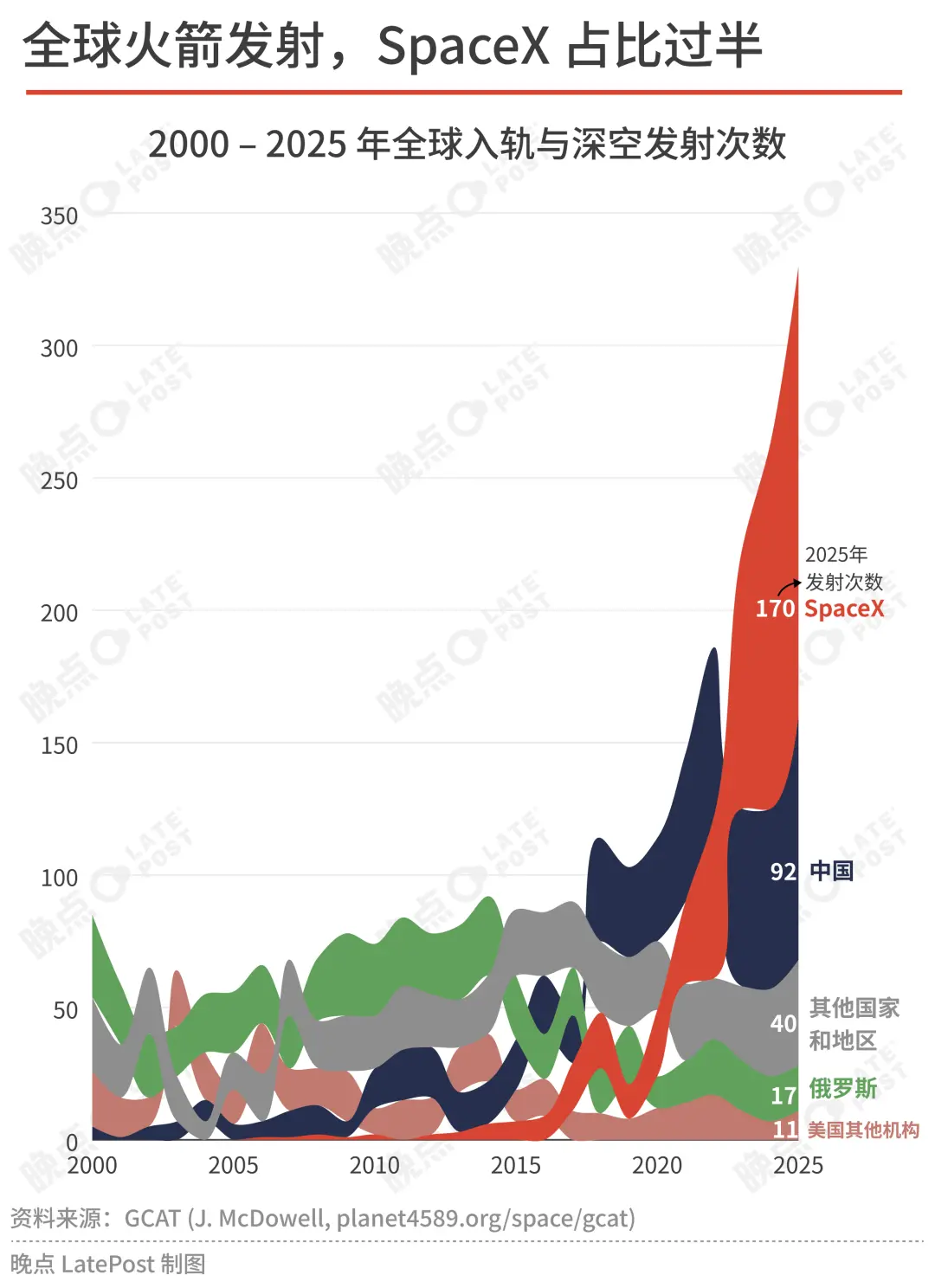
Starship is still in the testing phase, having launched 11 times and successfully recovered the first stage (the bottom); the second stage (the spaceship part) has not been recovered yet. Last year, the total weight launched into orbit by SpaceX accounted for about 90% of the global total, relying almost entirely on the Falcon 9.
Rockets like the AS-1 are lying in suburban factories across China, no fewer than ten of them. They are all Falcon 9-sized, but some materials and designs are borrowed from Starship. The goal is low-cost, reusable launches.
From LandSpace, valued at 75 billion yuan and having completed IPO tutoring, to Series A startups valued at several billion yuan, there are now over 20 similar companies. If production capacity ramps up, they could build 100 rockets a year.
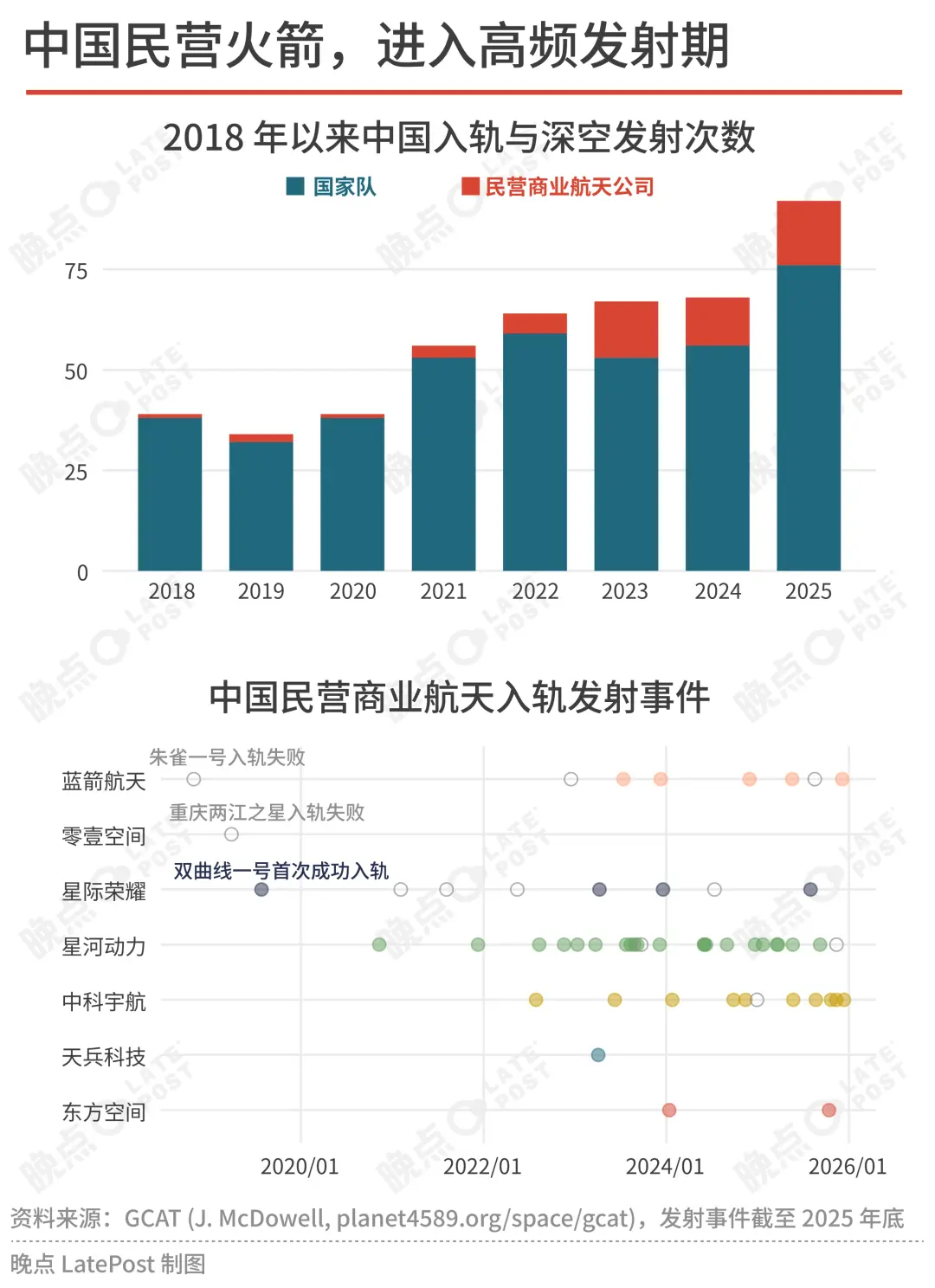
If they can fully achieve their design goals and successfully recover the rocket body, the launch cost per kilogram for this batch of rockets could drop to $4,000, roughly half the launch cost of AVIC, and only 50% higher than the Falcon 9.
Most rocket companies believe that achieving this cost and maintaining high-frequency launches can create a positive commercial cycle. They believe aerospace is not about intimate global cooperation; China needs its own system, and even if they can't match SpaceX's prices, they will still get orders.
They feel highly supported by policy—Hainan's aerospace launch site Pad 2 has been regularly opened to commercial companies, and more launch pads are under construction. China's主导的 StarNet and the Qianfan Plan, initiated by local governments and the commercial company Shanghai Yuanxin, have collectively generated launch demand for 25,000 satellites.
The China Securities Regulatory Commission added new guidelines late last year allowing commercial rocket companies to apply for listing even if they are not yet profitable, provided they reach technical milestones. Investors have thus reached a consensus: if a rocket company successfully recovers a rocket, it is "very likely" to be approved for an IPO. Currently, five rocket companies, including LandSpace, have submitted listing applications. The highest-valued, LandSpace, is valued at over 70 billion yuan, and recent trades of its older shares imply a valuation of 85 billion yuan, higher than Unitree Robotics. Other rocket companies are also valued in the tens of billions.
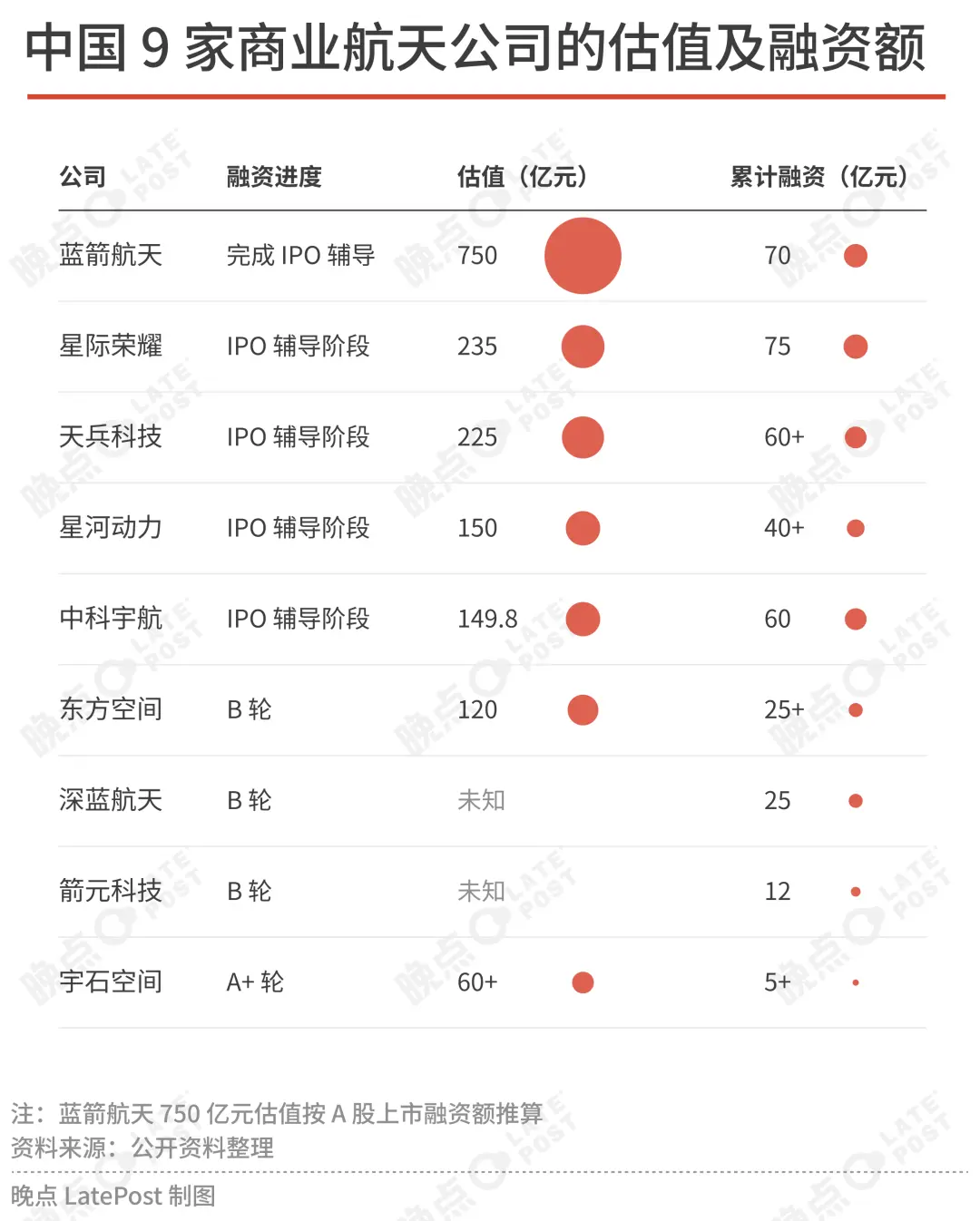
Smaller startups that started later can still raise funds. They tell investors that building a useful rocket is easier than building a useful humanoid robot; rocket companies also don't need to perform on the Spring Festival Gala, and all the money goes into R&D; R&D is cheaper than building cars—an automaker can spend billions developing a new model, which is enough for a rocket company to produce 30 rockets, "enough to launch once a month for two and a half years."
Some domestic rocket companies tell investors they will become the "Android" of the aerospace industry, "number one in learning from SpaceX." Others claim they have the fastest "real progress," even though no one has successfully recovered a rocket yet.
All companies pin their hopes on the same premise: China must have its own low-cost reusable rockets in the future, just like semiconductor fabrication plants. Thus, they only need to be the leader in China to secure lucrative orders.
20 People, 6 Weeks, Welding a Stainless Steel Rocket
"Traditional aerospace can't sacrifice face or human lives, so it can only sacrifice money; in commercial aerospace, money is the most important, and it doesn't carry people, so some face can be sacrificed," said a chief engineer at a rocket company.
The path is clear: replace expensive traditional aerospace-grade materials with stainless steel for the rocket body, use civilian-grade sensors and chips to build rockets at lower costs, and then scale production and iterate quickly through trial and error.
Musk said that building rockets with stainless steel was "the best design decision SpaceX ever made." The cost of stainless steel is 1/30th that of carbon fiber composites; a rocket can save $5 million (about 34 million yuan) just in shell material costs.
Switching to stainless steel isn't just about saving money. The large stainless steel shell also acts as a load-bearing structure, allowing Starship to forgo the several-tons-heavy internal structural skeleton used in other rockets. A chief structural engineer for rockets said this is equivalent to building a direct mechanical highway for the rocket—allowing engine thrust and external aerodynamic pressure to traverse the rocket body via the most direct path, eliminating complex stress points prone to tearing and reducing risk.
Starship's design embodies the philosophy proposed by materials scientist J.E. Gordon in *Structures*—it's not true that the stronger the material, the better; it's more important that the material fits the working conditions; strength comes not only from materials but also from geometric structures; a good structure allows one component to serve multiple functions, minimizing material usage. Musk has recommended this book multiple times.
Starship is manufactured as a complete shell from the start, then pressurized internally, making it like a shaken Coke can that goes rigid. The external ring structure then constrains deformation, concentrating all pressure on the entire outer shell rather than a single point.
The principle of building rockets with stainless steel is simple, but doing it is hard. When Starship accelerates enough to reach orbit, the gravity from thousands of tons of fuel inside is magnified fourfold; as the rocket tears through the air, before passing Max-Q (maximum dynamic pressure), the external air pressure keeps increasing. At the extreme, every square meter of stainless steel must bear nearly 5 tons of pressure. At the same time, the shell must withstand the massive thrust and disturbance from the engines.
A startup rocket company obtained some parameters of Starship's steel, reverse-engineered the composition, and spent three years developing stainless steel suitable for building rockets.
Welding requirements are as high as building submarines. The weld seams on a rocket shell can stretch for dozens of kilometers. Under high-pressure flight conditions, a 1-millimeter-diameter air hole is enough to render everyone's efforts in vain.
Liu Xing (pseudonym) previously worked at CRRC Zhuzhou, welding high-speed train carriages for ten years. He survived a 5% selection rate, practiced for 6 months on a circular steel barrel before starting work, and then began welding rockets.
Liu Xing's colleagues mostly come from heavy industry, having welded excavators and cranes; building rockets is a newly learned skill. They use laser welding to roll 1-meter-wide steel plates into circles, stick them together, weld them into 4.2-meter rings, and then stack them layer by layer to weld into a 20-story-high cylinder.
Starship's body wall is only 4 millimeters thick, about the same as two stacked coins. The AS-1 is smaller in volume, and its shell is even thinner. If you shrunk the rocket to the size of a Coke can, its shell would be thinner than the can. After the welding gun heats the steel, it becomes soft and wrinkles; a slight hand tremor causing welding deformation would ruin the rocket's mechanical structure.
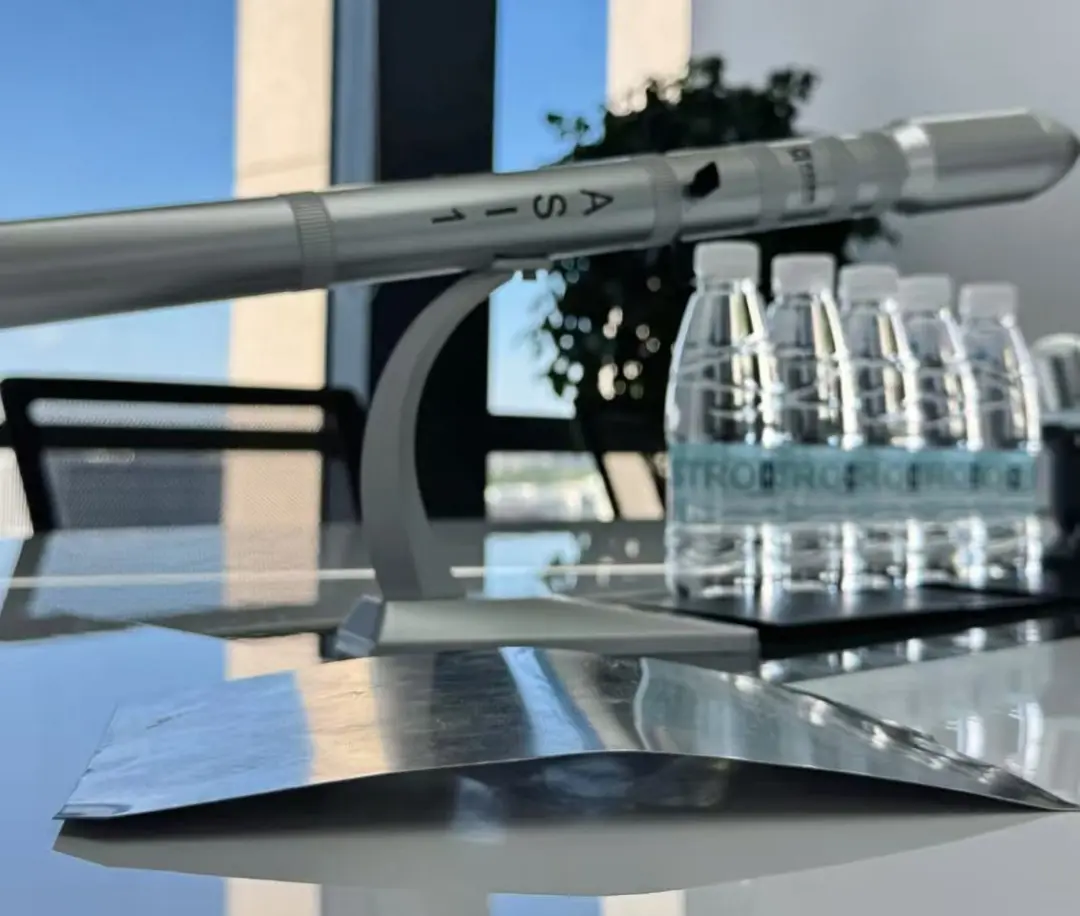
The stainless steel thickness of Yushi AS-1's rocket body is less than 1 millimeter. Source: Yushi Space.
Currently, for a skilled engineer to weld a 15-meter-long seam takes at least 5 hours, averaging less than 1 millimeter per second. The entire process takes 20 skilled technologists two months. After welding a rocket, Liu Xing's team will have over 10,000 additional X-ray films on their hands. Every weld seam must be X-rayed; for every flaw found, engineers must cut out the entire steel coil section and reweld it.
Welding the shell is only the first step; a nearly 100-meter-high stainless steel rocket typically requires over 4,000 reinforcing ribs to support the stainless steel shell. This means engineers must weld 4,000 more times.
SpaceX possesses the most rocket welding experience; some processes are already automated, and engineers can weld a rocket body in just two weeks. Yushi Space takes at least 6 weeks at its fastest.
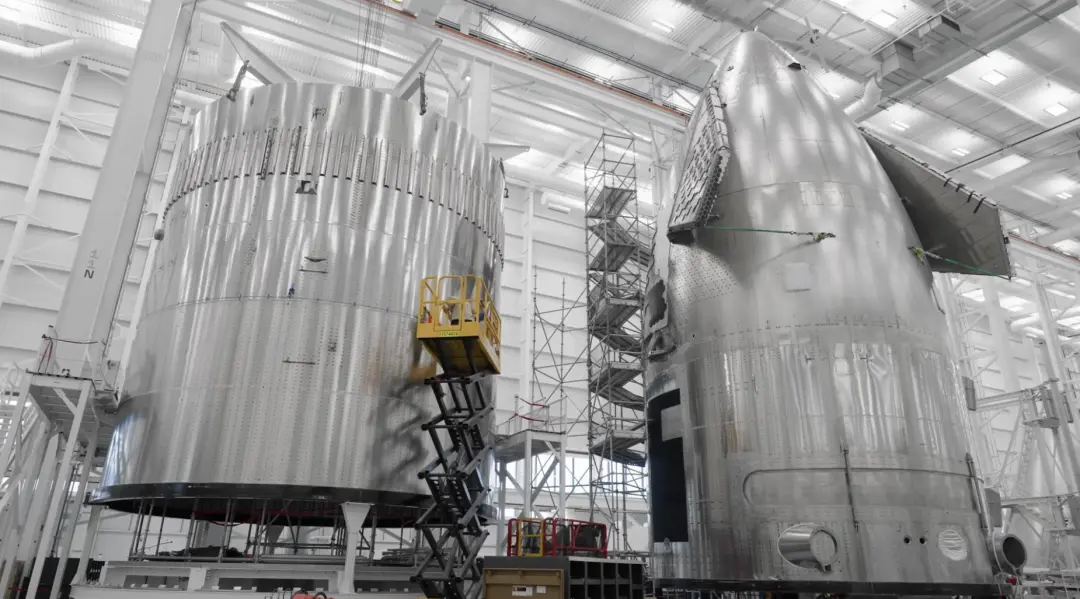
Engineers welding the Starship shell. Source: SpaceX official documentary Test Like You Fly.
The structural strength of the rocket body is almost the most core secret of every rocket company. When some rocket companies display their rockets, they pixelate the connection between the first and second stages and the part where the body meets the engine.
The most difficult parts are the first/second stage connection and the bottom engine connection; the structure must withstand the acceleration loads during launch and the impact during separation; at the bottom, the structure must channel the thousands of tons of engine thrust into the shell while also accommodating complex piping and control systems.
Starship is currently the only stainless steel rocket to successfully reach orbit. The closest to Starship structurally in China right now is LandSpace's Zhuque-3, which successfully reached orbit last December. Zhuque-3 is almost entirely stainless steel, but uses more stable aluminum alloy at the first/second stage connection.
Before hitting the launch pad, these rockets must undergo at least 6 months of ground testing to assess their condition under various scenarios. "Software calculations might show no issues with aerodynamic vibration and structural loads, but manufacturing introduces randomness; it must be tested on the real machine," said Wang Shilei, co-founder of Qianyi Aerospace.
Rockets Haven't Reached the "Xiaomi Moment" Because the Starship Supply Chain Isn't in China
Most commercial aerospace companies benchmark against the Falcon 9, mainly because their engine performance isn't sufficient—the Starship's Raptor 3 engine has a thrust of 280 tons, while the Merlin engine used in the Falcon 9 has 84 tons. Currently, the maximum thrust of a Chinese commercial aerospace engine that has successfully sent a rocket into space is 80 tons.
After researching the engine supply chain, an investor from a leading industrial capital fund said he became a "defeatist" and switched to investing in SpaceX's suppliers.
Looking at a schematic, a rocket engine is very simple—a turbopump pushes fuel into the combustion chamber, ignites it, and blasts it out, propelling the rocket into the sky. The difficulty lies in the fact that the process of burning aerospace fuel is a continuous explosion, and the engine must make that explosion occur with millisecond, gram, and millimeter precision.
Musk said that even if you got the blueprints, no one could replicate the Raptor engine in a short time.
Copying a Raptor 3 requires unique metal materials. Its turbopump is a super fan responsible for blowing fuel into the combustion chamber, about the size of a household refrigerator. During operation, it is fiercely scoured by 700°C hot gas, while a few centimeters away, -182°C liquid oxygen flows; a temperature difference of nearly 900°C is enough to make most materials instantly crack due to thermal expansion and contraction. To solve this, SpaceX's metallurgy lab developed SX500 alloy, which can withstand 800 bar and pure oxygen erosion.
The industry only knows it is a nickel-based alloy doped with strengthening elements like chromium, cobalt, and tungsten; they don't know the formula or the synthesis conditions for this material. Other rocket companies can only use mature nickel-based superalloys similar to those in civil aviation engines; the turbine operates at lower temperatures, combustion efficiency is lower, and the thrust-to-weight ratio is heavily discounted. Engineers also have to coat the turbine blades with expensive and fragile anti-oxidation ceramics, incurring higher costs.
Suitable materials must also be solidified into suitable, efficient structures. The inner wall of the Raptor 3 combustion chamber receives enough heat per second to instantly vaporize several centimeters of steel plate; the only solution is to lay thousands of tiny tubes along the metal inner wall to dissipate heat before the pressure chamber melts. The core parts of the Raptor 3, such as the turbopump and combustion chamber, are almost entirely grown in 3D printers; the combustion chamber capable of withstanding ultra-high pressure is hollow, with minus-hundred-degree liquid methane fuel flowing inside. Domestic engines can currently achieve 100 bar.
SpaceX uses 3D printing equipment from Silicon Valley startup Velo 3D. Now it has started developing some in-house. In 2024, SpaceX bought out the global permanent modification and usage rights for Velo3D's metal 3D printing technology and began developing its own 3D printing algorithms.
Making the Raptor 3 run stably also requires precise control capabilities. Hundreds of bars of pressure, over a thousand degrees of high temperature, flow rates of hundreds of kilograms per second, thousands of combustion vibrations. The control algorithm must assess and adjust to operating conditions within milliseconds, keeping the entire engine within an extremely narrow operating window.
The latest Raptor 3 engine thrust reaches 280 tons, 10% lighter than the previous generation. Starship V3's first stage is equipped with 33 Raptor 3 engines, with a total thrust of 9,800 tons. SpaceX can now build one Raptor 3 engine a day.
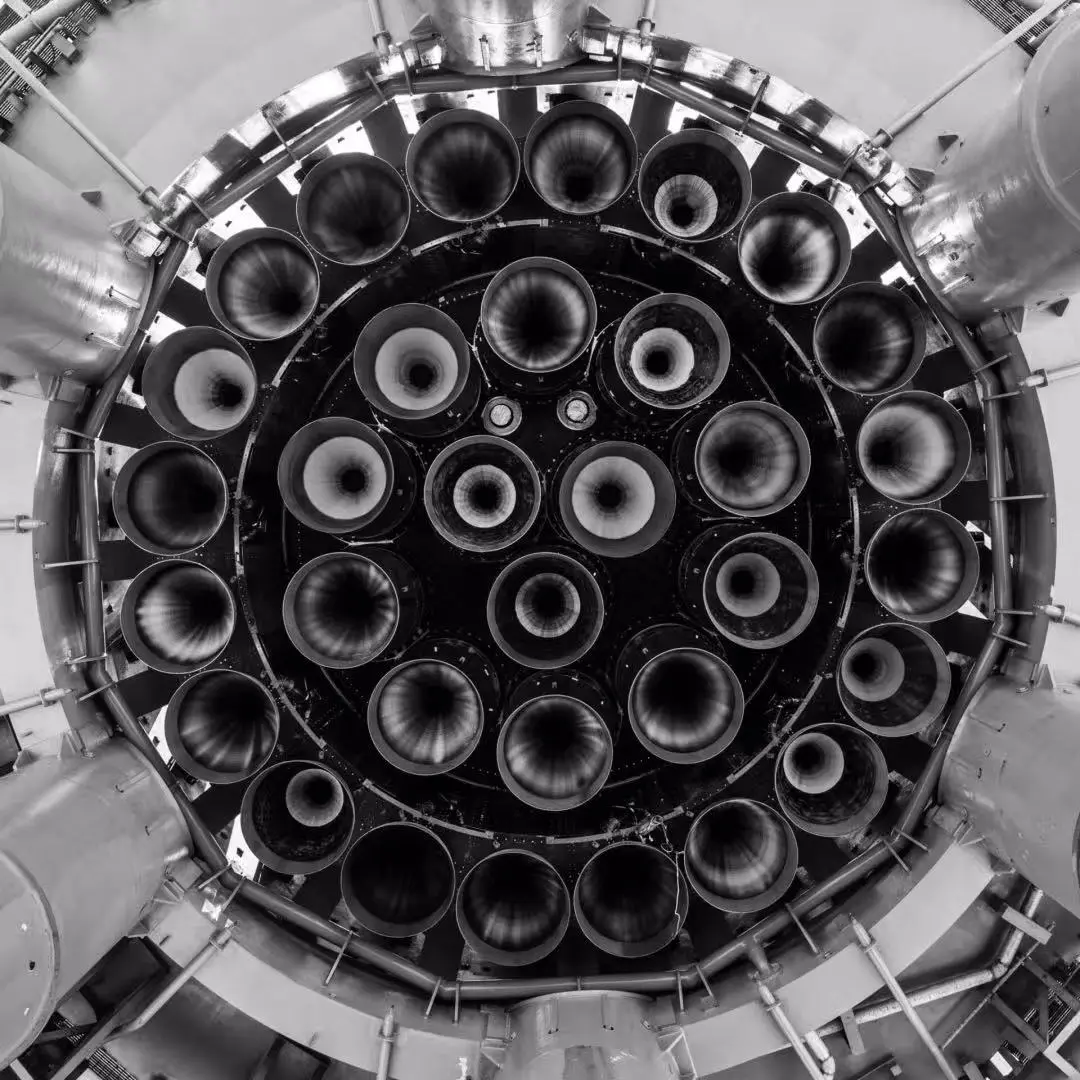
The 33 Raptor engines at the base of Starship's first stage. Source: SpaceX.
In 2017, Zhang Changwu, founder of LandSpace, which had been in business for over two years, realized that the key subsystems of a rocket "cannot be bought." At that time, there was virtually no domestic commercial aerospace supply chain, so LandSpace began developing its own liquid oxygen methane engine, which is the hardest but most reusable path. Its latest mass-produced engine, the LandSpace Tianque 12B, is currently the engine with the highest thrust and thrust-to-weight ratio in China's commercial aerospace sector, with a thrust of about 100 tons, but it has not yet been launched.
Rocket companies established after 2020 mostly choose to purchase engines from suppliers, as this is the fastest way to build a rocket. The best engine currently in the supply chain is Jiuzhou Cloud Arrow's Longyun, with a thrust of about 80 tons. Like the Tianque, it references the Raptor's philosophy, using 3D printing technology to make some structural components.
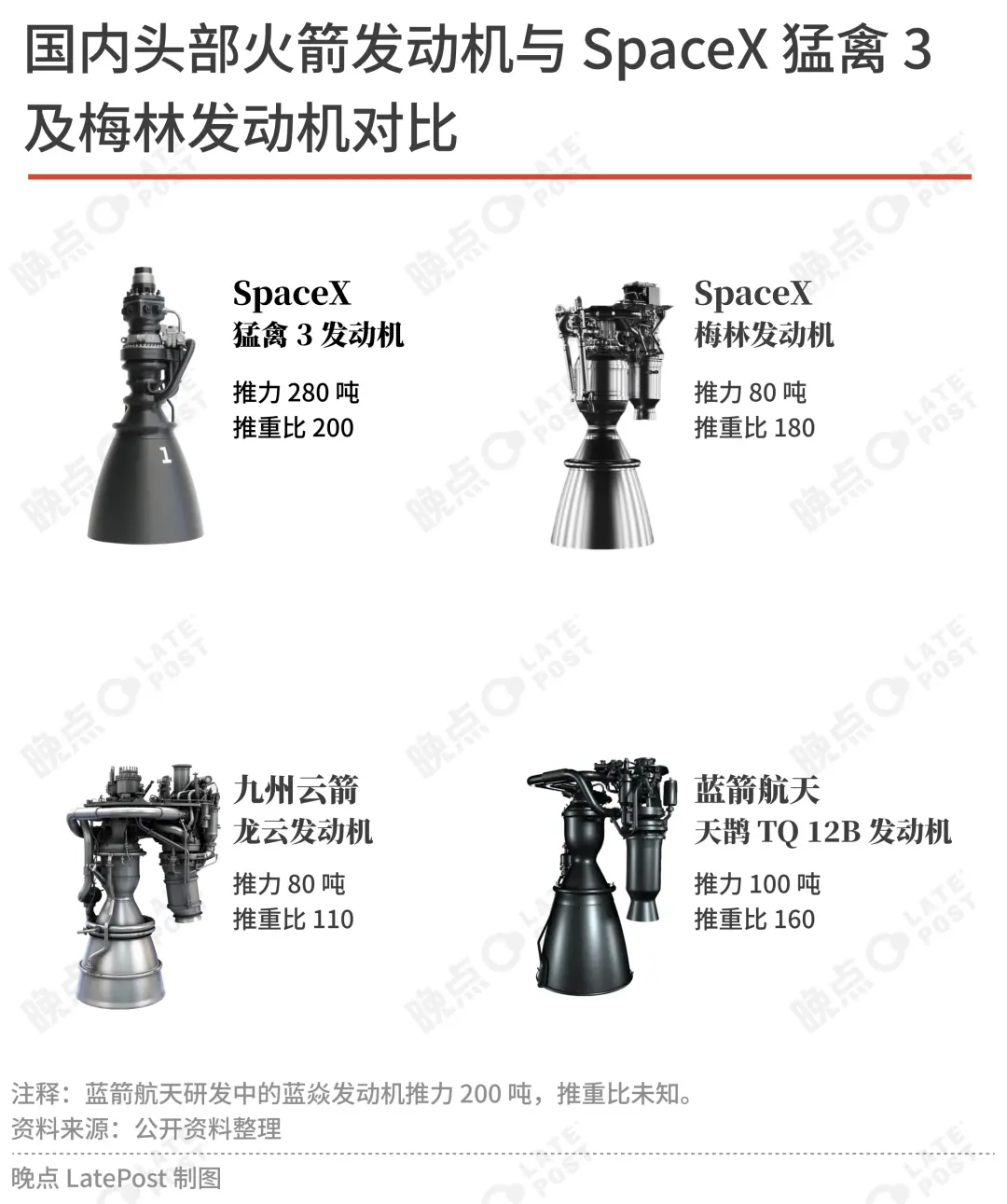
Among the key figures for these two engines, only cost is relatively close to the Raptor. An investor said the BOM cost of Jiuzhou Cloud Arrow's Longyun engine is about 5 million yuan. The Raptor 3, with over three times the thrust, costs about $500,000 (3.4 million yuan) to build, and Musk believes it can drop to $250,000 (1.7 million yuan) in the future.
Rockets equipped with the Longyun engine produced by Jiuzhou Cloud Arrow generally adopt a 9+1 design: 9 engines in the first stage, 1 in the second stage, with a maximum payload capacity of 20 tons, which is 1/10th of Starship V3.
As we understand, Jiuzhou Cloud Arrow is also developing a full-flow staged combustion engine with a single thrust of 140 tons; they have already produced a prototype and will conduct whole-engine testing in the second half of the year. If all goes well, it could reach space around 2030. LandSpace completed the ignition test for its full-flow staged combustion engine, Lanyan, earlier this year; Lanyan's thrust exceeds 200 tons.
Wang Shilei of Qianyi Aerospace said that catching up to the current Raptor 3 might take 20 or even 30 years. This is not something a single rocket company or equipment manufacturer can catch up to; the fundamental gap lies in the underlying metallurgical capabilities of the industrial system. The Raptor 3 combustion chamber has reached 350 bar, while domestically it is 100 bar. "Our steel industry is number one in the world, but that's number one in production capacity."
Some are optimistic. A chief engineer said, "Although we fall behind in payload, our production capacity is invincible. If they launch once, we launch three times."
The gap in the rocket supply chain goes beyond engines. Another rocket company executive said that regarding rocket body stainless steel, overseas suppliers also have better consistency and yield rates; the stainless steel they currently use is three years behind SpaceX.
Starship's stainless steel material comes from Finland's Outokumpu, which also supplies stainless steel for the Tesla Cybertruck; the nickel-based superalloy for the Raptor engine comes from South Korean materials company Sphere and US-based ATI; RF communication equipment comes from the UK's Cobham; engine valves and fluid control components come from US-based Parker Hannifin.
Many of SpaceX's high-end manufacturing suppliers around the world also do military work and are subject to export restrictions. They have helped produce Boeing's aviation engines, Lockheed Martin fighter jets, submarines, and semiconductor precision instruments, and were later brought in by SpaceX to build rockets together.
There are also some key materials for which there are no ready-made suppliers globally, which SpaceX researches and develops or improves itself.
When Starship returns to Earth, it descends belly-down, using its massive belly to friction-brake against the air. At this time, the 18,000 hexagonal heat shield tiles on its belly must withstand a plasma firestorm exceeding 1400°C.
We once saw a heat shield tile that had fallen off Starship in a rocket company's laboratory; its density was similar to a foam board, and the outward-facing side was a black frosted material. An engineer heated it red with a blowtorch, and three seconds later I could pick it up with my bare hands, only feeling warm. The whole process looked like magic; the engineer said this is the charm of materials.
This heat shield tile is made of high-purity silica ceramic fiber; NASA's space shuttle also used similar materials. Its drawbacks are that it is too brittle, too expensive, and requires workers to glue it onto the rocket. SpaceX optimized the ceramic fiber formula so it can withstand multiple cuts, and then directly embedded it into metal fasteners on the Starship's surface, eliminating the need for glue.
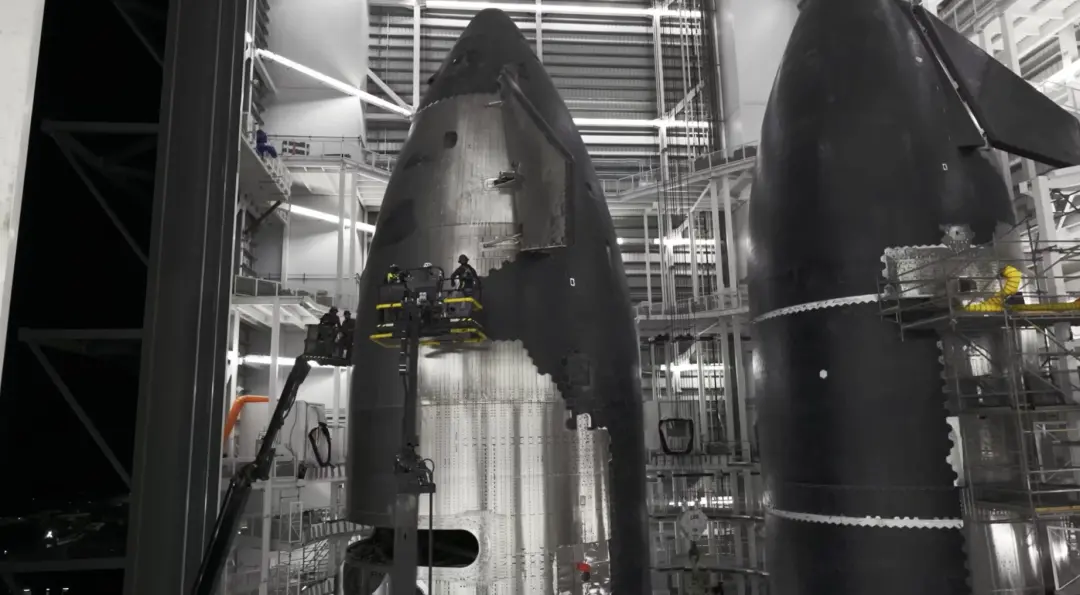
Starship's hexagonal heat shield tiles embedded in the rocket body surface. Source: SpaceX official documentary Test Like You Fly.
Multiple analysts told *LatePost* that about 80% of Starship's components are self-researched and self-produced by SpaceX, covering the rocket body structure, engines, fairings, control software, sensors, and more.
"Guidance is where we have the smallest gap with SpaceX," said the aforementioned chief engineer. Rocket positioning is similar to the guidance systems of intercontinental ballistic missiles. "People who have built missiles are easier to find than people who have built reusable rockets."
Fly First, Improve the Supply Chain While Blowing Up
"Throwing away a multi-million dollar rocket after every flight is like throwing away a Boeing 747 after every flight," Musk once said; reusability is the key to commercializing the space industry.
The most reused Falcon 9 has flown 33 times, reducing single-launch costs by 80%—after the rocket's manufacturing cost is amortized, the main launch costs become fuel and rocket inspection. The more ambitious Starship discards the Falcon 9's built-in landing legs, using the tower's mechanical arms to catch the rocket in mid-air.
"SpaceX has an insanely high level of confidence in its recovery control system to dare to do this," said an engineer. Tower recovery requires the rocket to land on the recovery point with an error of no more than a dozen centimeters, and the engine's thrust must be incredibly smooth at the final moment, bringing the rocket to a near-standstill in mid-air. The slightest misstep, and the rocket will explode along with the launch pad.
From its first rocket reaching orbit in 2008 to successfully recovering the Falcon 9 in 2015, SpaceX took seven years; it took another three years of optimization by engineers before reusable rockets were launched at scale; Starship has been continuously attempting tower recovery since 2019. Jeff Bezos's Blue Origin has been around for 25 years, only completed its first stage rocket recovery in January last year, and only reused a recovered rocket for the first time in April this year.
Rocket companies worldwide are chasing the recovery technology SpaceX achieved in 2015. LandSpace is the furthest along domestically.
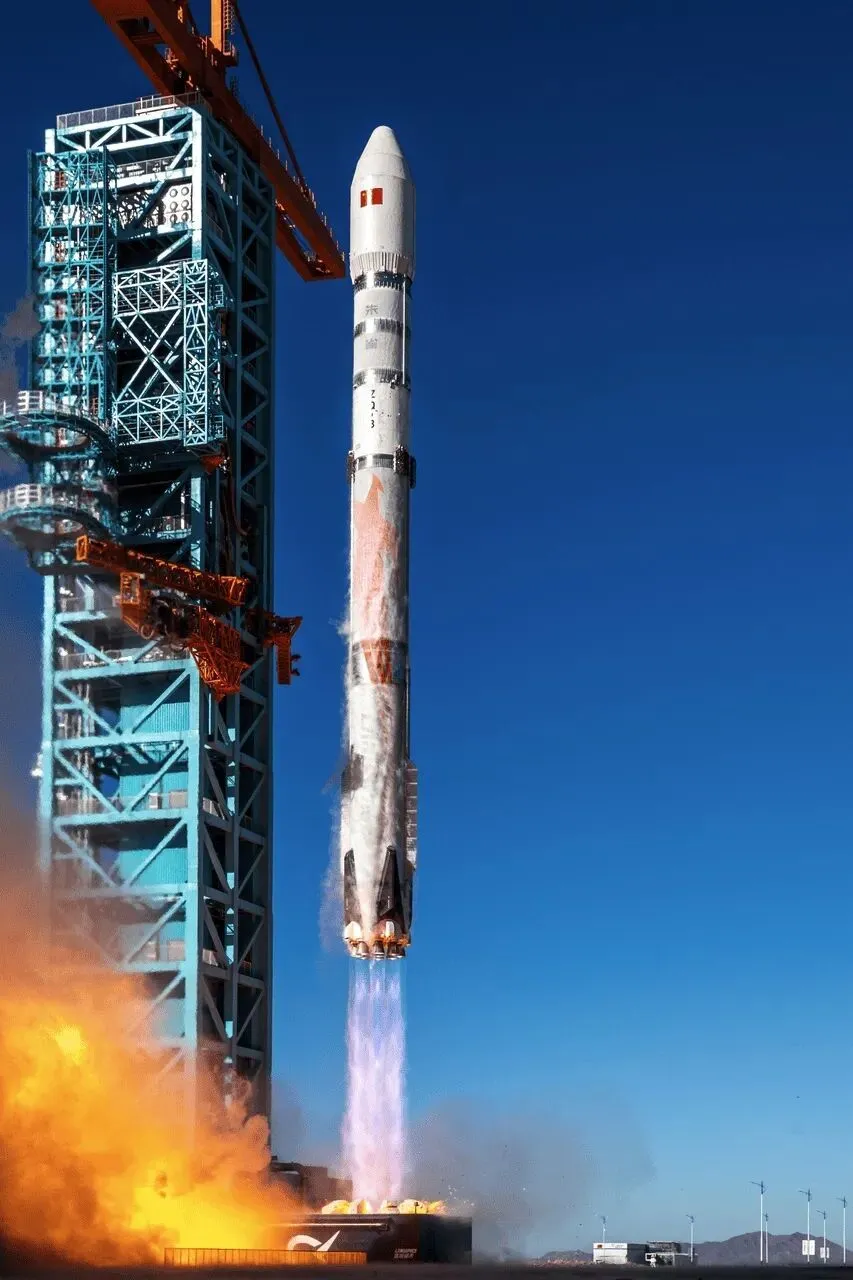
Footage from Zhuque-3's first test. Source: LandSpace.
LandSpace's Zhuque-3 rocket had its maiden flight last December; the second stage successfully reached orbit, but the first stage failed during the final phase of vertical recovery, falling on the edge of the recovery zone. Multiple industry insiders believe the probability of success for Zhuque-3's next recovery test is very high. "This failure wasn't a rocket design problem; it was that the recovery method design was too aggressive," said a rocket company chief engineer.
Companies like Deep Blue Aerospace and iSpace are tackling rocket recovery control systems; over the past two years, they have completed vertical recovery tests with experimental craft at altitudes of several kilometers. Most other rocket companies are still in the ground testing and simulation phase.
Some companies set their recovery demonstration videos to the soundtrack of the movie *F1*, making rocket recovery sound as effortless and breezy as a race car starting. Other startups propose different routes: abandoning recovery, using hypersonic missile technology to build expendable rockets, driving costs below 1 million yuan, and just throwing them away after use. Or equipping rockets with airplane-sized wings to glide and decelerate when returning to Earth—the CEO of this company says this way the engine only needs to ignite once, it can carry less fuel, and engine life is extended.
Most rocket companies base their recovery algorithms on a standard rocket body, but rockets actually deform during flight, and may even suffer local damage or coating loss like Starship. Every variable generated by the complex flight environment could lead to recovery failure.
"In Starship's latest test flight, the wing burned through with such a huge hole and it still flew back, which shows its adaptability is extremely strong; its control algorithm has been optimized to the limit," said Wang Shilei. Domestic rocket companies lack vacuum and high-dynamic-pressure laboratories and cannot fully verify engine operating conditions, "so we can only fly and test hard." His team includes engineers who have worked on fighter jets and hypersonic vehicles, hoping to bypass engine shortcomings through bolder aerodynamic designs. But this requires testing with real rockets, like SpaceX does.
The entire Starship project's R&D investment exceeds $15 billion (about 106.5 billion yuan). Starship V2 was fully tested 5 times, exploded twice, failed recovery once, made a controlled ocean splashdown once, and only succeeded on the last attempt.
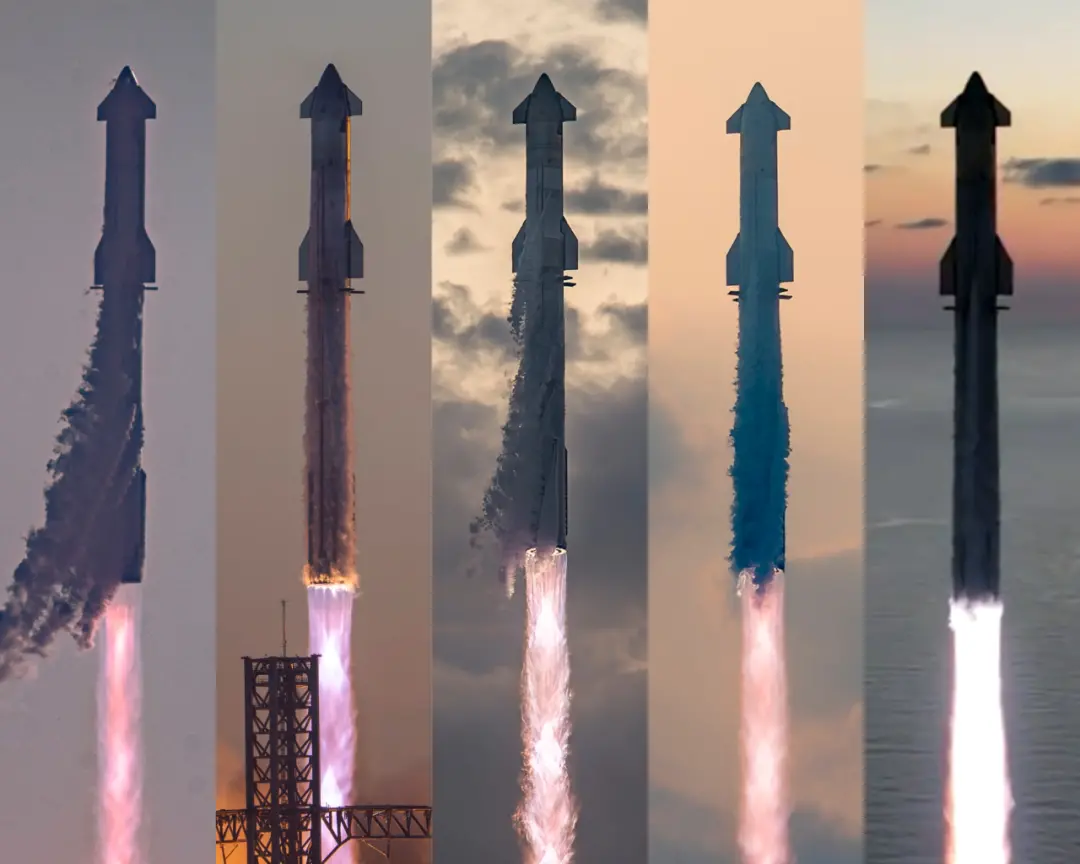
The five tests of Starship V2. Source: Fandom.
A former Tesla executive told *LatePost* that Musk is not afraid of failure, but requires engineers to document every failure in detail, collecting as much data as possible.
Companies chasing SpaceX are preparing to do the same. LandSpace plans to test fly Zhuque-3 again in the second quarter of this year, and companies like GalaxySpace, Deep Blue Aerospace, and iSpace will also begin their first recovery test flights this year.
Engine costs account for over 50%; some investors claim this segment will give birth to the "CATL of aerospace." Currently, the most mature suppliers are the Academy of Aerospace Solid Propulsion Technology (AASPT) and Jiuzhou Cloud Arrow. AASPT primarily served the Long March series rockets in the past, but they have now launched engines sold to commercial aerospace companies. As we understand, Jiuzhou Cloud Arrow's new valuation has reached 10 billion yuan, with an order book of over 100 engines.
The remaining most important technical and engineering segments are aerospace electronic components, 3D printing equipment, and structural parts. As we understand, commercial aerospace companies currently procure most of their electronic components from state-owned enterprises like Aerospace Electronics, which previously served national projects. The leading supplier of 3D printing equipment is Bright Laser Technologies (BLT), whose equipment was also used to manufacture key components of the C919 passenger jet. Additionally, most rocket structural part suppliers come from the wind power sector, such as Feiwo Technology, which makes fasteners for wind turbines and is now a supplier for LandSpace and Space Pioneer.
Chinese commercial aerospace companies are trying to introduce more non-aerospace suppliers to build a cheaper supply chain.
The rocket body accounts for about 25% of the total cost; LandSpace, Space Pioneer, and others all control the design and manufacturing of the rocket body themselves. There are also domestic suppliers who can directly contract the manufacturing of rocket shells, such as Jiutian Xingge and Lightyear Exploration—their core teams come from the First Academy of CASC and the School of Aerospace Engineering at Tsinghua University, respectively, with the former having participated in the development of the Long March series rockets. Lightyear Exploration is trying to build fairings using a method of sandwiching 150-yuan flame-retardant plywood between steel plates to reduce rocket weight and cost.
Manufacturers from other fields are also investigating rocket shells, such as wind turbine manufacturers. An investor said, "The tower barrels of rockets and wind turbines look pretty similar."
Automotive-grade components have also made it onto rockets, used in areas where errors are tolerable—such as cables, cameras, air pressure sensors, and thermometers. A chief engineer said, "We didn't dare to use them before, but now as long as delivery and quality pass, private rocket companies dare to use them provided the risk is controllable, because China's existing supply chain is genuinely cheap."
A customized aerospace-grade cable set can easily cost over a million yuan, with a wait of several months for delivery, whereas an automotive-grade cable costs just over ten thousand yuan, a hundred times cheaper. A rocket company will buy dozens of automotive-grade wiring harnesses, throw them into thermal vacuum chambers and vibration tables simulating aerospace environments for brutal testing, discard the broken ones, pick the survivors, add safety redundancy, and install them on the rocket. In the words of one engineer, "Even if you throw away half, the total cost is still cheaper than aerospace-grade cables."
Deep Blue Aerospace installed joints from industrial robots costing only 5% of aerospace-grade equivalents onto rockets to drive grid fins. Another rocket startup, Lingkong Tianxing, is modifying cameras bought from Taobao into aerospace cameras, and converting construction cement into flight thermal protection materials; it has received investment from Source Code Capital and Matrix Partners.
"Now if you have money and blueprints, apart from the most core pyrotechnics, you can buy most things in the supply chain," said Wang Shilei. The most extreme example we saw was Qianyi Aerospace: a startup with fewer than 40 people only does overall design, leaving all manufacturing to the domestic supply chain; they spent 150 million yuan and also built a stainless steel rocket, planning to launch it in the first half of next year.
Several investors we contacted believe that reusable rockets succeed based on rapid iteration, and the iteration speed of external supply chains cannot keep up with internal vertical supply chains. "Car companies all build their own engines; do rocket companies buy engines from others?" said one investor.
According to calculations by Zhu Xinwen, co-founder of Yushi Space, the lowest cost to build a reusable stainless steel rocket using an all-domestic supply chain is currently around 120 million yuan. In comparison, the single-build cost of a Falcon 9 is about 250 million yuan. However, Falcon 9 recovery is already mature, and its single-launch payload is nearly half as much again, making its cost per kilogram still over a thousand dollars cheaper.
SpaceX has already proven that the commercial aerospace model is viable, making it easier for other companies to secure investment. Its valuation now exceeds $1.7 trillion; the story it tells the capital markets is no longer just about aerospace, but also AI. AI space computing is Musk's latest commercial dream proposed this year, but it still faces engineering challenges like space heat dissipation and radiation-proofing computing chips, making it very distant.
Domestic rocket companies are offering the capital markets the first-stage story—building cheap reusable rockets, lowering launch costs, allowing domestic satellite companies to launch more satellites into orbit at low cost, and providing paid positioning and communication services to ground equipment, such as helping deep-sea fishing vessels locate fish schools more precisely.
"If the launch cost per kilogram drops to a few hundred yuan, many people will be willing to go up and take a look. Our generation will see it in our lifetimes," said an investor who will turn 30 this year.
Title image source: Don't Look Up
 微信扫一扫打赏
  支付宝扫一扫打赏
Comments (0)