
Recent fuel vehicles have become so cheap it's insane.
The Range Rover Evoque L, originally priced at 420,000 RMB, now sells for just 200,000 RMB, and the 340,000 RMB Jaguar XEL can be driven home for just 170,000 RMB.
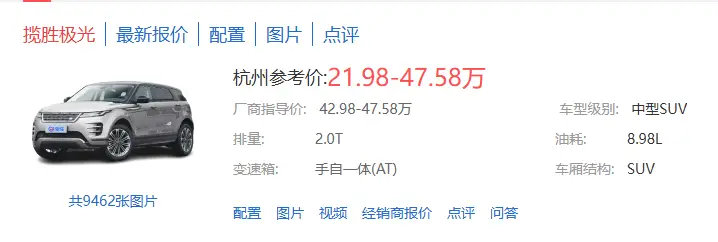
Why have the prices of Jaguar Land Rover, which used to be hard to get even with a markup, suddenly been slashed in half?
It's not that the big spenders are out of money; it's that they've been Ganked by domestic EVs.
You see, the 1.4 million RMB Range Rover under Land Rover hasn't budged in price at all, but in the 200,000 to 600,000 RMB range, they are all having a tearful clearance sale. Besides the Range Rover Evoque, there's also the Range Rover Velar, where the on-the-road price also gets chopped by around 200,000 RMB.
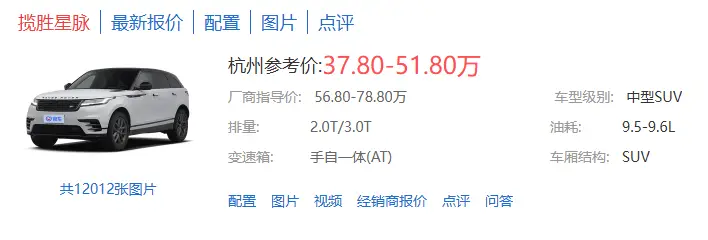
The reason is that this price range has been completely cornered by domestic EVs.
In our earliest impressions, EVs were just Hongguang MINIs like chopped pepper fish heads, or various grocery-getters from BYD. But now, for 500,000 RMB, you can buy large SUVs like the Zeekr 9X, Li Auto L9, and AITO M9 with high configurations and great chassis. The concept of luxury has been completely reshaped.
So why would I take that money to settle for a base-model mid-size SUV like the Range Rover Velar? Just because it's called a Range Rover?
Therefore, before the domestic '9-series' battle has even concluded, these entry-level models of luxury brands have already been exposed for what they truly are.
By March of this year, Chery Jaguar Land Rover simply threw in the towel, announcing the halt of all ICE vehicle production (except imports). The Range Rover Evoque and Jaguar XEL are already in the process of clearing inventory, and thus everyone has witnessed the spectacle of prices being slashed in half.
But this is far from over. Aside from Jaguar Land Rover, the BBA brands with more complete model lineups are experiencing the same. If in the past only the entry-level 34C models were collapsing, now, as domestic EVs move upmarket, the pressure has spread to the 56E luxury car segment.
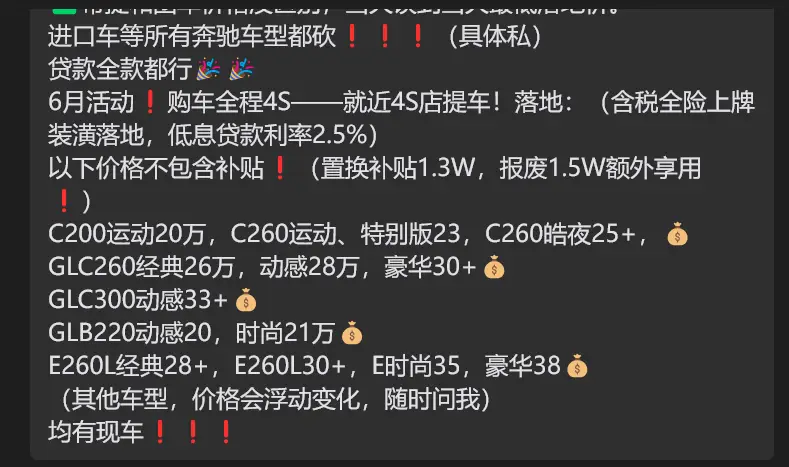
For Mercedes-Benz, a 200,000 RMB C-Class and a 300,000 RMB E-Class have become the norm. This indiscriminate attack has probably made many previous owners cry faint in the restroom.
At the beginning of this year, BMW also slashed the official guide prices of 31 models in one go, with most reductions exceeding 10%.
You have to know, the move of 'official price cuts' was not common among luxury brands in the past.
Previously, when ICE vehicles had massive sales, it was only the dealers secretly dropping prices. The manufacturers would at most turn a blind eye, but would absolutely never mention the word 'price cut.' Even to maintain their prestige, BMW once tried to lower its sales targets and exit the price war.
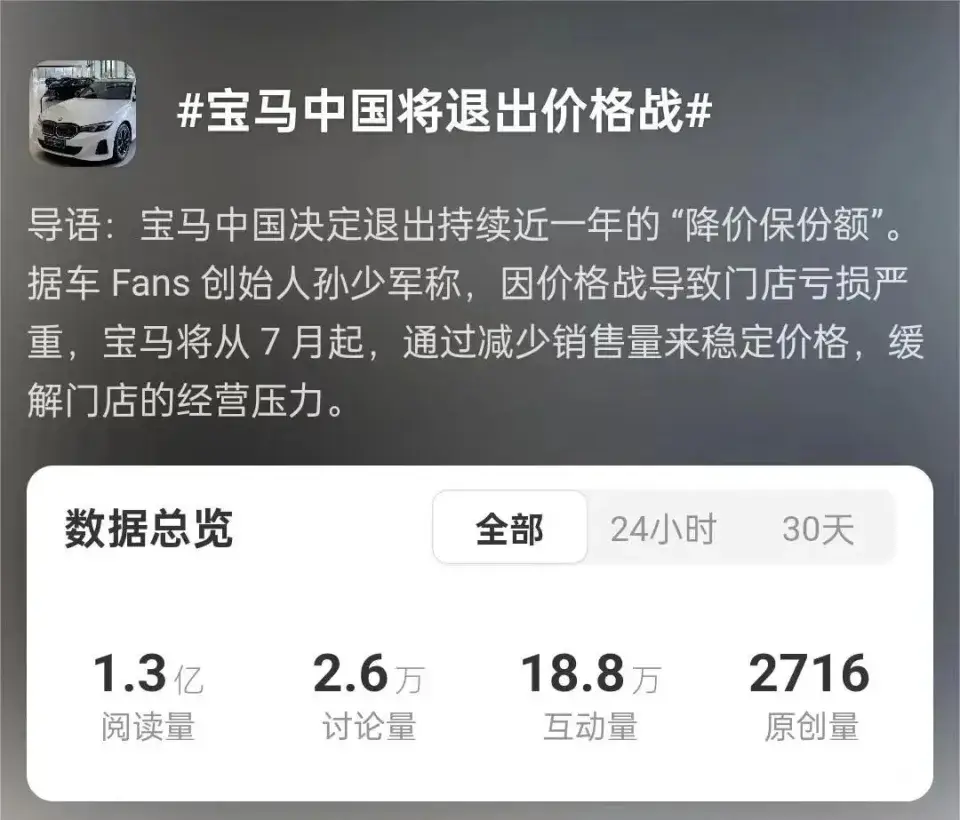
But now, times have changed. BMW has started officially announcing price cuts, and has successively dragged Audi and Mercedes into the gutter. It seems they also have a bit of a 'throwing in the towel' mentality.
The most typical is the BMW 740Li Leading model. The previous generation had a guide price of 1.069 million RMB, which has now dropped to 938,000 RMB, an official cut of 130,000 RMB. Even so, the market still isn't buying it; the actual terminal on-the-road price is only 714,000 RMB, requiring another 220,000 RMB to be knocked off.
This is entirely due to the impact of the Maextro S800. After its launch in May last year, BMW 7 Series sales plummeted from over a thousand units to around 500.
So everyone can see the pattern, right? As long as domestic EVs move up in price, similarly positioned luxury ICE vehicles get eaten up. The ones left with firm prices are generally those that haven't met their match yet...

In other words, behind every domestic EV breaking through, there is an ICE vehicle silently shedding tears.
And many of the mainstream grocery-getters you think you can 'buy with your eyes closed' have actually long been hit with massive discounts. For example, the Honda Accord, while its guide price remains stubbornly unchanged, the actual price has dropped by 50,000 RMB, a decline of nearly 30%.
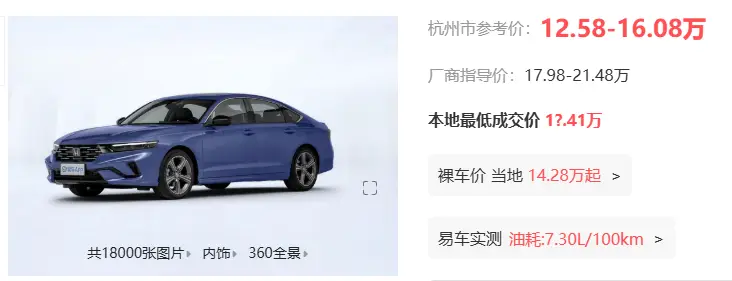
When you open the Yiche price drop ranking, it can basically be described as shocking.
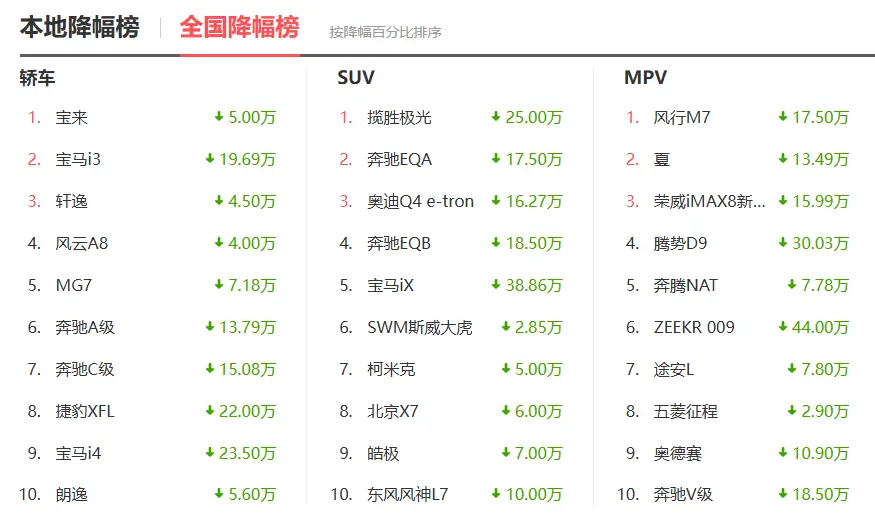
Does this mean you can bottom-fish ICE vehicles? Brother Bozi suggests you think again, because this price drop is a bit different. In the past, price cuts were to promote sales and maintain volume, but now both volume and price are falling, seemingly in a trend of collapse.
According to data from the China Passenger Car Association, in May this year, ICE vehicle retail sales were only 530,000 units, a year-on-year decrease of 39%. In contrast, the decline for new energy vehicles was only 7%.
And there is no such thing as 'domestic substitution' here; all ICE vehicles are treated equally, plummeting across the board. Independent brands fell by 39%, mainstream joint venture brands fell by 41%, and luxury brands also fell by 31%.
The most intuitive example is that last month, the top 10 sales of all models still included one ICE car, the Geely Binyue. By this month, the top 10 has been completely taken over by EVs; you have to count to the 17th place to find the Boyue L.
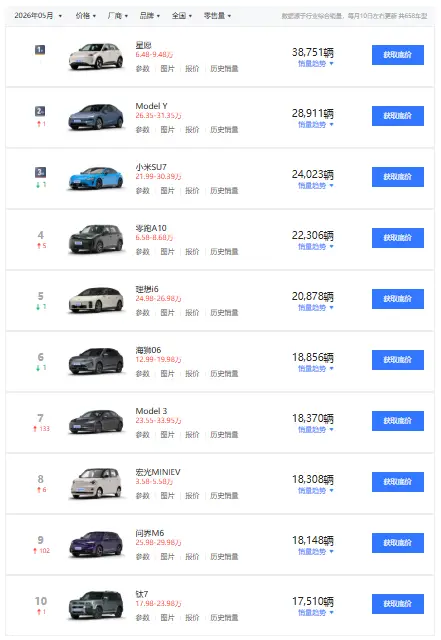

So one can imagine, major joint venture dealers are having a hard time.
In April this year, the comprehensive inventory coefficient of auto dealers was 1.89 (inventory/sales), a year-on-year surge of 34%, far above the 1.5 warning line, and the inventory coefficient of joint venture brands even reached 2.24.
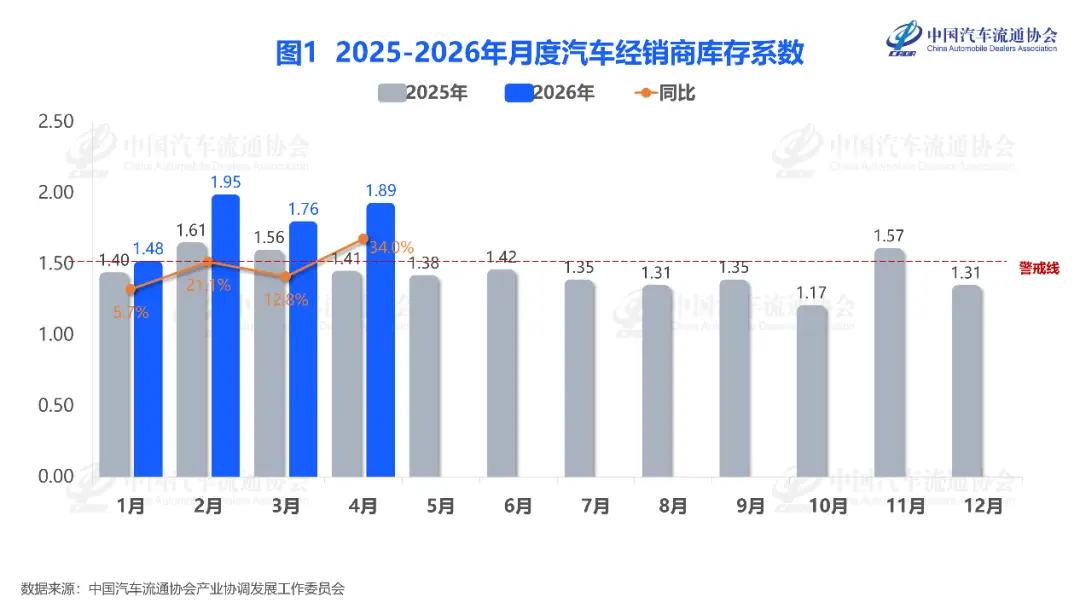
As a result, in the first quarter, 1,200 ICE vehicle 4S dealerships nationwide withdrew from the network. Yueda Kia, Chevrolet, Changan Ford, Dongfeng Peugeot Citroen, and others saw their 4S dealerships shrink by 50-70%.
This wave of collective price cuts is clearly a sign that car companies have run out of options.
But as the old saying goes, 'There are no unsellable cars, only unsellable prices.' So why is it that now, when prices are dropping, no one is buying?
Actually, besides the fear of car prices continuing to fall and taking a loss on the purchase, the key is that used car prices are falling even more sharply. Now, the resale value of ICE vehicles is almost as low as that of EVs.
According to the 'April 2026 China Car Resale Value Research Report' released by the China Automobile Dealers Association, the average three-year resale value of pure EVs is 45.2%, while ICE brands like Peugeot, Nissan, Skoda, and Citroen are already approaching this level. Chevrolet's resale value is even lower than the EV average.
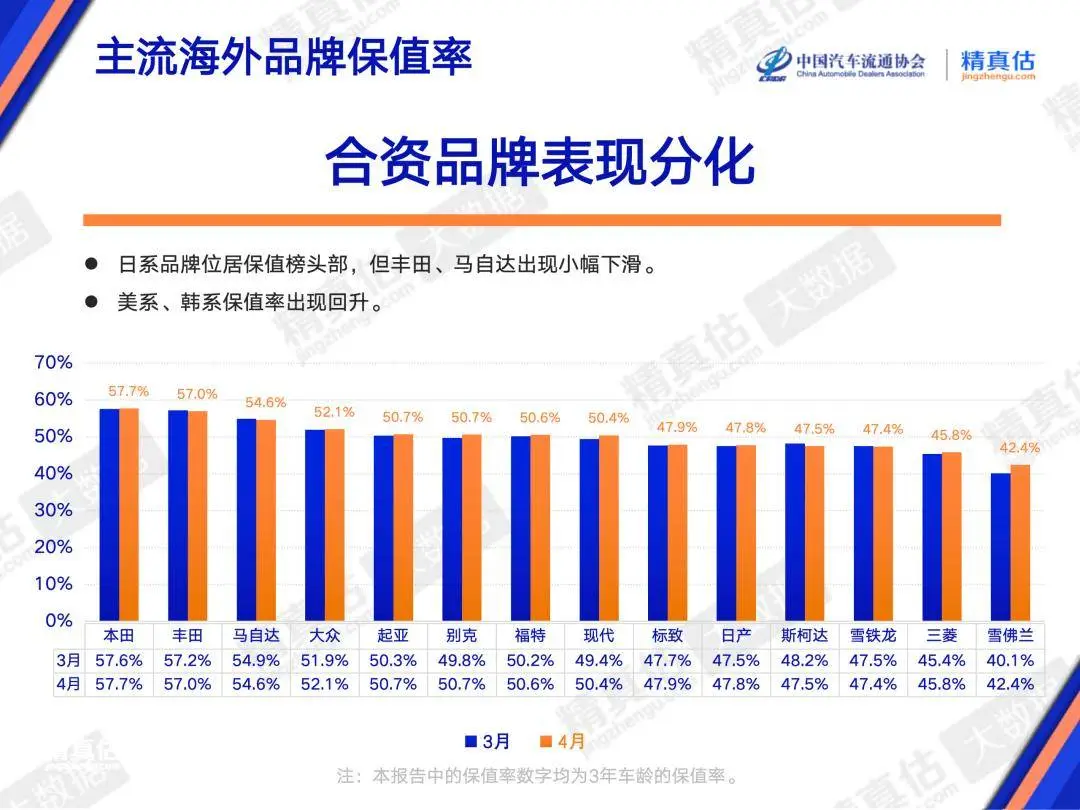
You have to know that in 2023, the resale value of these brands was basically about 10 percentage points higher. The most value-retaining brand, Toyota, could even approach 70%.
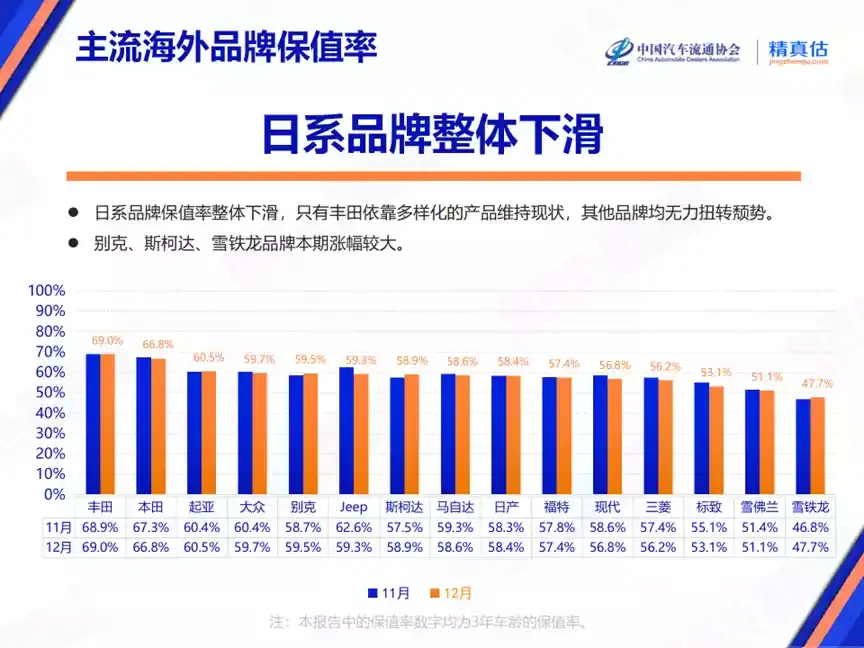

But as everyone abandons ICE for EVs, the resale value of ICE vehicles will likely never return to its former levels.
Media reports say that in the last half-year, the trade-in price for a Mercedes C-Class has dropped from 180,000 RMB to 130,000 RMB, a direct depreciation of 50,000 RMB.
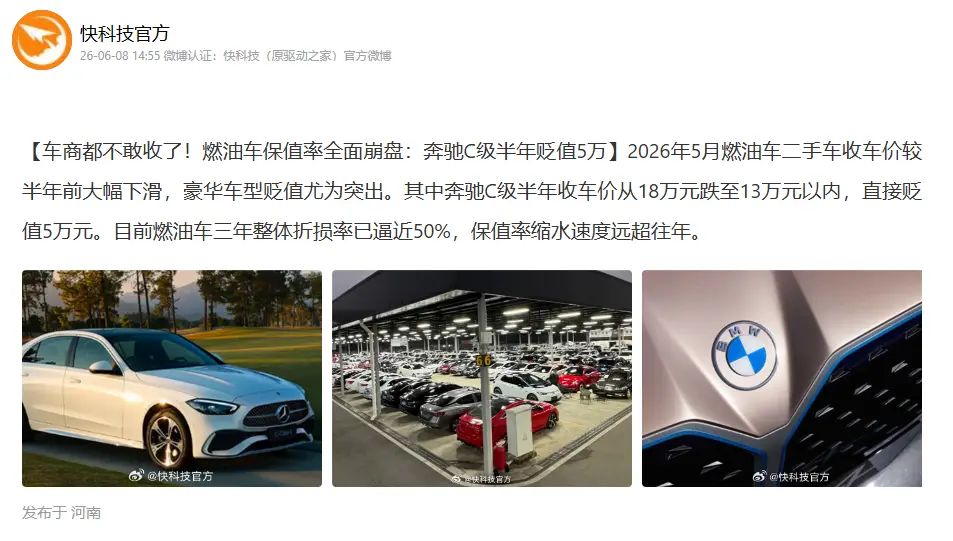
But even with low buying and low selling, practically no one dares to buy. The listing period for used cars has extended from 30 days last year to 45-60 days.
All these issues are shattering the last bit of confidence among ICE vehicle users. Meanwhile, the market share of EVs is getting higher and higher. In May this year, the sales share of new energy vehicles quietly broke through 60%, reaching 62.9%. For every 10 cars sold, 6 are EVs.

Of course, as an owner of both ICE and EVs, Brother Bozi doesn't mean to praise one and step on the other. If you still like ICE vehicles, you don't need to consider issues like fuel prices and resale value at all. The various ICE vehicles on the market are not only buyable, but also quite a bargain.
Whether used or new, many so-called luxury brands have already lost all their premium. Now, spending half the money can get you your Dream Car, isn't that awesome?
Although we must admit that EVs replacing ICE vehicles is an inevitable trend, and it's very difficult for ICE vehicles to make a comeback. But the ones anxious about this might be the car companies; for friends who truly love ICE vehicles, this is purely a huge benefit.
We can only say, thanks to EVs, ICE vehicles have finally become something we can afford.
Source: Chaping Jun
 微信扫一扫打赏
  支付宝扫一扫打赏
Comments (0)