
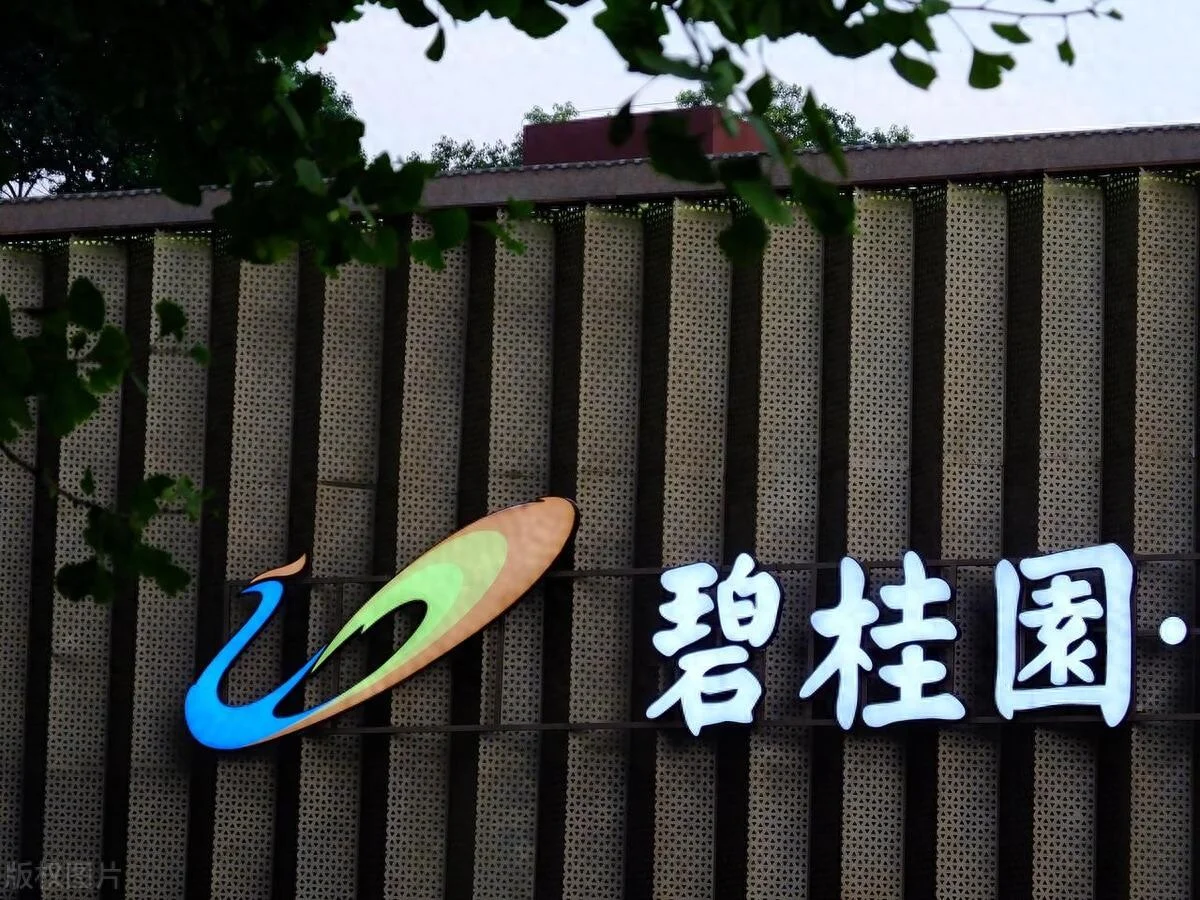
@DaMaoFinance: Changxin Technology is about to go public with a valuation of 2 trillion, but the most tragic figure has also emerged: the richest woman lost 27 billion. If we add LandSpace, the total amount she missed out on exceeds 34 billion.
The richest woman is Ms. Yang, formerly of the largest real estate developer Country Garden. The 34 billion is 10 times Country Garden's net profit last year, and not far from its peak profit of 39 billion in 2019. Yet, Country Garden's current total market capitalization is only 9.7 billion.
If we look solely at investment performance, Country Garden could almost score 90 out of 100. However, because it is a real estate company, it had to sell off chips it knew were highly profitable at low prices. In other words, even knowing they would be worth a billion in the future, they had to sell them for just 50 million now. Under a liquidity crisis, this is the cruelest thing imaginable.
Going back 10 years.
In 2015, Country Garden, holding ample cash, began investing outward, initially just as an LP. In 2019, they decided to do it themselves, raising 6 billion mostly on their own. The team evaluated over 1,000 projects and invested in 90, with 10 companies subsequently going public successfully—a quite high success rate.
The star enterprises among these include: Changxin Technology, LandSpace, UNISOC, BYD Semiconductor, Biren Technology, SJ Semiconductor, Dreame Technology, and KE Holdings.
Country Garden made significant layouts in the hottest sectors of the past two years: semiconductor chips, commercial aerospace, and robotics.
But the problem arose in 2023, when Country Garden defaulted.
This is how real estate companies are: they appear wealthy, but their scale is essentially built on debt. Country Garden's total liabilities were nearly 1 trillion, and its debt ratio soared to 93%. Although it had over 60 billion in cash on hand, most of it was restricted cash, with only 6.7 billion actually accessible. That year, it directly suffered a net loss of over 200 billion.
Even basic operations were difficult, let alone repaying debts.
And a more urgent task than repaying debt was "guaranteeing project delivery."
Boss Yang certainly didn't want to become the next Hui Ka Yan, so she had to put up real money, forcing her to dump assets.
The shares in Zhuhai Wanda Commercial Management were sold back to Wang Jianlin, recovering about 6 billion;
Changxin shares were sold to Hefei state-owned assets, recovering 2 billion;
LandSpace shares were sold to local state-owned assets, sold for 1.35 billion...
One month before Country Garden's default, the independently developed Zhuque-2 by LandSpace soared into the sky, with the "Country Garden Venture Capital" logo clearly visible on the rocket body. No one expected this to become a swan song.
Now that Changxin has passed the listing hearing, it is absolutely a super IPO project. Based on the industry's estimated 2 trillion valuation, Country Garden's initial investment would have multiplied at least 30 times, with a book value exceeding 27 billion. As for LandSpace, which they invested 500 million in back then, its book value would also approach 7.5 billion if it successfully IPOs.
Unfortunately, there are no "ifs" in life. If Country Garden hadn't sold those shares back then, the company might be gone now. It was a matter of life and death, and they had to bite the bullet.
We can only say that Boss Yang was severely victimized by the cycle. At the time when cash was most needed, she had to sell golden assets already in her grasp on the eve of their IPOs, making it the most regrettable story.
In short, it remains true that circumstances are stronger than individuals.
On a side note, we introduced the concept of "housing is for living, not for speculation" in 2016, yet a massive bubble still formed in 2021. If that bubble had been contained earlier, many companies and families would be under much less pressure today.
 微信扫一扫打赏
  支付宝扫一扫打赏
Comments (0)