
@XiaodouXiaogua: Someone asked me whether the current market is a bull or bear market. I'll post a chart for you to judge for yourselves. The green line represents conglomerate stocks, and the red line is the median of all A-shares. Since December 2025, the conglomerate stock index has risen by 34%, while the median of all A-shares has dropped by -29%.
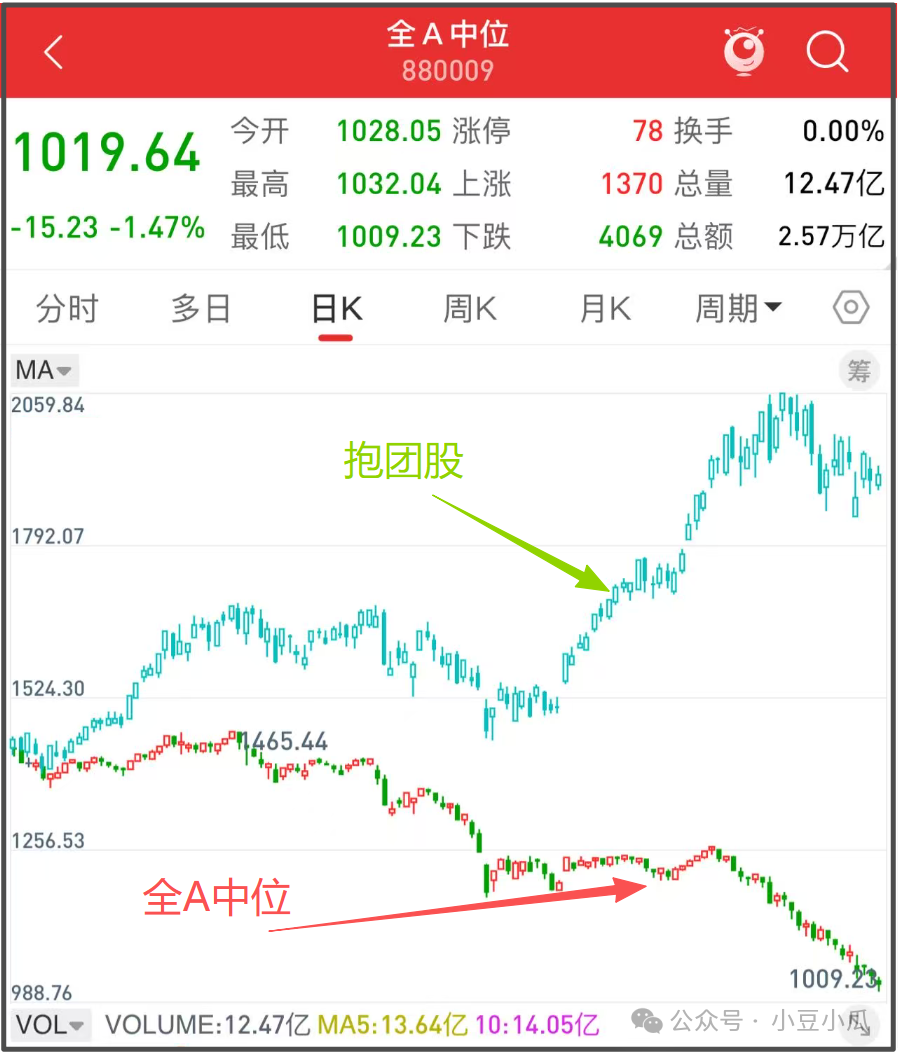
The answer is obvious: it's a bull market for the top 5% of conglomerate stocks, but a bear market for 95% of stocks—and an epic mega-bear market at that. I asked AI to illustrate the current market, and it drew a bear wearing a bull hat.

@MaoBiDao: I say that it's actually already a slow bear market, can you feel it? Today's market median fell another 1.41%. At the worst point during the session, the cumulative median for 2026 had exceeded -13%.
Typically, when the cumulative median decline within a year exceeds 10%, it already feels like a minor bear market—widespread losses and very hard to make money. If the cumulative median decline within a year exceeds 30%, it is universally recognized as a major bear market.
If it continues to slip like this, it will wipe out last year's gains. Even worse are some traditional sectors, which have been falling both last year and this year. They are in a state of extreme deep bear, even more miserable than when the Shanghai Composite was at 2,600 points.
Actually, the incremental capital brought by this market rally has always been limited. There is no massive wave of nationwide account openings like in 2007 or 2015; it's more of a rotation of liquidity within the market. About half of the funds driving the AI sector's rise have been siphoned from traditional sectors. This is true not only for A-shares but also for overseas markets, where analysts are also complaining about the extreme style and rationality of similar market trends.
 微信扫一扫打赏
  支付宝扫一扫打赏
Comments (0)