
Every year, over 3,000 retired athletes in situations similar to Wu Liufang's may not have the same luck.
Right after the May Day holiday, a trending topic made many people pause their scrolling—Wu Liufang had paid off her 400,000 yuan debt.
The former gymnastics world champion, a controversial streamer once criticized across the internet for "borderline" content, spent over a year dancing in front of the camera, live-streaming, shooting short dramas, and promoting intangible cultural heritage, finally clearing the debt that had weighed on her for eight years. On the night she scraped together the final payment, she probably didn't celebrate; she just confirmed the transfer record—the money arrived, the debt hit zero, and she quietly sat alone.
Later, she said something to a reporter that felt like finally exhaling a breath she had been holding for years: "Only now that I have paid off this debt can I pick my dignity back up."
A world champion with 15 gold medals took eight years to regain her dignity. This is not an inspirational story; it is a case study of survival. And the silent group standing behind Wu Liufang is far larger than imagined.
The Champion's Debt Piled Up as a Family's Wound
When she retired in 2013, Wu Liufang made a choice many couldn't understand—she took a one-time retirement payout for self-employment, giving up a secure system position as a provincial team coach. It wasn't because she didn't want stability, but because her family's living conditions were truly terrible. A family of four squeezed into a rented room, unable to take hot showers year-round, with mice always scurrying in the corners. After receiving that retirement payout, she didn't keep a single cent, putting it all toward a down payment for her family. When she got the keys to the 70-square-meter new apartment, she was thrilled—the feeling of having a home was more grounded than a gold medal.
But life never cuts you slack just because you're kind.
After graduating from Beijing Sport University, Wu Liufang went to Hangzhou to work on a "gymnastics into schools" program. The contract was for two years; the first year's salary was 4,000 yuan a month, rising to 6,000 in the second year. She never got the promised institutional position at that sports school. She heard "the position will come" for two years, but in the end, nothing materialized. Her parents' tailor shop, which they had run for nearly 30 years, was hit hard by e-commerce and couldn't make ends meet. Soon after, her father was hospitalized twice, and her mother was diagnosed with a malignant tumor, piling up 400,000 yuan in debt.

For someone earning four to five thousand yuan a month, 400,000 yuan is an astronomical figure. The last straw came when she returned to her hometown. Her father picked her up at the train station and, without saying a word, took her straight to the hospital—her mother had just woken up from surgery for the malignant tumor, her hair yet to grow back from chemotherapy. At that moment, she hated herself for being unable to help at all.
A world champion's "dignity" wasn't shattered by a single blow; it was worn away bit by bit—by hospital bills, by a promised position delayed for two years, by the end-of-month calls chasing her salary.
The Stigma of "Borderline" Content and the Absurdity Behind 6 Million Views
Many people probably still remember what happened next.
In November 2024, 26-year-old Tokyo Olympic champion Guan Chenchen left a comment under one of Wu's dance videos: "Senior sister, if you want to do borderline content, that's your business, but don't smear gymnastics." Wu Liufang fired back at the time, saying, "Sour grapes."
Public opinion completely exploded. The hashtag #FormerGymnasticsChampionBorderlineContent trended for days, with both sides fiercely clashing. The critics said: "A world champion doing this kind of stuff brings shame to gymnastics!" "With so many paths to take, why choose this one?" Those who understood argued: "She's 400,000 yuan in debt; if she doesn't become a streamer, are you going to pay it off?"
What was the most absurd part? Wu Liufang had persevered for four years, testing various directions to build a content IP using her identity as a "retired gymnast." Her follower count remained stuck at just over 40,000; no matter what she did, it wouldn't grow. Yet, the moment the "borderline" controversy erupted, she gained 6 million followers overnight—but was then immediately silenced and penalized by Douyin. The follow function was disabled, and her follower count plummeted back to 44,000 overnight. Six million became 40,000; it was as if she had been torn to shreds on the internet and pieced back together.
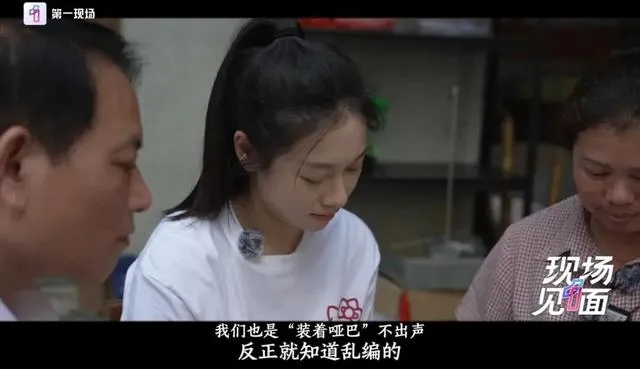
But a side few people saw was the deeper sorrow hidden within this cycle of traffic. Wu Liufang said she didn't dare leave the house during those days, afraid people might actually throw rotten eggs at her. Meanwhile, her parents sat in their old tailor shop, scrolling through the comments section for her, jabbing at their phone screens and cursing, "They're talking nonsense, it's too outrageous."
This storm was the last thing Wu Liufang wanted to face over a year ago, but it has now settled. For her, the hardest part wasn't making money to pay off the debt; it was that while she was repaying it, everyone was saying she had no dignity.
40% of Retired Athletes Have No Way Out
When you retire from the gymnastics team, what do you actually take with you? Over a decade of injuries, highly specialized skills, social experience largely isolated from the outside world, and a gold medal—but in the job market, these are almost useless.
According to the General Administration of Sport of China, about 3,000 to 4,000 registered athletes face retirement nationwide each year. Those who can smoothly transition into coaching or administrative roles within the system account for roughly 10% to 15%, and the vast majority of them are Olympic champions at the "top of the pyramid."
Weightlifting champion Zou Chunlan worked as a bathhouse scrubber after retiring; marathon star Ai Dongmei set up a street stall—these headlines aren't really news today because such things happen far too often.
Although Wu Liufang won many world championships during her career, without the halo of an Olympic gold medal, her commercial value and access to institutional resources were worlds apart from true "top-tier athletes." "15 gold medals can't match the value of 1 Olympic gold"—these words are heartbreaking, but they are the truth.
Lacking a systemic safety net, the "toolkit" available to retired athletes is extremely limited. MCN agencies saw this and proactively offered contracts when signing them—is there a guaranteed base? No contract, but if your traffic is good, you can make money fast. The reliance on such a "fast track" not only amplified Wu Liufang's immediate traffic but also invisibly squeezed dry the last bargaining chip she had: her identity as an athlete.
After clearing her debt, Wu Liufang pivoted to the traditional Chinese style niche, starting to promote intangible cultural heritage and shooting short dramas. Her account's follower count has now rebounded to 900,000. Her greater value, perhaps, lies in blazing a trail of self-rescue for the vast number of retired athletes—a path that insists on "not being swallowed up" even when facing the backlash of internet traffic.
Using Institutional Reform to Break the "Gold-Medal-Only" Security System
Ultimately, Wu Liufang's personal turnaround was fought too slowly, took too long, and came at too heavy a price. She eventually climbed out on her own, but more of the 3,000-plus retired athletes in similar situations may not have the same luck.
Fortunately, on a practical level, we are seeing some glimmers of hope.
On one hand, the fund center under the General Administration of Sport has begun promoting transparency and expanding the coverage of compensation for self-employment. Several provinces have successively introduced financial compensation measures and entrepreneurship support programs for self-employment, gradually building a "safety cushion" for retired athletes.
On the other hand, social forces are quietly filling the institutional gaps. Wang Meng's "Wandao Sports" explicitly proposed the concept of "no social recruitment, only hiring retired athletes." Through tiered training, it provides retired athletes with diverse choices ranging from technical positions to streaming hosts, without relying on the excessive consumption of their past honors.
In addition, new technologies and platforms are opening up spaces in unexpected ways. Douyin's "2024 Retired Athletes Data Report" mentioned that over 2,500 retired athletes joined platforms like Douyin within a year. Although the head effect remains significant, many non-top-tier sports influencers have quietly accumulated unique, niche fan bases and achieved long-tail monetization.
At the national team level, more flexible and long-term athlete development systems are also being explored. The concept of "integration of sports and education" has entered the substantive implementation stage, linking academic grades directly to athletes' long-term ratings, thereby fundamentally reducing the risk of cultural education gaps after retirement.
These scattered practices may not be enough to change the overall situation in the short term, but for every retired athlete standing at a crossroads, they are like a crack finally pried open, letting in a breath of fresh air.
After "The Light Boat Has Passed Ten Thousand Mountains"
When a reporter last asked Wu Liufang how she felt after paying off her debt, she quoted a line of poetry by Li Bai: The light boat has passed ten thousand mountains; looking forward, the long road ahead is also brilliant.
Her next wish doesn't sound grand, but it is specific and warm—she wants to save up to buy an apartment with an elevator for her parents, who have trouble with their legs.
"Borderline" may have been sealed as an indelible label in the tide of internet traffic. But for Wu Liufang, that was merely a very cramped transitional period in her life. A gymnastics champion's true dignity isn't the moment she stands on the world podium—that was something she took—it is the process of being thrown down and slowly washing herself clean to stand back up.
This story deserves to be told, not because it's a dramatic "reversal," but because it happens to uncover a heavier, more concrete proposition: When a nation's sports competitive system puts the gold medals forged by an ordinary person's dozen years of training on display, can it also properly handle their survival landing after retirement?
If this system could move faster, so that people like Wu Liufang wouldn't have to rely on controversy and self-consumption just to pay off their debts—that would be true dignity.
Source: This article is from the WeChat Official Account: Sports Economy Observer
 微信扫一扫打赏
  支付宝扫一扫打赏
Comments (0)