
You folks might not have realized it yet, but just yesterday — May 6, 2026 — Samsung (China) Investment Co., Ltd. suddenly posted an announcement on its official website.
The announcement wasn't long, but its impact was massive. The original text read: To cope with the rapidly changing market environment, after careful consideration, Samsung Electronics has decided to stop selling all home appliance products, including TVs and monitors, in the Chinese mainland market.
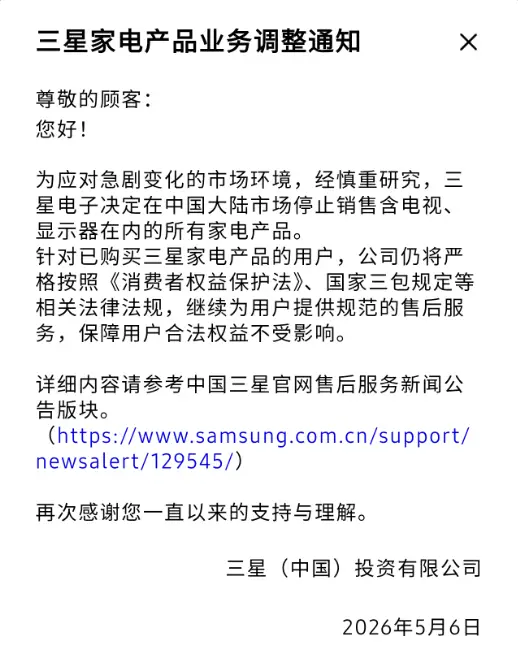
Translated into plain English: Samsung home appliances will no longer be sold in the Chinese mainland market.
To this end, Samsung specifically listed a cessation of sales inventory, which includes products like TVs, monitors, air conditioners, refrigerators, washing machines, dryers, washer-dryer combos, clothing care machines, audio equipment, projectors, vacuum cleaners, and air purifiers...
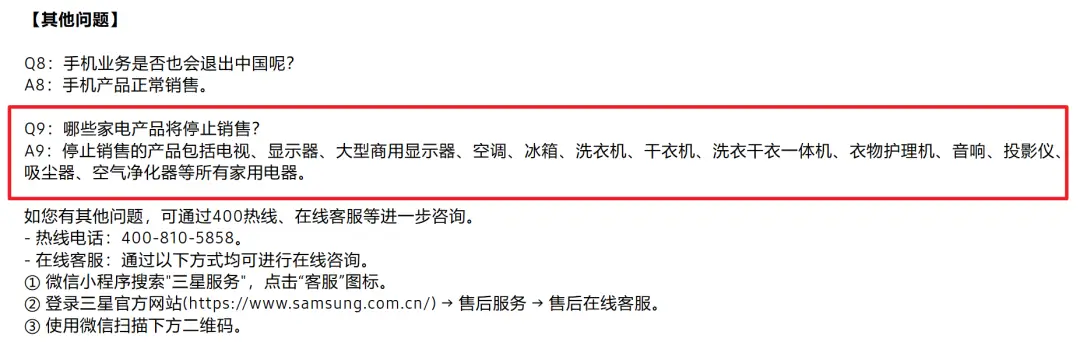
This means that, apart from mobile device businesses like smartphones and tablets which will continue, it won't be easy to buy a brand new Samsung TV, monitor, refrigerator, or washing machine through official domestic channels in the future.
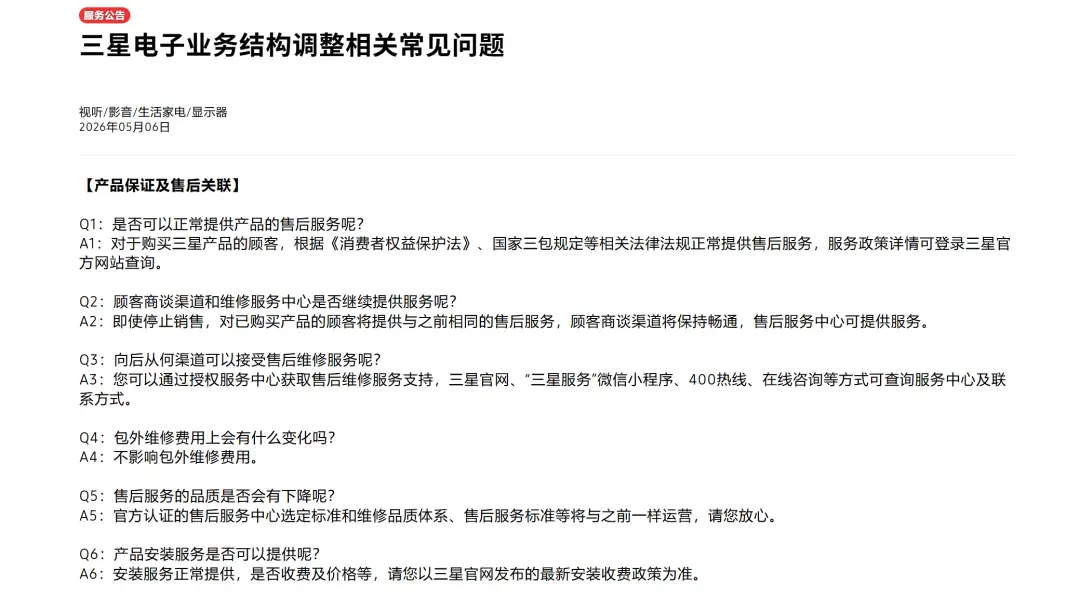
Of course, for those who have already bought Samsung monitors and home appliances, there's no need to panic too much.
Samsung also stated in the announcement that subsequent after-sales service will continue to comply with the "Consumer Rights Protection Law" and the national "Three Guarantees" regulation. If it needs warranty, it gets warranty; if procedures need to be followed, procedures will be followed.
But even so, this news still makes one feel a bit dizzy.
After all, on one hand, Samsung Electronics' market cap just broke the trillion-dollar mark, making it the second Asian tech company after TSMC to reach this milestone, riding high on its success; on the other hand, with a single announcement, it completely axed its home appliance business that it had cultivated in the Chinese market for over thirty years.
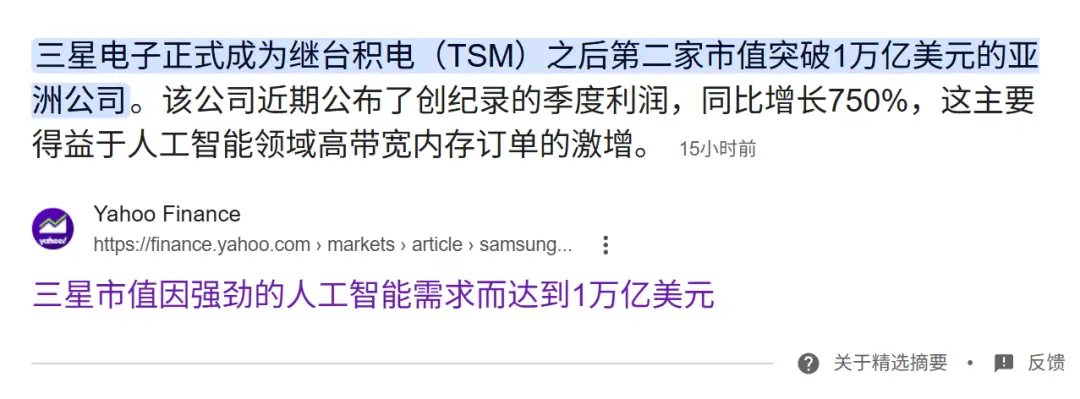
The contrast in this plot is just too huge. It doesn't look like they ran out of money to flee; rather, it's more like their foundation is so solid that they simply don't want to play anymore. So the question arises — why did a giant that sold home appliances in China for decades suddenly run away? What is Samsung after?
To understand this matter clearly, we need to turn the clock back thirty years.
In 1992, Samsung Electronics officially entered the Chinese market. At that time, domestic home appliances were still in their infancy, with weak technology and brands. Samsung charged in with the halo of a high-end Korean foreign brand, positioning its TVs, refrigerators, and washing machines directly towards the high-end and quality market.
To be honest, back in the day, having a Samsung LCD TV in your home was pretty much like driving a Porsche now — it gave you a lot of face.
How fierce was Samsung at its peak? Around 2005, Samsung's color TV market share in China once approached 20%, crowning it first in the industry; for white goods, Samsung refrigerators and washing machines also ranked among the top in the industry thanks to differentiated technology and brand premium.

Samsung home appliances back then were a giant in the truest sense, but the saying "the wheel of fortune turns" spins especially fast in the home appliance industry.
According to channel monitoring data from AVC in recent months, Samsung's share of offline sales in China's color TV market is down to just 3.54%, ranking 5th offline; refrigerators at 0.41%, ranking 14th offline; washing machines at 0.38%, ranking 15th offline.
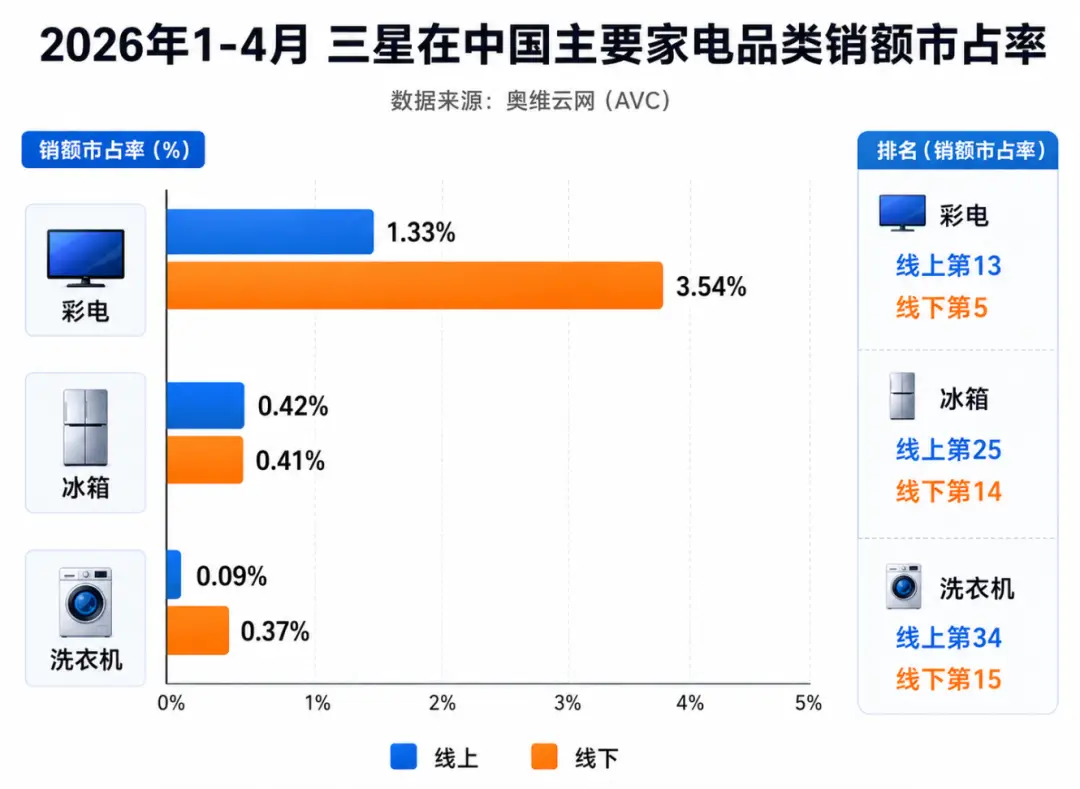
What does this mean? Color TV sales have shrunk by more than 80% compared to the peak, and home appliance sales are less than 1% of their prime. In other words, Samsung home appliances have long ceased to be a giant in China; they can't even be considered a major player, at best a nobody.
So, while this announcement was sudden, it's actually not surprising at all — after all, with market share having dropped this low, whether they exit or not makes little difference to consumers. Most people probably haven't seen a Samsung home appliance counter in major offline stores for a long time.
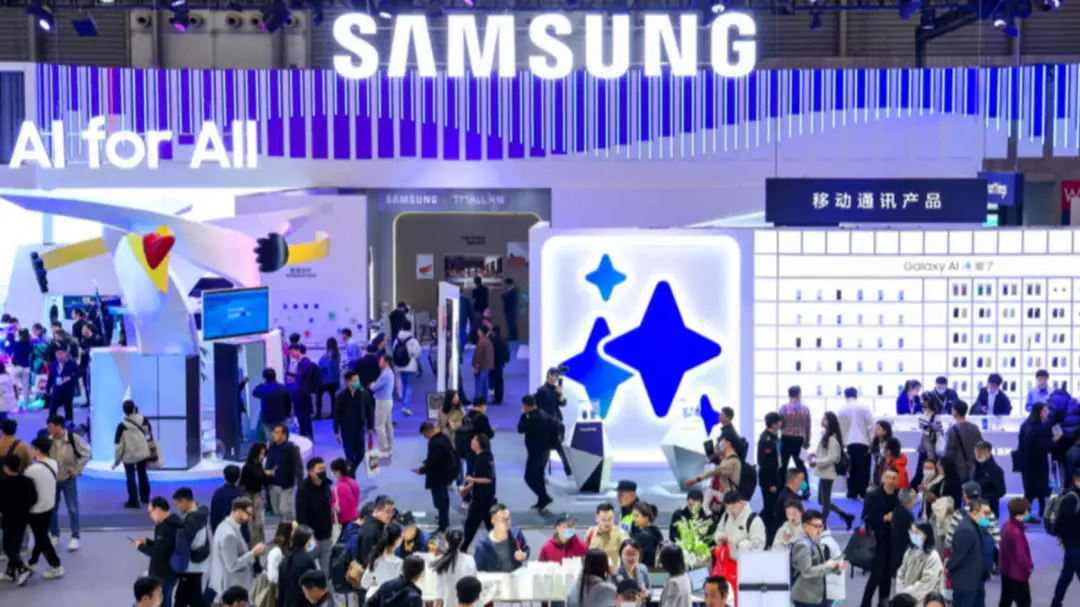
Many netizens' first reaction upon seeing this news was: Huh? Samsung was still selling home appliances in China? That's pretty heartbreaking...
Moreover, Samsung's withdrawal actually had early signs.
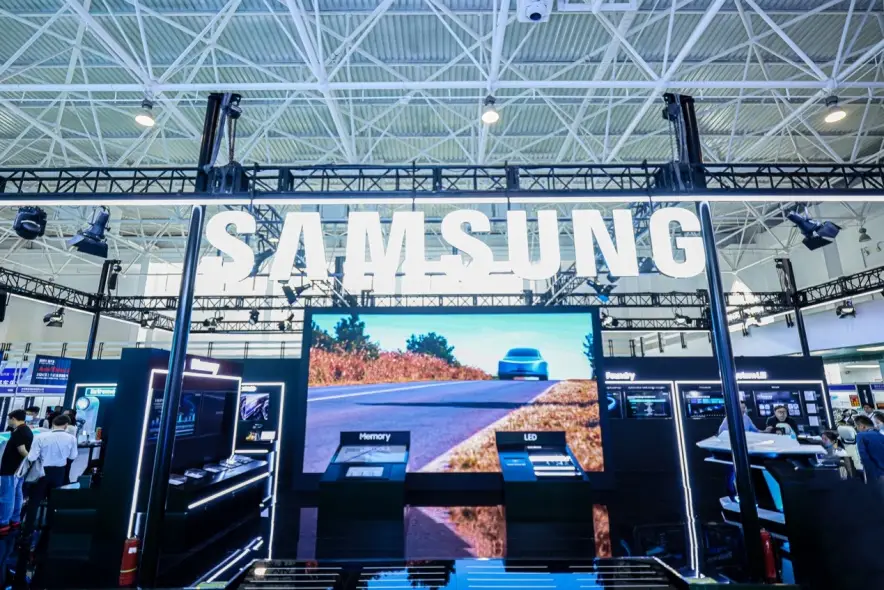
When our editorial team visited the China Home Appliances and Consumer Electronics Expo (AWE) in Shanghai this year, we found that local brands like Haier, TCL, Xiaomi, and Huawei were all heavily present. Even foreign peers like Sony and LG didn't miss it, but Samsung was absent.
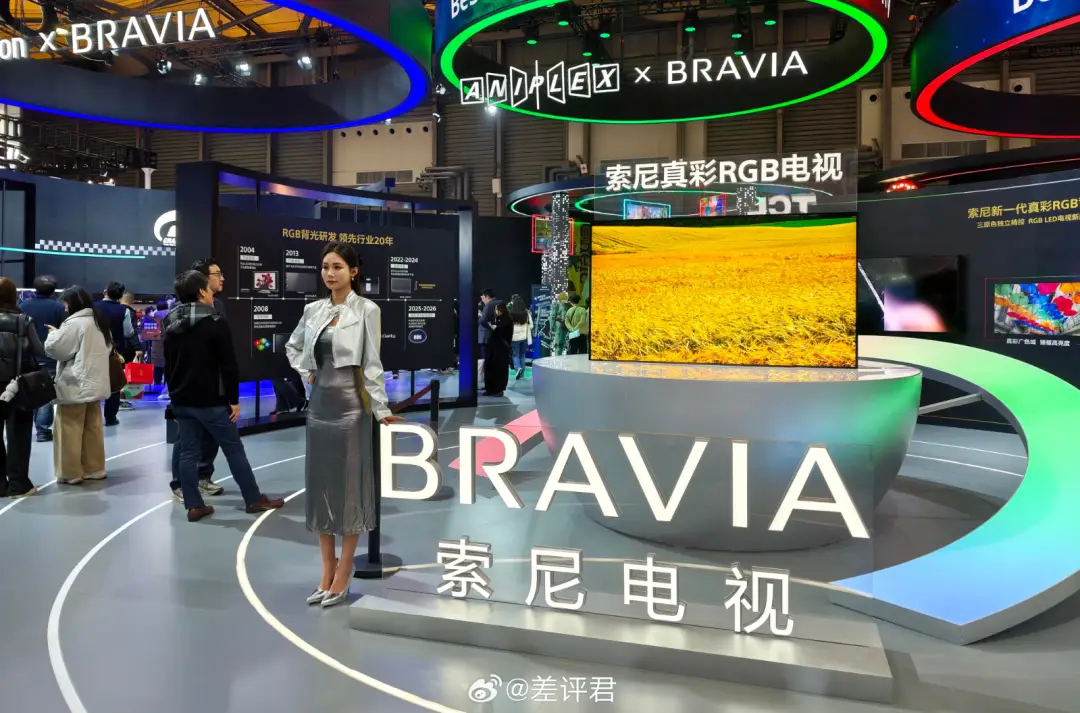
Keep in mind that last year it still showed up with a thousand-square-meter booth. Its direct absence this year made it obvious to anyone with a discerning eye that Samsung was about to make a big move; it's just that people probably didn't expect it to come so suddenly and so thoroughly...
But then again, the decline in market share and the eventual official announcement of exit are ultimately results, not causes. I believe many of you reading this are curious about what exactly Samsung home appliances went through over these thirty-plus years to end up where they are today.
The most direct reason, of course, is that domestic brands are just too competitive. In the past, foreign brands relied on technology, design, brand, and channels, while domestic brands competed on price. Foreign brands targeted the high-end, domestic brands targeted the low-end; although they were on the same stage, they weren't really playing the same game.
But look at the past few years, the Chinese home appliance market is no longer the same landscape.
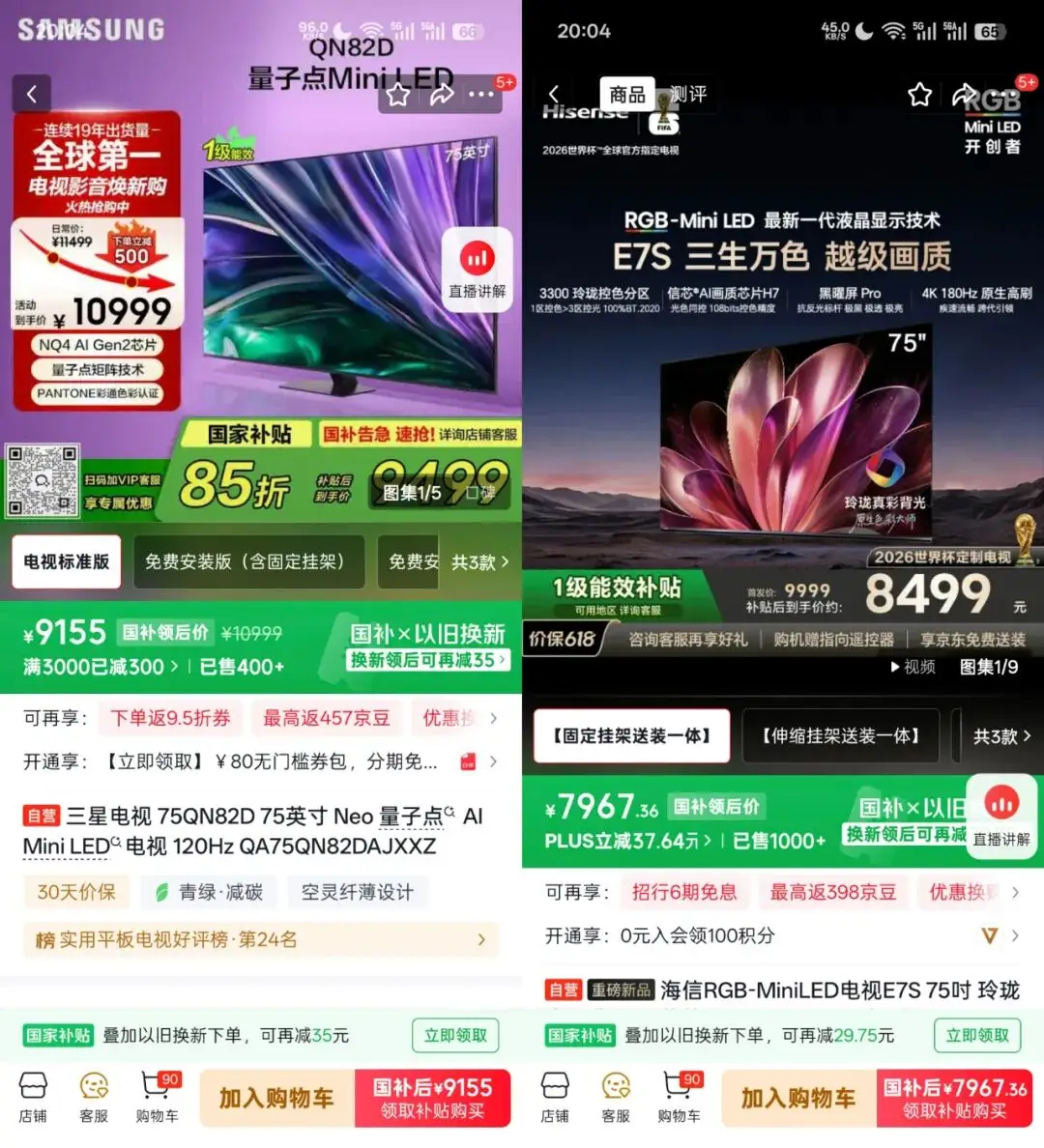
Take the TV sector for example. Now, TCL and Hisense pile on Mini LED, large sizes, high refresh rates, and local dimming. At the same price, their specs are higher; at the same specs, their price is lower. Consumers aren't fools; they naturally know how to choose.
Furthermore, Samsung TV's system localization is mediocre. User-friendly experiences like screen casting, installing third-party apps, and connecting to NAS are completely on a different level compared to domestic systems built on the Android底层, which really turned away a group of consumers.
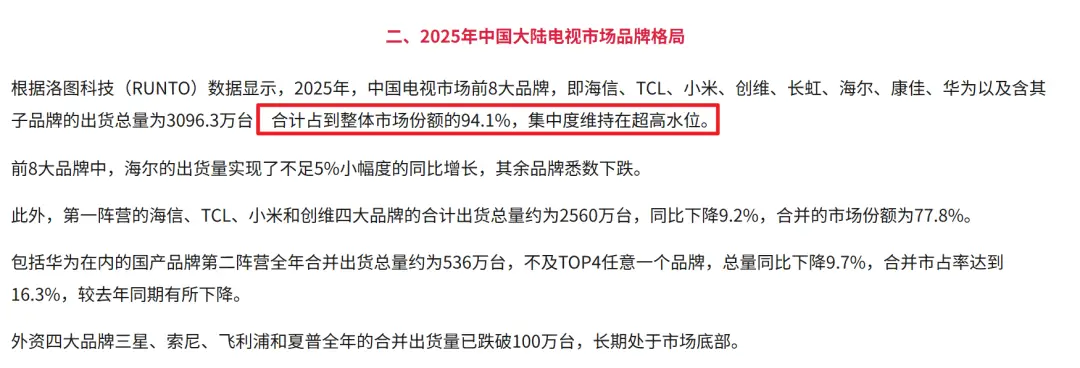
According to data from RUNTO, the top eight brands in the Chinese TV market in 2025 are Hisense, TCL, Xiaomi, Skyworth, Changhong, Haier, Konka, and Huawei — all domestic brands, with their combined shipments accounting for over 94%.
As for foreign brands like Samsung, Sony, Philips, and Sharp, their combined shipments have fallen below 1 million units, not even a fraction.
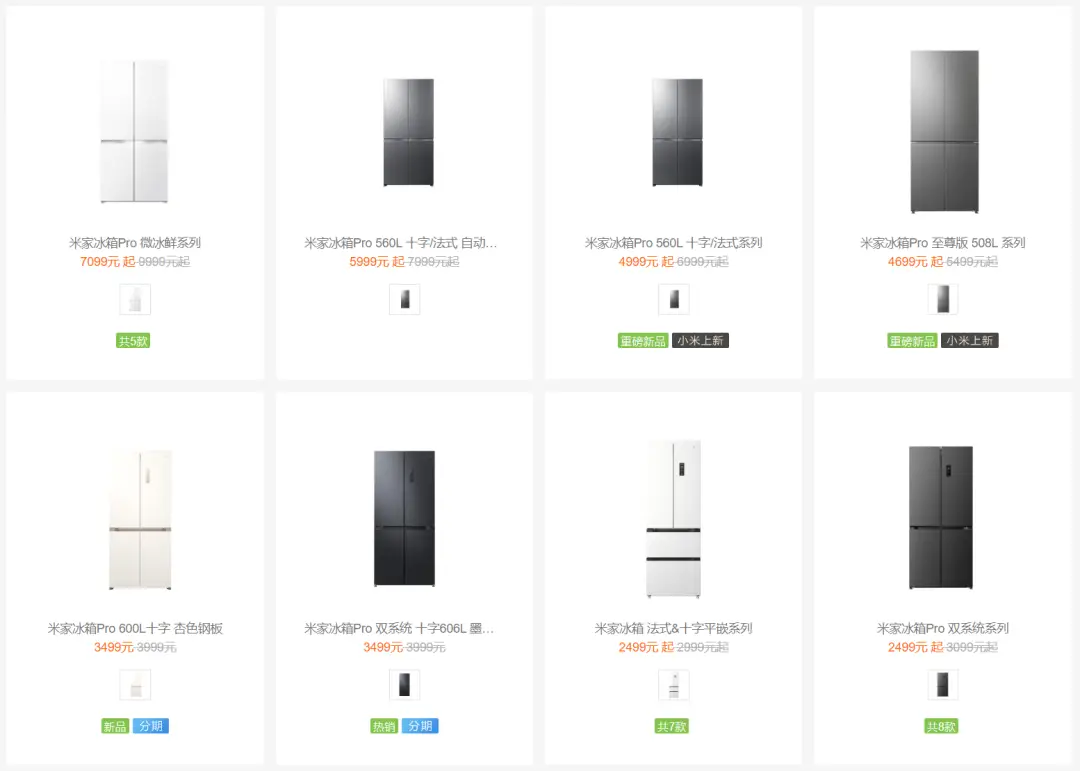
White goods go without saying. Refrigerators, washing machines, and air conditioners have always been the strongholds of local giants like Haier, Midea, and Gree. They have formed a complete localized system in offline stores, installation and after-sales service, trade-in programs, and product coverage.
If you want to buy a refrigerator, domestic brands offer everything from basic models costing one or two thousand yuan to premium built-in, French door, and cross-door models priced at over ten thousand yuan. If you want a washing machine, they can set you up with front-load, top-load, washer-dryer suites, all-in-one washer-dryers, and dual-zone washing machines.
As a foreign brand, many of Samsung's home appliance product logics are still globally oriented. The Korean headquarters sets the direction, and the Chinese market just sells along. As a result, the iteration pace of Samsung's home appliances is completely out of sync compared to domestic ones.
For example, I wonder if you folks have ever heard of a "dining sideboard refrigerator"?
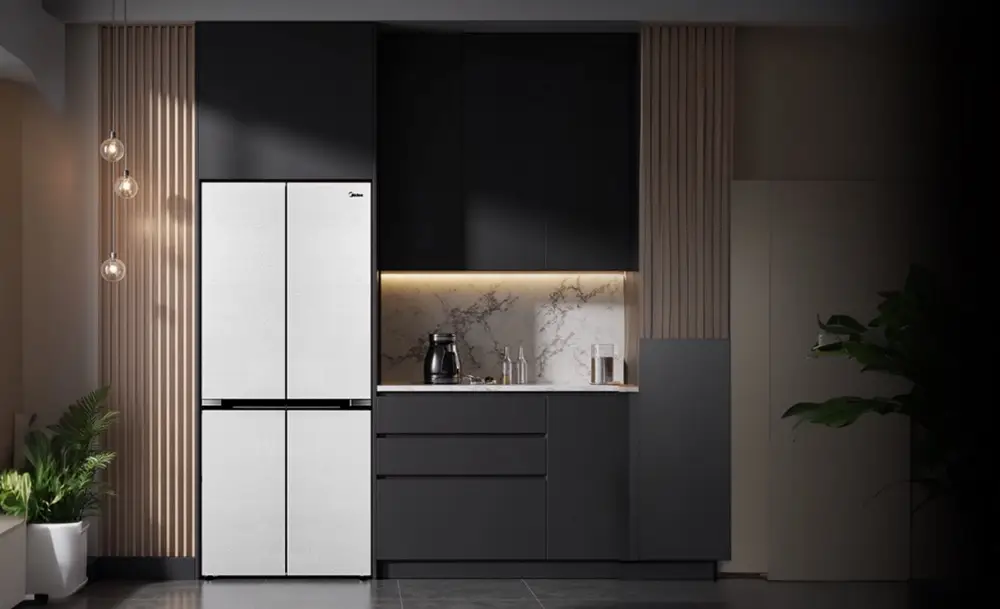
Here's the thing: our colleague Miluo was renovating his new home a while back. Due to the limited space, the newly bought refrigerator could only be placed next to the dining table. However, the vast majority of imported brands sell built-in refrigerators that are over 60cm thick.
These large refrigerators do look impressive, but they simply can't fit next to the dining table... As a result, while wandering into the Midea exhibition area, he accidentally discovered that they had released a refrigerator that is only 45cm thick, perfectly solving the dilemma of having to choose between double doors and a small apartment.
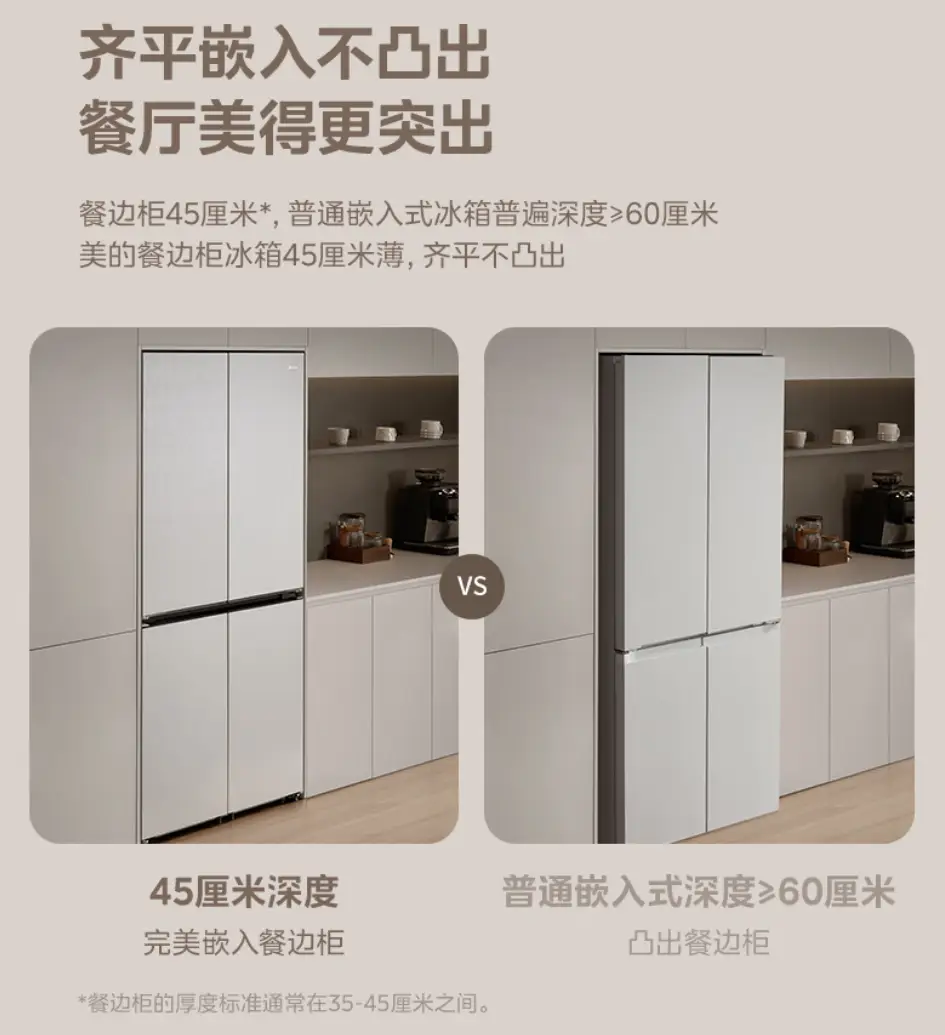
Interestingly, this Midea refrigerator was released in April 2025.
Technically speaking, making a thinner fridge isn't a difficult problem for foreign brands. But the crux of the issue lies right here — their product roadmaps probably never even considered the demand that "Chinese small-apartment families need a thin refrigerator"...
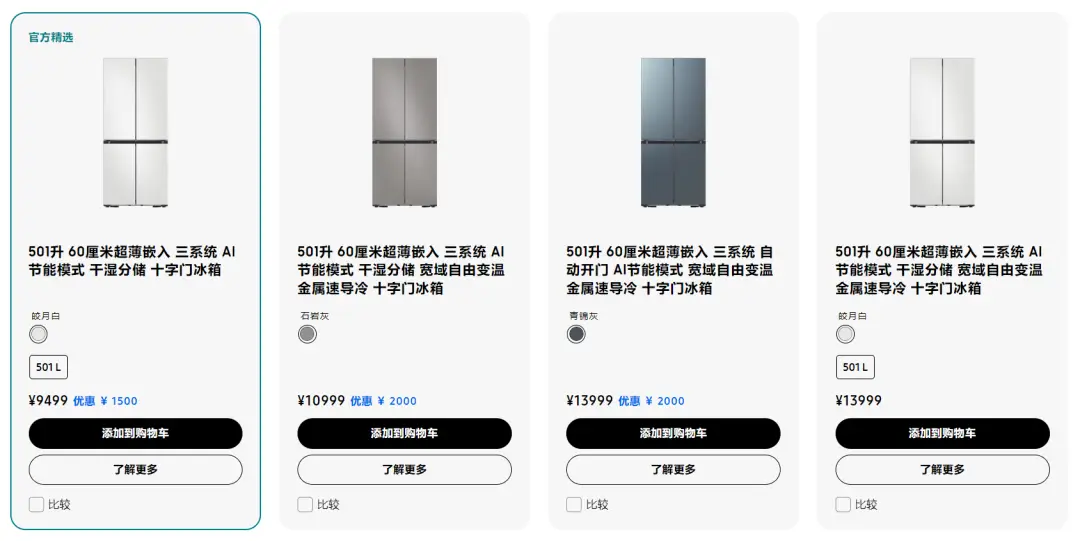
So you see, Samsung home appliances failing to survive in China isn't a momentary decision-making error, but a process from quantitative change to qualitative change. Domestic brands were rising, Samsung was falling behind; with this ebb and flow, their market share being eroded was almost inevitable.
However, low market share alone isn't enough to make Samsung completely flip the table. What really prompted them to hit the exit button was another, more realistic issue — it was no longer profitable.
According to Yonhap News Agency, throughout 2025, Samsung's Visual Display (VD) department overseeing the TV business and the Digital Appliance (DA) department for home appliances recorded a combined operating loss of 200 billion KRW, approximately 945 million CNY, suffering massive losses overall...
But at the same time, Samsung Electronics' operating profit in the first quarter of 2026 reached a staggering 57.2 trillion KRW, a year-on-year surge of 756%. The semiconductor business alone contributed 53.7 trillion KRW in profit, accounting for over 93%.
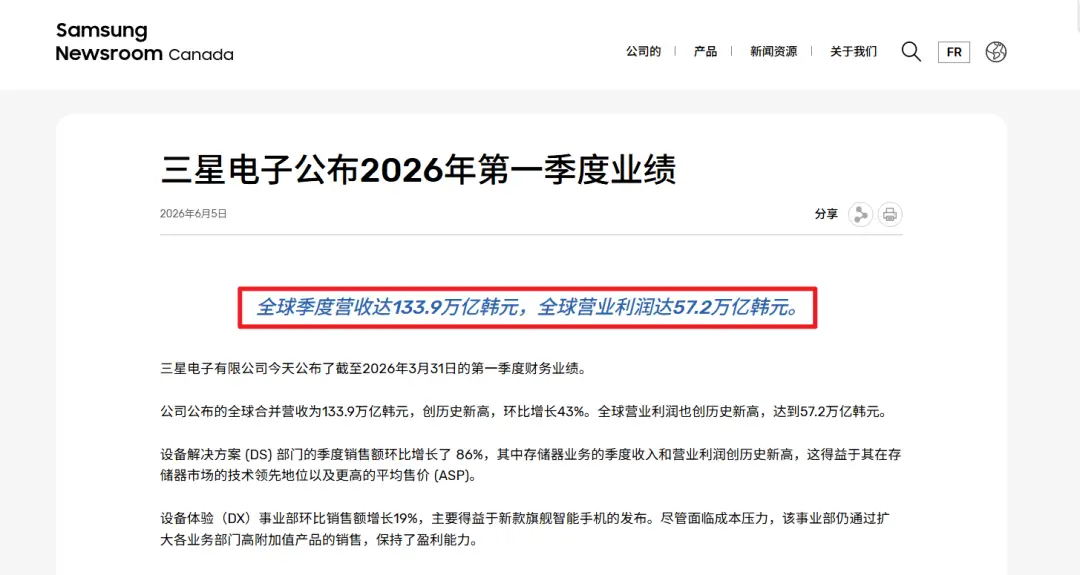
This makes the reality very clear — on one hand, the home appliance business in China is embroiled in cutthroat competition, with shrinking market share, yet still requiring continuous investment in channels, after-sales, and localization; on the other hand, AI is driving a surge in memory chips, and the semiconductor business is easily making pots of money.
If you were Samsung, where would you choose to throw your resources? The answer is pretty obvious.
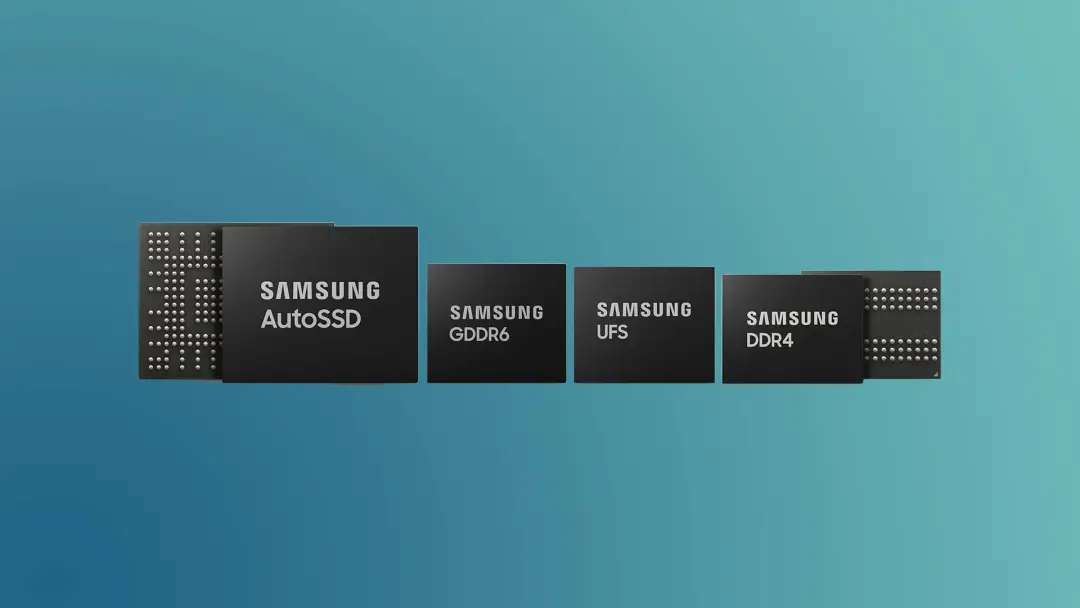
For Samsung, the Chinese home appliance market is no longer a cake worth fighting for, but rather a bone too tough to chew. Continuing to sell won't make much money anyway; stopping sales allows them to pull resources back and pile them into more profitable and promising businesses.
Therefore, Samsung's retreat this time appears to be a halt in home appliance sales on the surface, but it is actually a very typical strategic trade-off. It's not that they lack the ability to keep playing, but rather they don't want to keep fighting to the death with a bunch of domestic brands in the Chinese home appliance market.
However, according to Yonhap News Agency, Samsung will continue to operate its home appliance factories in places like Suzhou. It's just that the products will no longer be aimed at the domestic Chinese market, but will instead pivot to overseas markets. Maybe in the future, Samsung home appliances bought by foreigners will be printed with "Made in China"~
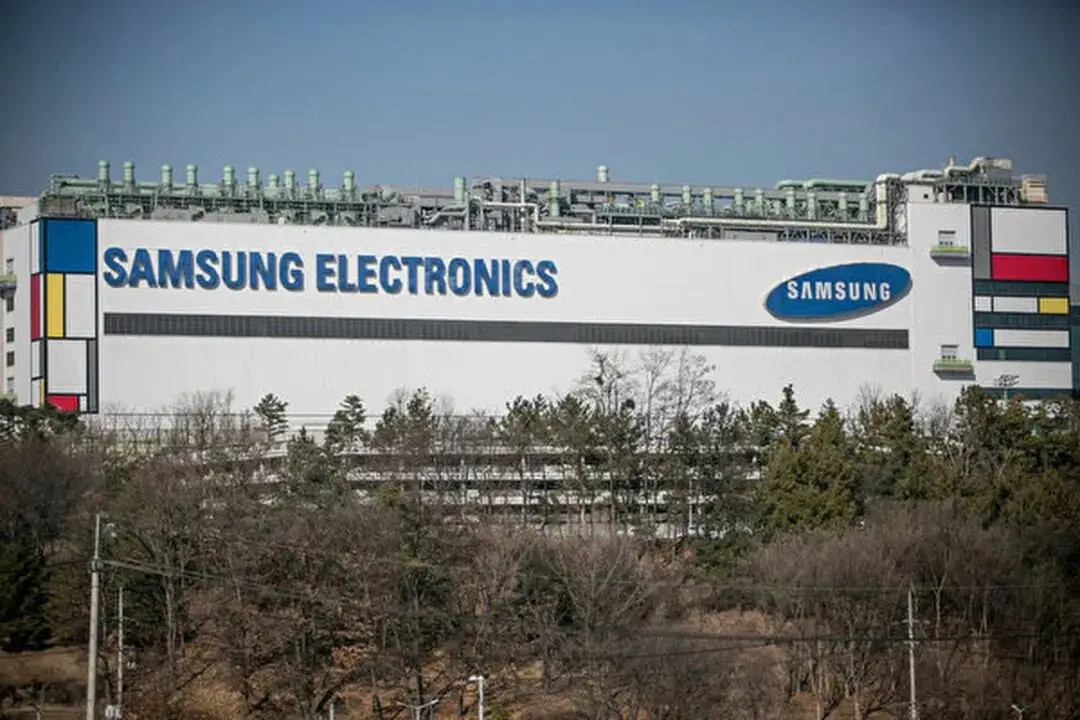
Meanwhile, Samsung's semiconductor factory in Xi'an is still continuously expanding and increasing production. Their investment in high-end industries in China is increasing rather than decreasing. We can understand it this way — Samsung is just changing its posture to continue making money, rather than saying goodbye to the Chinese market entirely.
So for those who have bought Samsung home appliances before, it's fine to feel nostalgic, but there's no need to be too sad.
After all, in the future when we surf the web, save photos on our phones, or even run an AI large model, the underlying storage chips are still very likely to come from Samsung. It just won't appear in your living room anymore; instead, it will continue to make money from us in places you can't see.
As for Samsung home appliances... the world is vast; if fate allows, we'll see each other through overseas online shopping.
Source: ChaPingJun
 微信扫一扫打赏
  支付宝扫一扫打赏
Comments (0)