
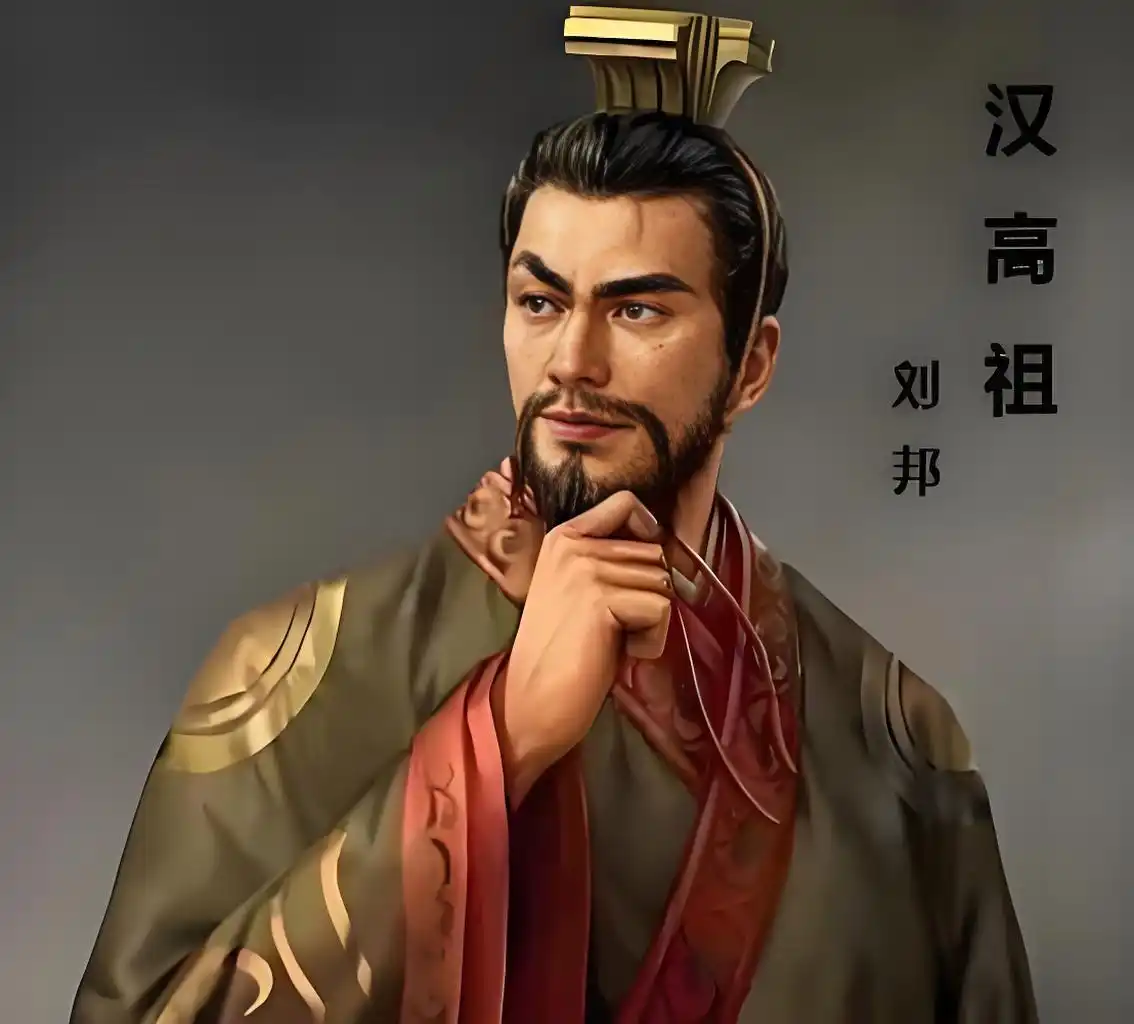
@Zhang Zhou: A few days ago, my eldest son asked me a particularly interesting question. I pondered it for a long time before daring to answer him.
He asked: Why is it that Liu Bang's and Zhu Yuanzhang's brothers—farmers, butchers, the dregs of the streets—suddenly became famous generals capable of holding their own? Yet, the people in my grandma's village—dog butchers, farmers, and a bunch of idle street punks with dyed hair—don't show the slightest trace of military talent or the aura of a general. Why could Liu Bang's and Zhu Yuanzhang's dubious friends achieve great things?
I thought about it for a long time and answered:
It's not that they were naturally brilliant; it was purely the result of era-driven selection, life-and-death tempering, and the elevation of a platform.
Many people looking at history only remember the famous generals whose names went down in history, like Fan Kuai, Zhou Bo, Guan Ying, Xu Da, and Tang He, but they completely ignore the names of the others who rose in arms alongside them, fought desperately, and ventured into the world together. At the very beginning, thousands of people followed Liu Bang and Zhu Yuanzhang—all fellow townsfolk and spirited young men. But history has always been the biography of victors. Those ordinary people who died early in battle, collapsed midway, or were buried in the wilderness are like John Doe on the side of the road; they can't be written about, and movies and TV shows can't film them. In the Legend of Yue Fei, don't you only remember Niu Gao and Yue Yun? What about the rest? Dead, that's what!
The chaotic eras at the end of the Qin and Yuan dynasties were cruel, real-life elimination tournaments. Ten people enter, nine become cannon fodder, and very few survive. It absolutely wasn't that these people were born with the talent of generals and commanders. It was because they rolled in blood and flesh for years, crawled out of piles of dead bodies, and endured until they forged real ability and broad vision.
You've read yourself silly, always thinking that "military talent" is about aura, education, or innate gift. In reality, the very first requirement of military talent is survival. Psychological resilience, ability to withstand pressure, on-the-spot reactions, a gambler's boldness, and survival instincts are all forged through near-death experiences, not learned from books. Peaceful times simply cannot cultivate these things. People raised in comfortable lives crumble under the slightest pressure; they can't step onto a battlefield at all.
The most typical example is Fan Kuai, a genuine roughneck dog butcher who hadn't read a single word of military strategy. At the Feast at Hongmen, all the civil and military officials were so terrified they didn't dare to breathe. Liu Bang's life hung by a thread, and he was extremely anxious. Even Zhang Liang could only sneak out to seek help. Fan Kuai alone, carrying a sword and a shield, forced his way into Xiang Yu's heavily guarded central tent, knocked down the guards, glared furiously, and faced the Hegemon directly. He publicly rebuked Xiang Yu into speechlessness. Eating meat and drinking wine, his sheer presence overwhelmed everyone, and he relied entirely on his ruthless grit and on-the-spot courage to carve out a path of survival for Liu Bang. This kind of mindset forged in near-death situations and the audacity to turn the tables in desperate straits is something ordinary people raised in peacetime could never cultivate in their entire lives. Whampoa Military Academy is a school for training generals, but it produced plenty of cowards too.
The ruthlessness, shrewdness, and strategic thinking of the ancient lower class were on a completely different level compared to ordinary people today. What can today's street punks do? Nothing more than racing motorcycles, playing video games, whistling at girls on the street, and putting on airs. They look arrogant, but inside they are cowardly and restless. The street toughs and rural commoners of ancient times were different. Back then, disputes between villages over land or raids would frequently escalate into armed brawls. To survive, everyone had to be shrewd, brave, and calculating. They figured out all the practical rules of combat: don't launch a rash attack in winter, as the freezing weather and slippery roads are unbearable; don't casually set up an ambush in summer, as mosquito bites and excessive movement make it easy to be exposed; for instance, they would choose to strike on a late night in early summer after the wheat was harvested, when the village's guard was down and the village leaders were drunk. This ability to seize the moment, understand human nature, and control the situation was the most primitive form of military strategy. The skills they honed in their youth fighting over territory in their villages meant they didn't have to learn from scratch on the battlefield; they were merely scaling up the small-scale village brawls into massive wars of thousands of troops. Take Zhou Bo: in his early years, he was just a lowly commoner making a living by weaving straw sandals and playing funeral music. He looked honest and unremarkable. But after years of walking the streets, he saw through the hearts of the villagers and became intimately familiar with the fickleness of human warmth. He knew best when to endure and when to strike. After joining the rebellion, his greatest strength was hiding ruthlessness within stability and biding his time. He dared to charge in tough battles, could hold the line in messy situations, and stabilized losing positions. Later, he was even able to command massive armies and quell rebellions, relying on the precise judgment he had honed through grassroots struggles in his early years.
There is also a key point that most people fail to grasp: the ancient grassroots toughs, butchers, and villagers were not simple brutes; they were grassroots practical talents. Ordinary people in modern society only know how to work, obey, and follow the rules; they are domesticated "good citizens." In contrast, the lower classes of chaotic times grew up in ruleless games. They understood the dark side of human nature, ambushes, laying traps, building momentum, forming alliances, and sacrificing the part for the whole. The essence of military strategy is not book knowledge; it is the grasp of human nature and timing, which they practiced naturally. For example, my father used to beat me, so I learned to read the room and understand the rules; breaking the rules meant a beating. So when I entered society, the rules weren't much different from home; home scaled up is society, and the village scaled up is the world.
War is the most hardcore crash course in the world, bar none. Modern people gain experience by playing games; the chaotic eras of the late Qin and late Yuan were the most brutal real-life experience pools. Men like Xu Da and Fan Kuai survived hundreds of fierce battles in just over a decade. Through this high-frequency, high-pressure, life-or-death practical tempering, anyone with a bit of perceptiveness could grow rapidly, their abilities multiplying exponentially.
Never underestimate the survival wisdom of the ancient lower classes. Xiao He was able to manage logistics flawlessly because he was originally a grassroots administrator who understood human relationships and rules. Zhou Bo could command armies and dispatch soldiers because his years of weaving sandals and playing funeral music had forged an extreme sense of rhythm and organizational ability. These seemingly unremarkable street skills, when transferred to the arena of a chaotic era, could directly transform into hard power for leading troops, setting up camps, and orchestrating the overall situation.
What's more interesting is that chaotic times completely overturn the evaluation criteria of peacetime. The rogue habits and ruthless temper that we despise today become scarce, hard skills in turbulent times. In peacetime, people value rules, degrees, refinement, and knowing one's place. But in chaotic times, when human life is cheaper than grass, courage, ruthlessness, boldness, and the ability to rally people are the true foundations of survival. Fan Kuai slaughtered dogs, and Chang Yuchun slaughtered pigs; they spent years plunging white knives in and pulling red knives out, long since desensitized to blood and butchery. Facing a dense army of enemies on the battlefield, honest peasant farmers would be scared to the point of trembling legs, whereas these ruthless grassroots men would instead have their bloodlust ignited, daring to fight and willing to risk everything.
Chang Yuchun is the most extreme example. Of pure peasant origin, he made a living slaughtering pigs in his early years, and his life motto was "fast, accurate, and ruthless." While other generals fought timidly and overthought everything, he constantly charged the front lines, leading by example. He never dragged his feet when leading troops; he fought in every vicious battle and charged in every tough fight. While others feared bloodshed and sacrifice, he was already numb to the gore, naturally adapted to the rhythm of battlefield slaughter. It was precisely this ferocity forged at the grassroots level that allowed him to become the fiercest general of the late Yuan dynasty, known as "Chang the 100,000." Not only were they ruthless, but they also possessed an innate talent for organization. A grassroots street punk like Liu Bang could rally a group of brothers to risk their lives for him, relying on loyalty, a sense of proportion, and the distribution of benefits, naturally exuding the aura of a leader. In chaotic times, this ability to build a team, win hearts, and lead a group is a hundred times more useful than scholars who only know how to read books and spout empty theories.
Since ancient times, scholars leading armies lose nine out of ten times. The reason is right here: scholars talk about reason, rules, and dignity; war in chaotic times is about human nature, ferocity, deception, and interests. Rogues understand human nature; scholars understand theory. War is a battle of human nature, not theory. This is also the fundamental reason why the mud-footed peasants of Fengpei and Huaixi could crush the aristocratic scholars and regular military officers. But then again, for these grassroots folks to become founding generals, there is an absolute core cheat they couldn't do without: their bosses were Liu Bang and Zhu Yuanzhang.
The biggest shortcoming of ordinary village punks and farmers is their lack of vision and perspective. Without Liu Bang, Fan Kuai would at best have been a tough bodyguard for his whole life; without Zhu Yuanzhang, Xu Da would have been nothing more than a mountain bandit at best, never becoming an eternal famous general guarding a region. Liu Bang and Zhu Yuanzhang were absolutely not ordinary stinking rogues; they were born top-tier strategic masters and team manipulators. They knew how to read people, dared to delegate power, knew how to train them, and possessed immense tolerance for errors and a grand perspective. Xu Da didn't know how to command large-scale troop operations at first either. It was Zhu Yuanzhang who gave him opportunities time and again, covered his mistakes, and guided him, forcibly molding an honest peasant boy into a top-tier commander with unparalleled merits.
In his early years, Xu Da was just an honest farmer working the land in Fengyang. He was of simple nature and inarticulate, starting out even more ordinary than many local militia. When he first led troops, he also lost battles and made mistakes, but Zhu Yuanzhang never blindly reprimanded him. Instead, he taught him hand-in-hand how to deploy, how to coordinate, and how to grasp the rhythm of a battle. Through post-battle reviews after every defeat and tempering through every tough fight, Zhu Yuanzhang used his top-tier perspective as a safety net, forcibly grinding an old farmer into the calm, reserved, and ever-victorious number one commander of the founding era, who guarded the North and awed the world.
Moreover, the entire team had a clear division of labor, compensating for each other's shortcomings: strategists set the strategy, surrendered enemy generals taught formal combat tactics, and these childhood friends were responsible for charging the front lines, stabilizing morale, and executing orders. They didn't need to be masters of military strategy from the start; as long as they dared to risk their lives, could execute, could hold steady, and could command respect, they could step by step grow into qualified generals and commanders.
An even more crucial point: what ordinary people lack has never been ability, but a margin for error and a stage. When ordinary people make a mistake once, they are ruined, lose their jobs, or crash and burn. But Liu Bang and Zhu Yuanzhang provided their followers with a national-level platform with a margin for error. If they lost a battle, someone covered for them; if they made a mistake, someone adjusted the strategy; their horizons were forcibly raised by top-tier perspectives every day. Ordinary people placed in a small village are just thugs and punks; placed in a founding team during chaotic times, they become founding fathers. The position choosing the person is far more powerful than the person choosing the position.
So, you really don't need to doubt your own judgment. Even if you traveled back to Pei County in the Qin dynasty or Fengyang in the late Yuan dynasty, when you first saw Liu Bang, Zhu Yuanzhang, and their brotherhood, what you would see is a bunch of foul-mouthed, grounded, low-class roughnecks, no different from the farmers, dog butchers, and wandering street punks in our villages. Their starting points were exactly the same as the ordinary people in modern villages. The only difference is: the era threw them into the meat grinder of chaotic times. They survived through sheer grit and perceptiveness, and with the elevation of top-tier bosses, they completed the most absurd, hardcore life comebacks in mountains of corpses and seas of blood.
This is the cruelest and most authentic truth of history: there are no naturally born famous generals. It is merely that chaotic times create heroes, platforms elevate people, and life-and-death tempering forcibly boils ordinary people into legends. So don't look down on the unremarkable roughnecks, punks, and pragmatic doers around you. In peacetime, they seem uneducated, lacking in vision, and unfit for polite society; but once the era reshuffles and rules are reconstructed, the first to stand up, the ones who can bear the most responsibility, kill to establish authority, and lead teams to turn the tide, will always be these ruthless, adaptable people who understand human nature and aren't afraid of trouble.
Aura is nurtured by status, military talent is forged through life and death, and legends are granted by the times. Mortals are inherently of no noble or lowly birth; once the times change, the hierarchy is instantly determined. A street punk tattoos the character "Endure" on his arm, while Liu Bang and Zhu Yuanzhang print the character "King" on their flags; they are not on the same level, nor are they the same kind of human.
 微信扫一扫打赏
  支付宝扫一扫打赏
Comments (0)