
The new Tesla you've been asking for is finally here!
Just before the long holiday, Tesla suddenly announced big news: the Tesla Semi, delayed for nearly nine years, has finally entered mass production.

You might be a bit confused—what exactly is this? Well, it's the purely electric heavy truck that caused a huge stir back in the day.
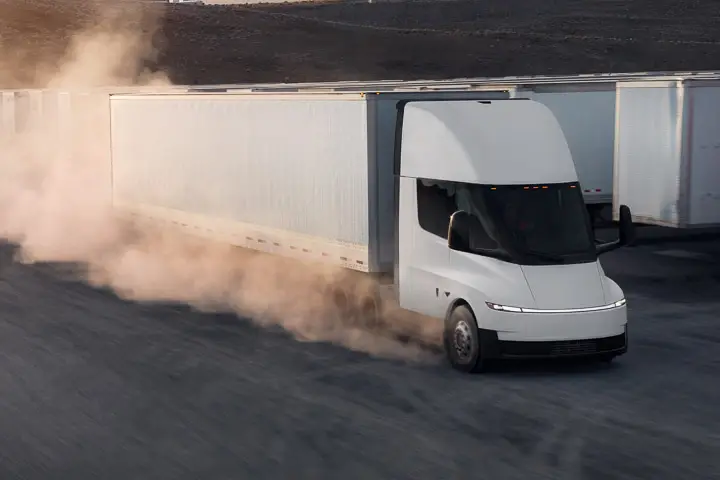
Keep in mind, this thing was actually unveiled back in 2017. Whether it's the exterior and interior design or the performance specs, they are almost identical to today's version.
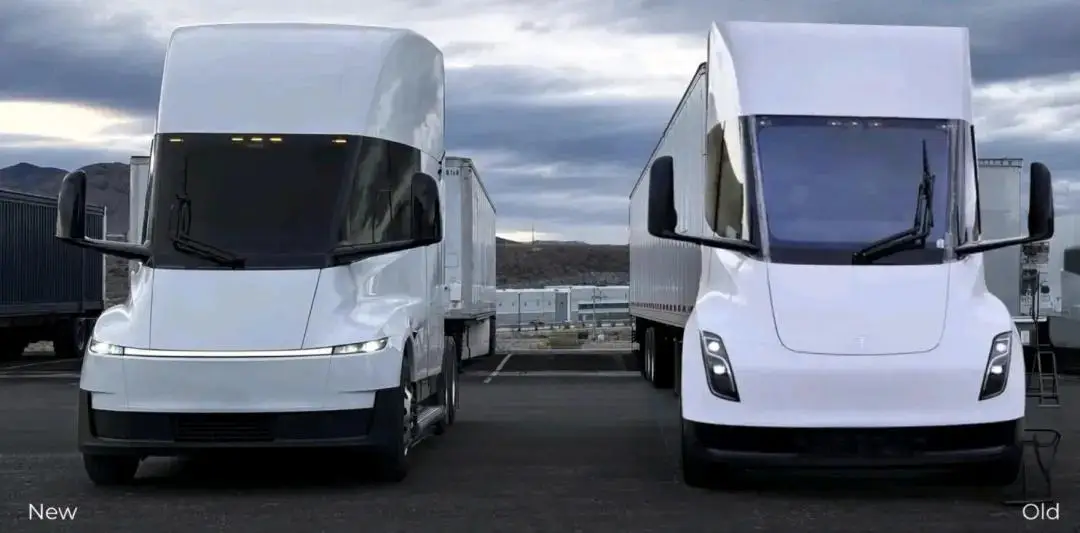
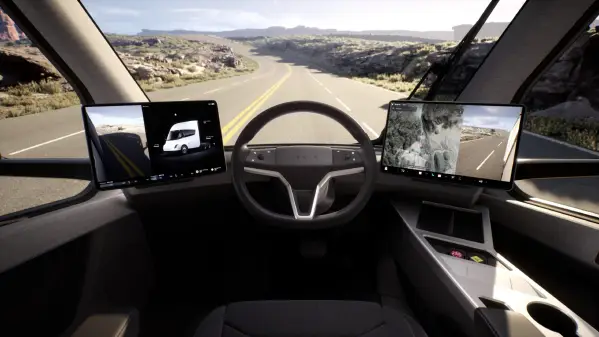
For example, the front fascia mainly just updated the headlight shape to maintain the current family style, and the overall dimensions remain basically unchanged; the interior still uses the dual 16-inch large screen setup.
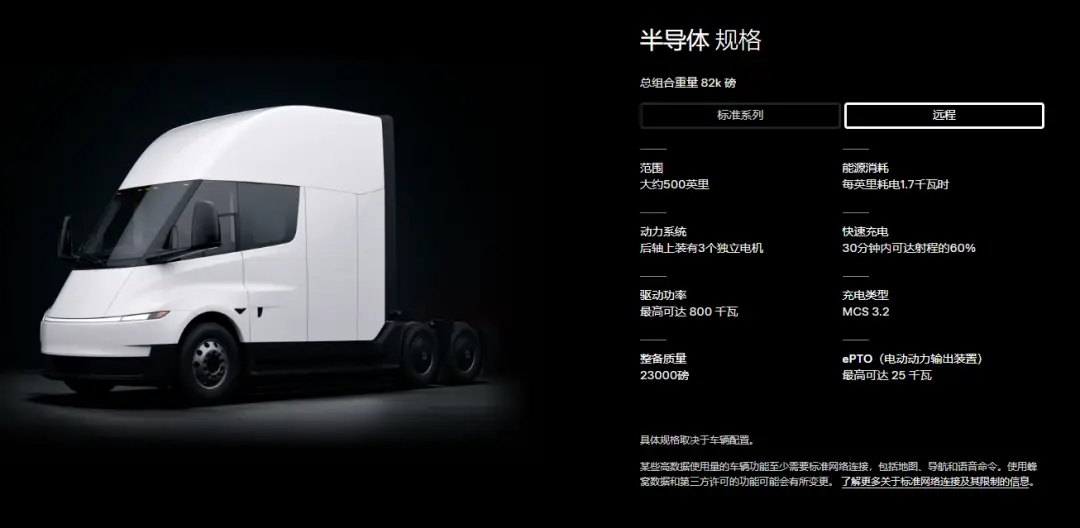
Additionally, it has a range of over 800 kilometers, and its tri-motor power reaches 800kW. In fact, even back then, the car was actually drivable; on the day of the reveal, a younger Musk rode it in for a handsome entrance...
So, if it was already built, why did it take until now to mass produce it?
That's a long story. The key issue wasn't the truck itself, but the fact that the battery inside couldn't be sorted out.
In 2017, Tesla was still using Panasonic's 2170 cells. For passenger cars like the Model 3 and Y, this was fine, but for the Semi, which demands much higher battery capacity and charge/discharge power, it just couldn't keep up.
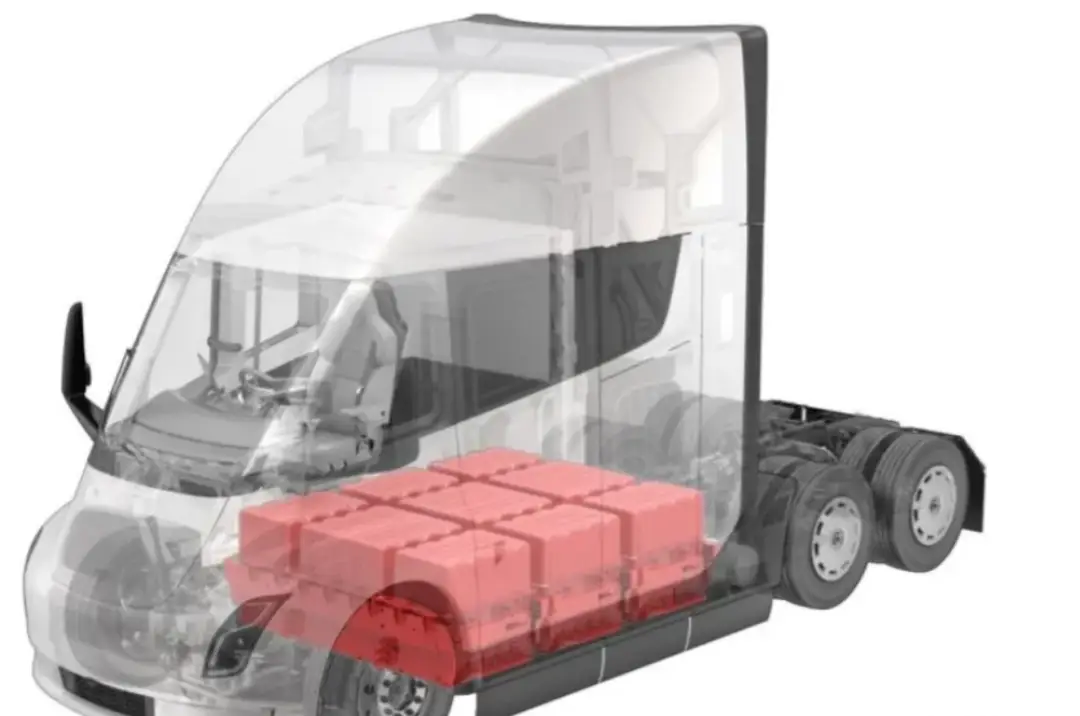
After all, the 2170 cells are small. To meet the Semi's roughly 900 kWh capacity, it would take about 50,000 cells. The metal casings alone would account for a huge portion of the weight, not to mention the welding. Old Musk would have fainted on the spot once he calculated the cost and weight.
So this round of PPT car-building died in the womb...
The Semi's comeback had to wait until after 2020, when the 4680 battery was announced.
The volume of this battery is 5.5 times that of the 2170, and it boasts the advantages of "tabless" electrodes and "dry electrode" technology, offering lower costs, higher capacity, and stronger output power—perfectly suited to the Semi's needs.
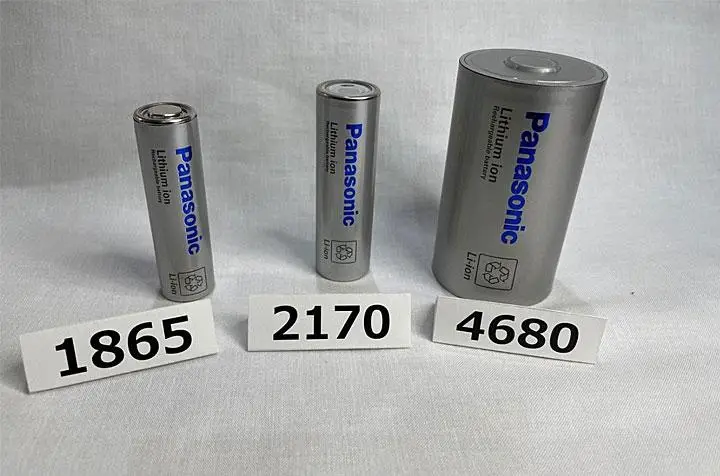
The problem was, the technical difficulty was still not as simple as written on a PPT. Just getting the "tabless" tech to work took Tesla 3 or 4 years, let alone the even more difficult "dry electrode process," which only began to show some progress late last year.
The Cybertruck, which also uses 4680 cells, was simply sold using the wet-process semi-finished version, but the Semi had to wait for further technological breakthroughs, only making symbolic deliveries to companies like PepsiCo.
By 2024, Musk couldn't wait any longer. Because the technology was stalled, he announced massive layoffs, during which 4680 core veteran Drew Baglino also resigned. This led the outside world to believe the 4680 program was completely doomed.
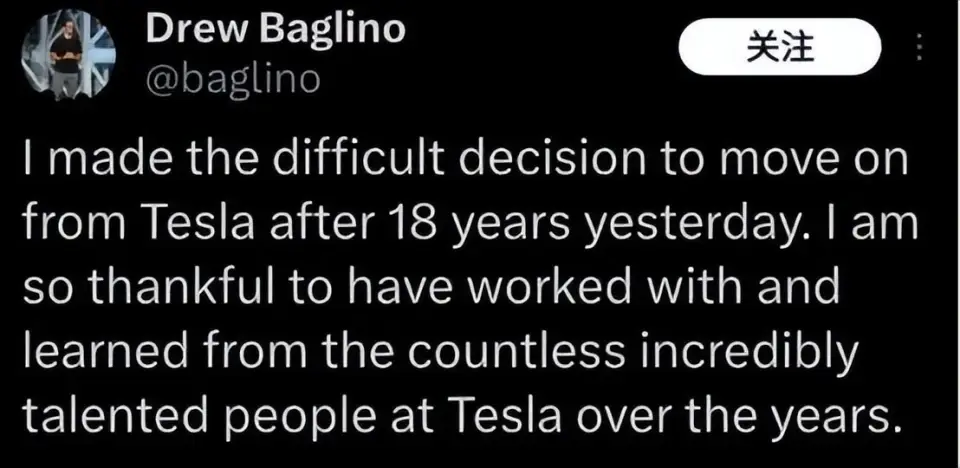
But as it turned out, it was precisely this transition that allowed Tesla to actually master the dry electrode technology, leading to this mass production of the Semi.
To be honest, this whole process was quite "Tesla"...
Since they've been dragging their feet for so long and finally built it, can this pure electric truck truly disrupt traditional diesel trucks like passenger EVs did? I think it can, because for commercial trucks, economics is indeed the most crucial factor.
According to estimates by overseas media, the energy cost of a diesel truck is roughly $0.60-$0.70 per mile, whereas an electric truck can squeeze it down to $0.25 per mile. The more you drive, the more you save; the electric truck wins hands down, not to mention places outside the US with even lower electricity prices.
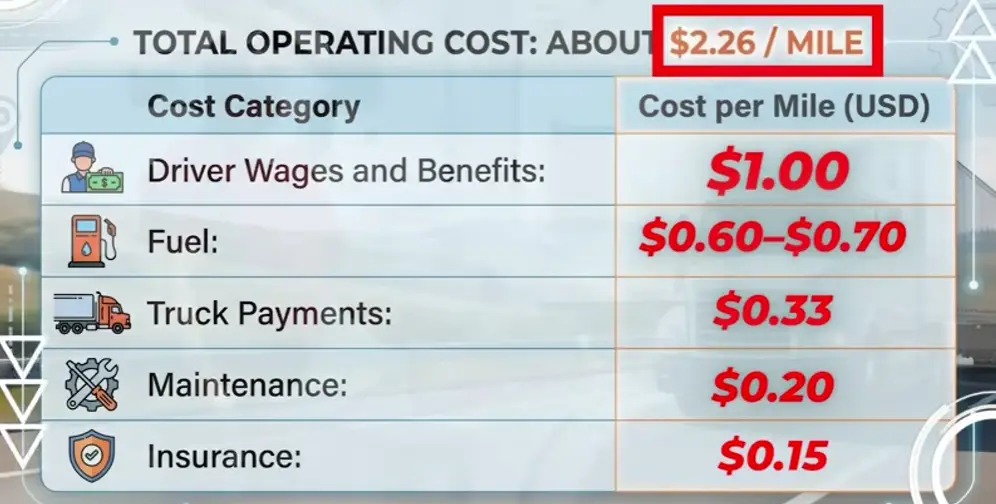
And compared to the money issue, other "inconvenient" factors can mostly be tolerated.
For instance, regarding its long-distance range capability: thanks to the 4680 batteries using the "dry electrode process," the Semi can travel up to 500 miles (about 805 km), and the base version does 325 miles (about 523 km). While it certainly can't beat a diesel truck that can run over a thousand kilometers on a full tank, it's not entirely unacceptable.
Also, because the battery is huge, recharging is definitely a big issue. Tesla naturally anticipated this, so through Tesla's dedicated charging stations, the Semi also achieves what we call "megawatt flash charging," which Tesla calls MCS, with a charging power of up to 1.2 megawatts, capable of charging 60% in 30 minutes.
After all, according to regulations, truck drivers must take mandatory rest periods after continuous driving. For example, in China, it's a 20-minute break after 4 hours of driving, and in the US, it's 30 minutes after 8 hours. Theoretically, as long as there are enough chargers, this time is just enough to fully recharge, making it no more troublesome than refueling.
Finally, a large battery brings another issue: weight. Because the cab alone weighs up to 10 tons (top spec), there have been many doubts about the Semi's cargo capacity.
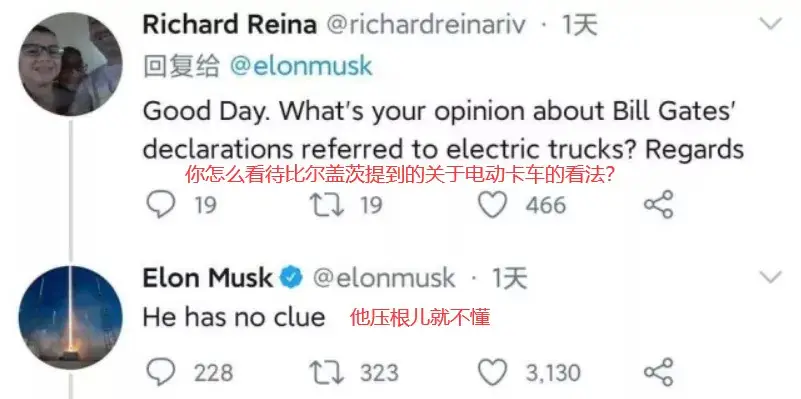
In 2020, after checking out the Semi, Bill Gates quipped: "Because of the physical bottleneck of battery weight, electric heavy trucks may never become a reality." Musk probably wanted to curse him out internally, responding that Gates "has no clue."
So, who was right in the end? Musk, of course. While it's true that pure electric trucks are heavy, the key is that their power is also much stronger. A typical diesel truck has a power output of around 400kW, while the Semi's total power reaches 800kW.
This is actually to simulate the downshifting and torque increase of a gas truck. When climbing a hill, the Semi's rear-axle tri-motors work simultaneously, maxing out the torque and literally brute-forcing its way up.
Later, Tesla tested it in real-world conditions: with a fully loaded weight of nearly 40 tons, the Semi handled the undulating 800-kilometer route from the Fremont factory to San Diego with ease.
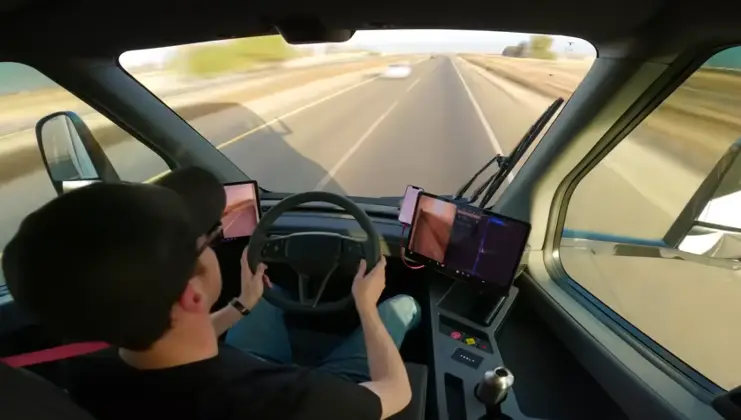
So, comparing everything, the Semi is indeed much more formidable than traditional diesel heavy trucks.
The only issue might be the price. Currently, the two versions are priced at $260,000 and $290,000. If you want a range that isn't too limiting, you'd definitely have to go for the $290,000 (about 2 million RMB) top-spec version, right? Compared to the average price of $240,000 for a Class 8 diesel heavy truck on the market, the Semi's price is certainly higher.
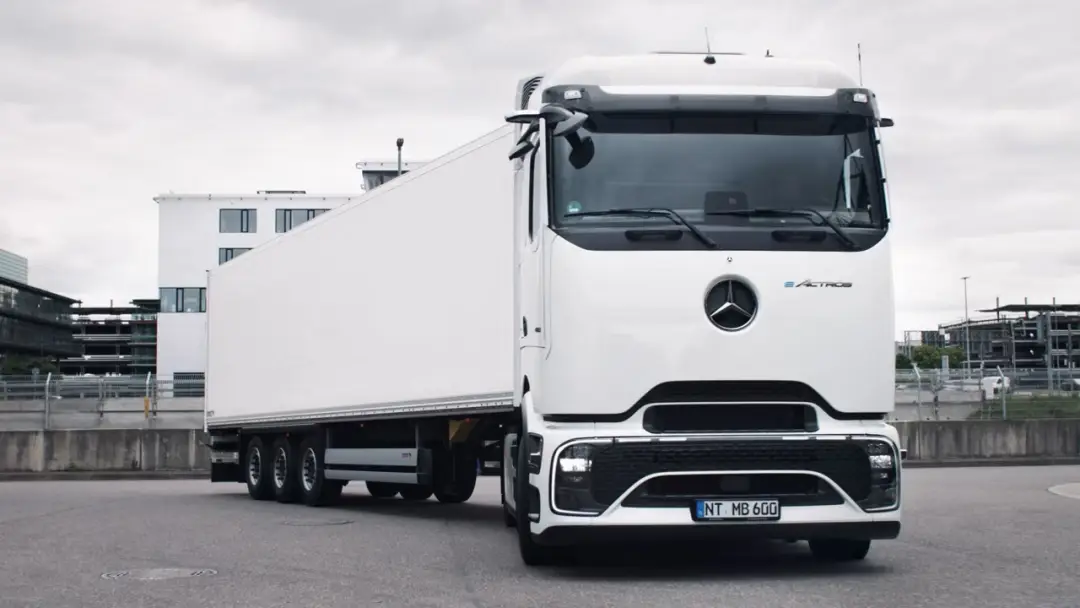
However, if you compare it to other pure electric brands in Europe and America, it might be much lower. European manufacturers' pure electric heavy trucks generally sell for over $400,000; for example, the Mercedes eActros 600 sells for $420,000, and the Volvo VNR Electric also starts at $400,000.
Looking at it this way, the Semi still offers great value for money.
Many in-house transport fleets like Coca-Cola, who are less sensitive to initial costs, have relatively fixed routes, and even want to promote green initiatives, really need products like the Semi. Tesla is essentially saving them big money.
So it's easy to understand why the truck immediately received large orders right after mass production was announced.
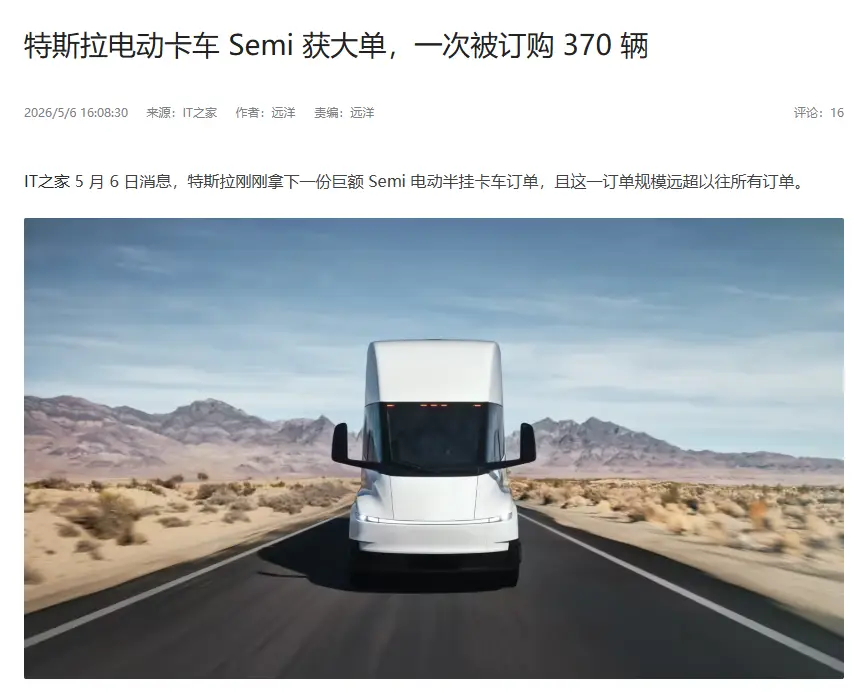
But if you treat it like a regular freight truck, then the math doesn't work the same way.
For example, in China, if you sell it for 2 million RMB, it's really hard to imagine who would foot the bill. A comparable model like the Farizon Xinghan H is priced at only 1 to 1.5 million RMB.
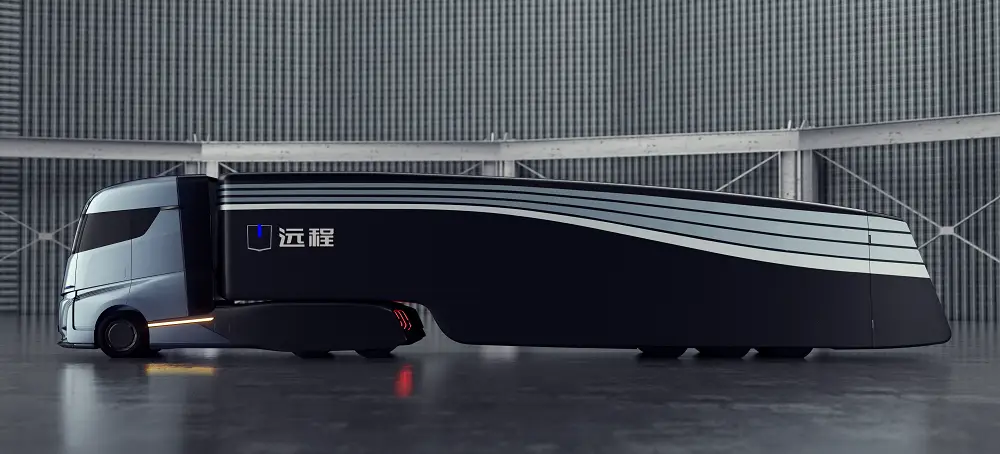
Not to mention, under normal circumstances, such a massive tonnage isn't even necessary.
Currently, the best-selling brands in the pure electric heavy truck market include XCMG, SANY, FAW, Sinotruk, Shaanxi Auto, Foton, and Farizon, with prices generally ranging from 500,000 to 1 million RMB.
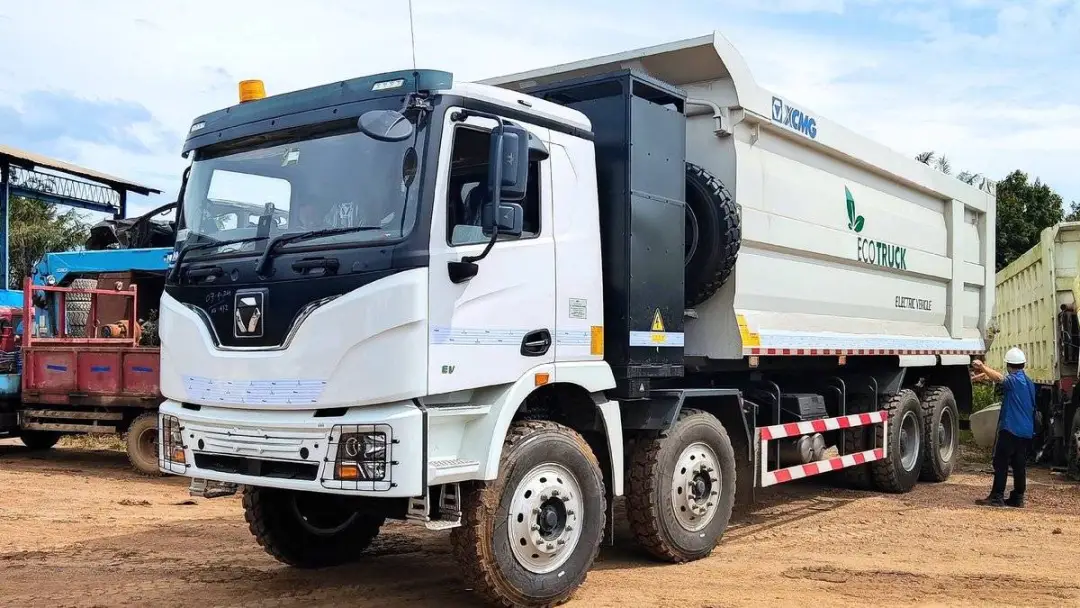
In terms of individual vehicle performance, these domestic trucks indeed cannot match the Tesla Semi; their range tops out at around 500 kilometers, and their power is under 500kW, but domestic brands have adopted a completely different approach: battery swapping.
As a result, the convenience of domestic electric trucks is much higher. Moreover, because of the unique "BAAS" (Battery as a Service) system for battery swapping, you can just buy the truck shell for as low as around 200,000 RMB—doesn't that smell much sweeter than the Semi?
As it stands, the market share of domestic new energy trucks has begun to skyrocket, reaching 29% for the full year of 2025, and even breaking through 50% in December. Soon, the competition in the truck sector will no longer be about "disrupting diesel trucks," but rather about pure electric trucks tearing into each other...
It's safe to say that Tesla this time has indeed fully cooked the grand pie that is the Semi, but the market may have already changed.
 微信扫一扫打赏
  支付宝扫一扫打赏
Comments (0)