
@BigCatFinance: The South Korean stock market continues to plummet, completely messed up by its own issues, all because of an uneven distribution of money.
Yesterday, Kim Yong-beom, Director of the Policy Office at the South Korean Presidential Office, posted on social media, proposing the concept of a "citizen dividend" to return the excess profits generated by AI to the entire society.
Just because of his remark, the South Korean stock market plummeted by more than 5% at one point yesterday.
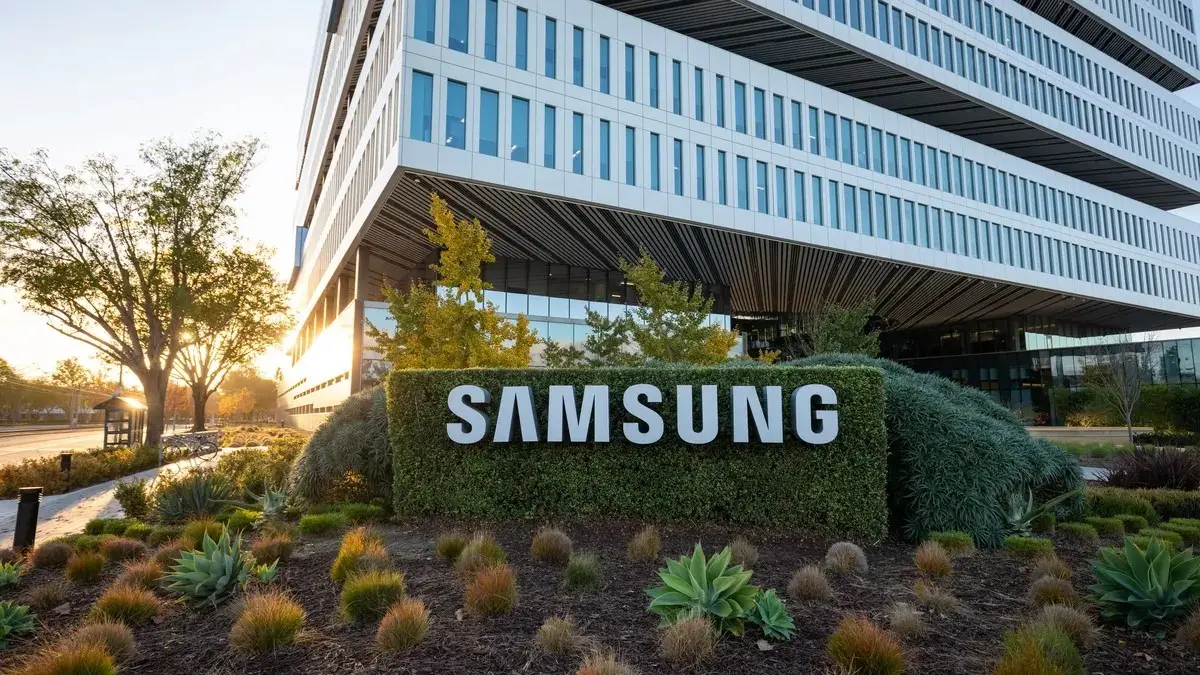
Then news just broke that Samsung's negotiations with the union have broken down, and a strike is highly likely. This morning, the South Korean stock market plunged by 200 points.
Who is Kim Yong-beom? Why did his words have such a huge impact?
The President of South Korea holds significant power, and the Director of the Policy Office is his primary aide, wielding considerable influence over major issues. His proposal essentially amounts to a windfall profit tax, hence the direct stock market crash.
Meanwhile, the Samsung union negotiations have taken on the air of a national crisis, also due to dissatisfaction over the distribution of money.
What happened?
Memory chip prices have skyrocketed over the past two years, and South Korea's Samsung Semiconductor and SK Hynix have been making money hand over fist.
Hynix proposed an insanely generous dividend: an average dividend of 3 million RMB per person in 2025, and by 2026, the dividend is expected to reach around 6 million RMB. Hynix also stated that this level of payout would continue for ten years; an ordinary employee receiving the full ten years of dividends could earn 30 to 40 million RMB.
As a result, Samsung employees were unhappy, as their dividends are much lower than Hynix's.
Consequently, the Samsung union immediately mobilized and made four demands:
1. Increase the dividend ratio from 10% to 15%, totaling 210 billion RMB this year;
2. Provide a long-term dividend commitment;
3. Abolish the bonus cap;
4. Raise salaries by 7%.
If their demands are not met, they will go on strike for 18 days starting May 21st.
This made the South Korean government anxious. Despite being only 18 days, it would be the longest strike in Samsung's history, likely causing a global memory chip supply shortage and skyrocketing prices, severely damaging South Korea's exports and foreign exchange reserves.
Therefore, the President directly stated, "Samsung is an asset of the national community, and a strike is unacceptable."
These words not only failed to convince the Samsung union but also infuriated the general public.
They argued that when the memory chip industry was not profitable, the entire nation supported Samsung and Hynix through tax breaks, low-interest loans, and government-built infrastructure. Wasn't this backed by taxpayers' money? Therefore, South Korean taxpayers are hidden shareholders. Why should everyone bear the losses together, but when profits are made, you distribute them among yourselves?
You could call this jealousy, but they can't help but be jealous.
The average annual salary of South Koreans is less than 240,000 RMB. A 6 million RMB dividend is equivalent to an ordinary person working for 25 years without eating or drinking. This massively disproportionate distribution is the real reason others are upset.
So on the surface, they are arguing about how companies should distribute money, but at its core, the question being asked is: when an industry reaps the benefits of nationwide support and earns super-profits, shouldn't it give back more to society beyond just paying taxes?
This is why Kim Yong-beom's "citizen dividend" proposal dealt such a heavy blow to the stock market at this time.
However, this concept is too utopian. Would the chaebols agree? How do we define excess profits? How should they be collected and distributed? These are all practical issues.
Finally, I must say that South Koreans are still too honest. Why didn't anyone short the stock market with billions of dollars? There's still a gap between them and the stock guru Trump.
 微信扫一扫打赏
  支付宝扫一扫打赏
Comments (0)