
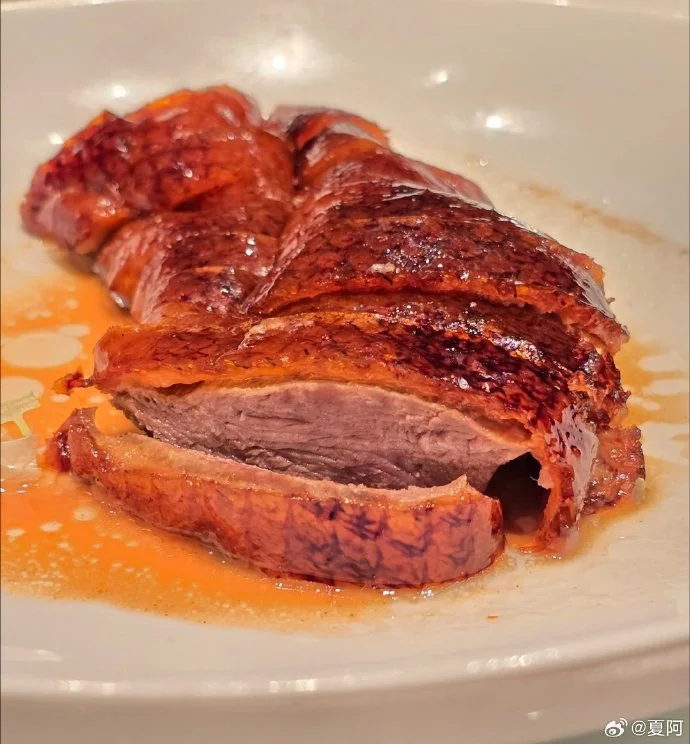
@Xia A: As someone born in Yangzhou who has eaten a lot of goose, and later settled in Nanjing where I've eaten a lot of duck, I can clearly explain the difference between goose and duck. In terms of texture, duck is more tender than goose and easier to chew. As for the aroma of the meat, only fresh meat has that distinct duck or goose fragrance; goose meat has a richer aroma than duck when chewed longer, whereas duck meat's fragrance is apparent as soon as you take a bite. Both can easily develop a rank oily smell if not prepared well, so processing and cooking methods are crucial. The skills these two cities possess regarding duck and goose are mostly trustworthy.
In terms of cooking methods, limited to our local area, salted goose tastes better than salted duck, while roast duck tastes better than roast goose. Old goose tastes better than young goose, but young goose has better liver. Mallard duck tastes better than Cherry Valley duck, though Cherry Valley duck is much cheaper and suitable for a casual treat anytime. Goose fat tastes better than duck fat, duck eggs taste better than goose eggs, and air-dried salted goose tastes better than salted duck. Old duck soup is in a league of its own, while goose soup is just so-so. Braised goose and braised duck seem a bit wasteful to me for these two poultry types, though braised goose is slightly better.
Finally, under equal conditions, the webbed feet, wings, intestines, tongue, and other offal of a goose all taste better than those of a duck, but the raising cost of geese is significantly higher than that of ducks.
In daily life, Nanjing roast duck is the optimal choice, and Yangzhou salted goose is the optimal choice! How to choose salted goose and roast duck is something I mentioned on Weibo before, so I won't repeat it here. In terms of value for money, Nanjing roast duck is definitely the winner, there's no way around it.
 微信扫一扫打赏
  支付宝扫一扫打赏
Comments (0)